A lethal injection administered at the Indiana State Prison has ended the life of Joseph Edward Corcoran, closing a 27-year legal saga and marking the state’s first execution in 15 years. The 49-year-old was pronounced dead at 12:44 a.m. on December 18, 2024, in Michigan City. His final words to the warden were a detached, “Not really. Let’s get this over with.”
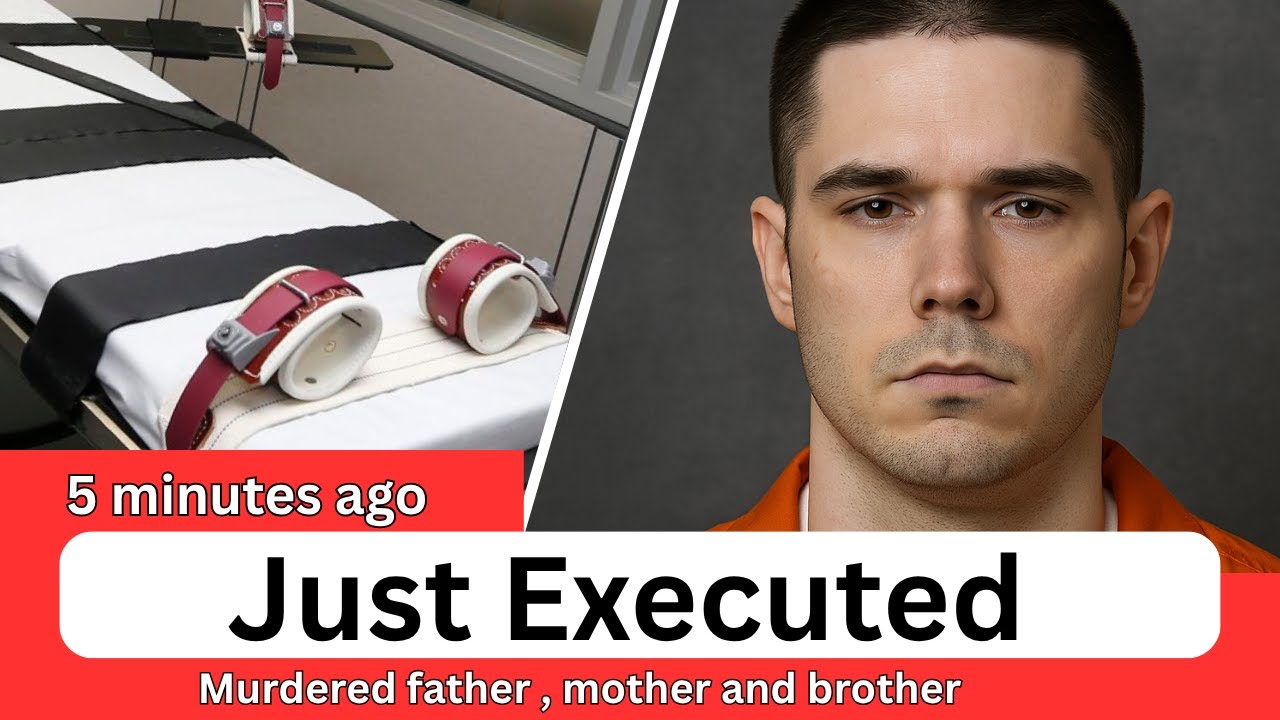
The execution followed a last-minute flurry of denied appeals and a clemency plea that Corcoran himself refused to endorse. His death concludes one of Indiana’s most protracted and psychologically complex capital cases, involving a man whose severe mental illness was never legally deemed sufficient to spare his life.
Corcoran had been on death row since 1999 for the July 1997 murders of four men in a Fort Wayne home. The victims were his brother, James Corcoran, his sister’s fiancé, Robert Turner, and two friends, Timothy Bricker and Douglas Stillwell. The crime was characterized by prosecutors as a cold, calculated execution.
His path to the death chamber, however, was haunted by an earlier, unsolved tragedy. In 1992, a 16-year-old Corcoran was tried for the shotgun killings of his parents, Jack and Catherine Corcoran. A jury acquitted him, accepting a claim of self-defense. That verdict left a cloud of suspicion that would forever shape his story.
Witnesses described a calm and almost procedural brutality to the 1997 killings. After reportedly hearing the men downstairs mocking him about his parents’ deaths, Corcoran first secured his seven-year-old niece in an upstairs room. He then descended with a semi-automatic rifle and opened fire.
He surrendered passively to the police, stating simply, “They’re all dead.” A search of his home revealed an arsenal of more than 20 firearms, suggesting a long-standing, obsessive preparation. At trial, his defense argued he was in the grip of severe paranoid schizophrenia, tormented by auditory hallucinations.

Prosecutors successfully contended that despite his delusions, he understood the wrongfulness of his acts. A jury convicted him and recommended death. What followed was a legal marathon, with courts repeatedly vacating and reinstating the sentence over procedural issues.
In June 2024, Indiana Attorney General Todd Rokita moved to set an execution date after the state secured the necessary lethal injection drugs. Governor Eric Holcomb supported resuming executions for heinous crimes. Corcoran’s defense fought vigorously, presenting evidence of his deteriorating mental state.
His lawyers detailed his belief that guards tortured him with ultrasound weapons and that voices spoke from the walls. They argued that executing a man so detached from reality violated constitutional protections against cruel and unusual punishment.
The courts were unmoved. The Indiana Supreme Court signed his death warrant in September, and all final appeals, including to the U.S. Supreme Court, were exhausted this week. Governor Holcomb declined to grant clemency.
In his final hours, Corcoran was visited by his wife, Tahina, whom he married while incarcerated. They spoke through glass; she wept, he remained stoic. He consumed a last meal of Ben and Jerry’s ice cream and met with a spiritual adviser.

He displayed no fear, officials reported, and was compliant as he was escorted to the execution chamber and secured to the gurney. The process began just after midnight with the administration of a single drug, pentobarbital. Eight minutes later, he was dead.
In a statement, Attorney General Rokita said, “Joseph Corcoran’s case worked its way through our judicial system, and today he finally paid his debt to society as justice was provided to his victims.” Governor Holcomb noted the extensive judicial review the case had received over a quarter-century.
For Corcoran’s sister, Kelly Ernst, who lost her fiancé and brother in the 1997 shootings, the execution brought no solace. “I’ve forgiven him,” she said before the execution. “He was sick, and we never saw it until it was too late.” She did not attend, stating his death would bring no peace.
The case reignites enduring debates about capital punishment, mental illness, and justice. Corcoran’s defense maintained that the state was executing a profoundly sick man failed by the system long before his crimes. Prosecutors and victims’ advocates saw a calculated killer who exploited mental health claims to evade ultimate accountability.
With this execution, Indiana re-enters the national conversation on the death penalty after a 15-year hiatus. It signals a renewed willingness by state officials to carry out sentences that have remained in legal limbo for decades. More executions in Indiana are expected to be scheduled in the coming months.
The prison chamber has been cleared and cleaned. The long, tortuous narrative of Joseph Corcoran—from a troubled teenager acquitted of patricide to a condemned mass murderer whose mind was a battleground—has reached its statutory conclusion. The justice he received, or the justice that was denied him, remains a question for the public to ponder as Indiana resumes its most severe and final punishment.
Source: YouTube