HUNTSVILLE, Texas — After more than two decades of legal battles and steadfast claims of innocence, David Santiago Renteria was executed by lethal injection Thursday evening for the 2001 abduction and murder of a five-year-old girl.
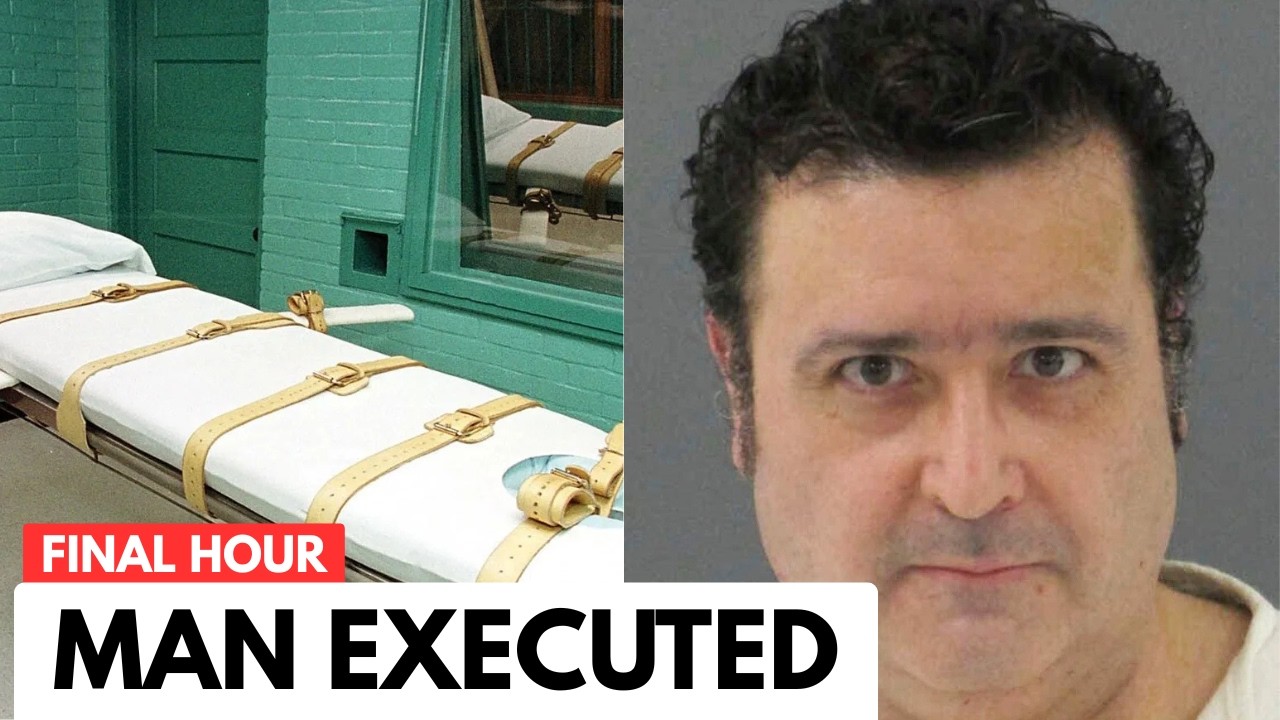
The execution proceeded at the Huntsville Unit State Penitentiary despite a last-minute flurry of appeals, including an emergency petition to the U.S. Supreme Court. Renteria, 53, was pronounced dead at 7:11 p.m. Central Time.
His final words were a mixture of apology, forgiveness, and prayer before he fell silent. The case closes a painful chapter marked by horrific crime, contested evidence, and a family’s 22-year wait for a resolution.
The victim, Alexandra Flores, was Christmas shopping with her family at an El Paso Walmart on November 18, 2001. Grainy surveillance footage showed her following a man out of the store. Her body was found the next morning in a distant alley.
She had suffered significant trauma before her death. Her remains were partially burned, an act prosecutors argued was intended to destroy evidence. The discovery shattered her large, close-knit family and ignited a manhunt.
Renteria, a local man with a prior conviction for indecency with a child, was swiftly identified. Physical evidence presented at his 2003 trial seemed overwhelming. His palm print was found on the bag placed over Alexandra’s head.
His DNA was also recovered from the scene. Blood matching the child was discovered inside his van. A jury convicted him of capital murder and sentenced him to death after just 90 minutes of deliberation.

Yet from the beginning, Renteria maintained he was not the murderer. He claimed members of the violent Barrio Azteca gang coerced him into abducting the girl under threats to his family.
He stated he was forced to hand Alexandra over to them and later assist in disposing of her body. This claim of duress became the core of his defense for the next twenty years.
Prosecutors aggressively countered his narrative. They argued the physical evidence proved he acted alone. They noted his legal team never raised a duress defense during his initial trial.
The legal journey was protracted and complex. In 2006, an appeals court overturned his death sentence due to misleading testimony about remorse, but a new jury re-sentenced him to death in 2008.
A potential breakthrough came years later. In 2016, the state disclosed a witness statement from a woman whose ex-husband, a gang member, confessed to involvement in a girl’s death at a Walmart.
Renteria’s defense argued that this corroborated his story and should have been investigated fully. A federal judge later deemed the statement “fraught with inaccuracies” and insufficient to prove innocence.
The final months were consumed by a fight for documents. His lawyers sought the prosecution’s full file, suspecting it contained evidence supporting gang involvement. A district judge granted a stay in August.
That order was swiftly overturned. The Texas Court of Criminal Appeals reinstated the execution date, bluntly stating the lower court lacked jurisdiction. All subsequent federal appeals failed.
The Supreme Court rejected two final pleas hours before the execution. One concerned the withheld documents. The other alleged that the execution drug had degraded and would cause unconstitutional suffering.

The Texas Board of Pardons and Paroles unanimously rejected clemency. Every legal avenue was exhausted as the sun set on November 16. The machinery of the state moved forward inexorably.
In the execution chamber, two families watched through separate windows. Alexandra’s siblings, now adults, stood in one room. In the other, Renteria’s sister wept and provided a chair after she collapsed.
Renteria sang hymns and prayed with a spiritual advisor. When offered a final statement, he addressed the Flores family directly, acknowledging their pain and the irreversible tragedy of that day.
“I’m sorry for all the wrongs I have done,” he said. To those who had called for his death, he offered forgiveness, quoting Abraham Lincoln on the power of mercy.
He turned to the warden and said, “I’m ready, warden. Send me home.” As the pentobarbital flowed, he began reciting the Apostles’ Creed. He stopped abruptly, stating, “I taste it.”
Within moments, he was silent. The official time of death was declared eleven minutes after the injection began. He was the eighth person executed in Texas this year.
Outside the prison, Ignacio Frausto, Alexandra’s brother, held a photo collage of his sister. He was 14 when she vanished; he now works for the El Paso District Attorney’s office that secured this conviction.
“It took 22 years, but the time came. It is done,” Frausto told reporters. He reflected on the contrast between Renteria’s peaceful death and his sister’s suffering. “He gets to die peacefully.”
The execution brings a formal end to one of Texas’s most protracted capital cases. It underscores a system where finality is measured in decades, not years, and where certainty is often shrouded in lingering doubt.
For the Flores family, it provides a long-awaited punctuation mark. For Renteria, it was the conclusion of a life sentence spent on death row, proclaiming his innocence. The legal debate ends, but the complex story remains.
Alexandra Flores was five years old. She was the youngest of eight children. She was Christmas shopping with her family. The memory of her brief life, and the violent end that defined it, endures beyond the courtroom and the execution chamber.
Source: YouTube