RAIFORD, Fla. — The state of Florida executed Billy Leon Kierce on Wednesday evening, closing a 35-year legal saga that began with the murder of a Fort Pierce police officer and evolved into a protracted debate over justice, mercy, and the execution of those who committed crimes as severely damaged teenagers.
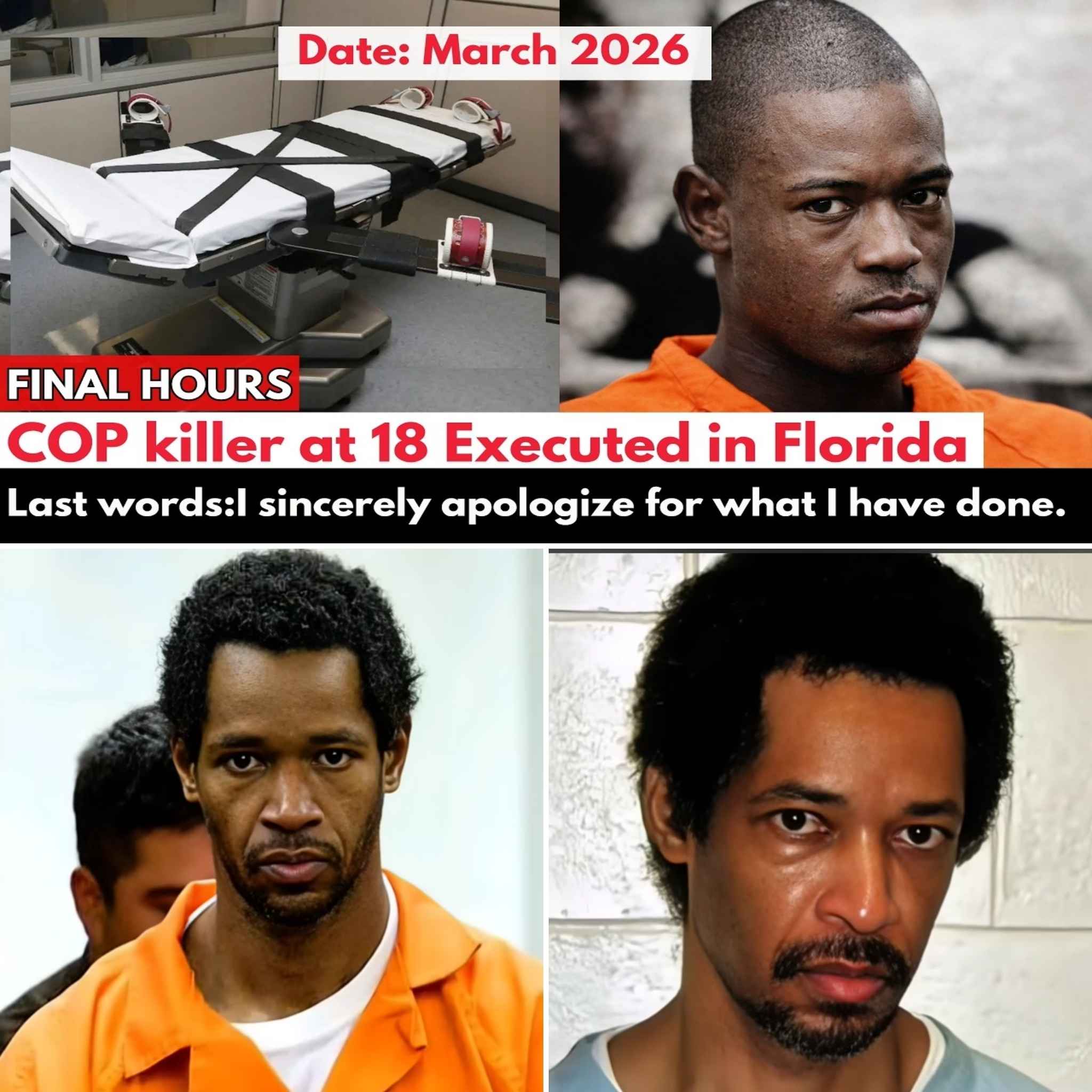
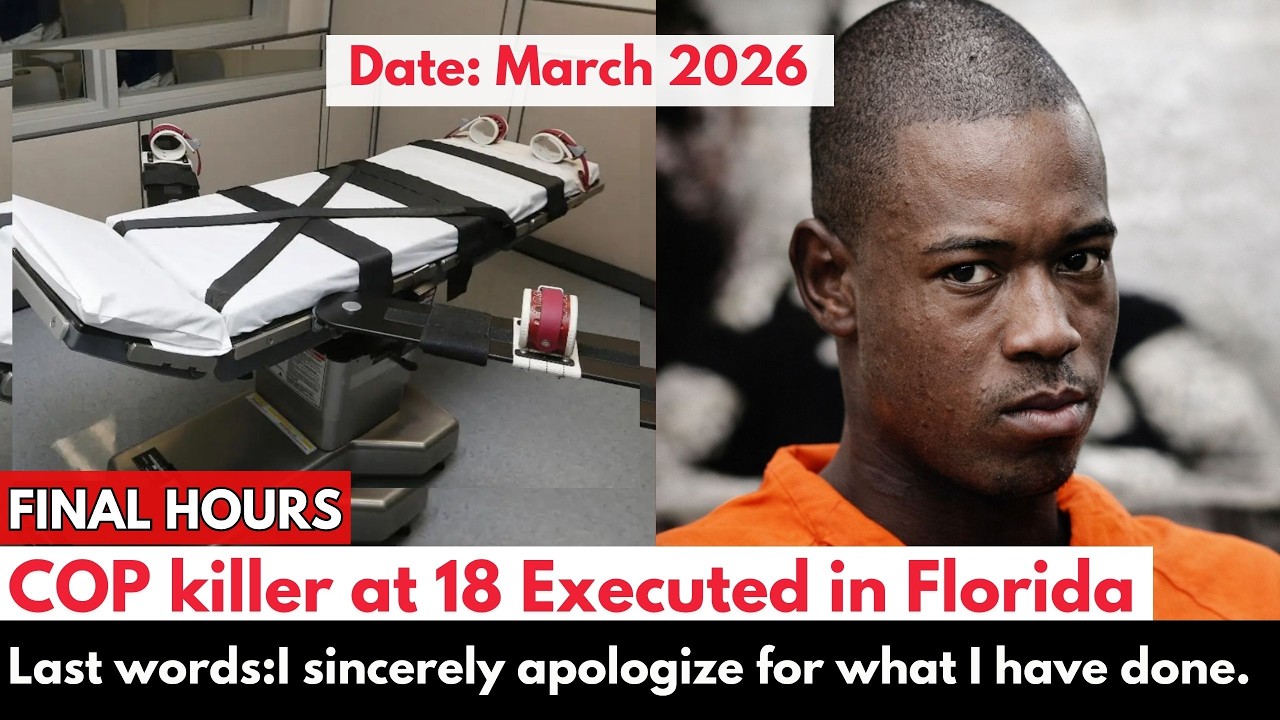
Kierce, 53, was pronounced dead by lethal injection at 6:24 p.m. at Florida State Prison. His death came 33 days after Governor Ron DeSantis signed his death warrant, accelerating the final appeals in one of the state’s longest-running capital cases.
In his final statement, Kierce looked toward the family of his victim, Sergeant Danny Thomas Parish, and apologized. “I sincerely apologize for what I have done,” he said. “There’s no way I can repay that.” His last audible words were, “Give me peace. Thank you.”
The execution was witnessed by more than a dozen members of Parish’s family and former colleagues, who had waited over three decades for this conclusion. Outside the prison walls, opponents held a vigil, ringing a bell as the procedure proceeded.
The case stemmed from a seemingly minor traffic violation on the night of January 18, 1991. Sergeant Parish, 29, pulled over a car driving the wrong way on a one-way street in Fort Pierce. The driver was 18-year-old Billy Kierce, who had no license and offered a series of false names.
Parish, a patient officer just three years into his full-time career, offered a simple resolution: provide a real name and receive three tickets. Kierce refused. When Parish moved to arrest him, a struggle ensued.
Kierce wrestled Parish’s service weapon from him and fired 14 times at point-blank range. Nine bullets struck the officer’s body; four more were stopped by his body armor. A taxi driver used Parish’s fallen radio to call for help, but the officer died shortly after at a local hospital.

Kierce was arrested the next day. His trial was moved to Vero Beach due to pervasive grief in Fort Pierce. In October 1991, a jury swiftly convicted him of first-degree murder and armed robbery.
The penalty phase revealed two starkly different portraits. Prosecutors emphasized the cold brutality of firing 14 rounds into a uniformed officer. The defense presented a childhood of profound neglect, fetal alcohol exposure, and cognitive limitations that left Kierce with the intellectual functioning of a young child.
Jurors recommended death by an 11-1 vote. A judge formally imposed the sentence, sending Kierce to death row at age 19. It was the beginning of a legal odyssey that saw his sentence overturned and reinstated over 17 rounds of appeals.
In 1995, the Florida Supreme Court threw out the original death sentence due to procedural errors. A new penalty trial was ordered. That 1996 proceeding unfolded with uniformed police officers packing the courtroom gallery daily.
The second jury unanimously recommended death. All subsequent appeals, including arguments citing U.S. Supreme Court rulings on executing the intellectually disabled and juveniles, were denied. Courts found Kierce, 84 days past his 18th birthday at the time of the crime, outside those protections.
Governor DeSantis’s signing of the death warrant in January marked a decisive turn. Under his administration, Florida has carried out executions at a record pace, with Kierce’s case among the fastest to move from warrant to execution.
His lead attorney, Paul Khalil, received the news while in a hospital planning hospice care for his dying father. The legal team was granted a mere 48-hour extension to file final appeals amidst this personal crisis. Khalil’s father died during the frantic preparation.
Final pleas to the U.S. Supreme Court for a stay, based on Kierce’s neurological immaturity and intellectual deficits, were denied without comment on Wednesday afternoon, clearing the path for the execution.
The execution itself took 22 minutes. Witnesses reported Kierce convulsed briefly after the lethal drugs were administered. A prison spokesperson stated the medical team followed protocol and carried out the execution in a “humane and dignified manner.”
For the Parish family, the moment ended a 35-year wait. Sergeant Parish, remembered as a dedicated officer who worked unpaid as a reserve for two years to earn his badge, left behind a wife, Martha. The community of Fort Pierce and law enforcement agencies across Florida had long rallied around his memory.
Kierce’s life, as documented in exhaustive school and court records, was a chronicle of systemic failure. Born to a teenage mother who drank during pregnancy, he was diagnosed with cognitive impairments early, functioned at an elementary school level, and begged police for food and shelter as a boy.
His defense argued his brain damage impaired his impulse control and ability to rationally process a police encounter. The prosecution maintained the sheer number of gunshots reflected a conscious, sustained intent to kill.
With Kierce’s execution, Florida has closed one of its oldest capital cases. The story of that January night in 1991—a routine stop, a sudden struggle, and two lives irrevocably shattered—has finally reached its legal conclusion, leaving behind enduring questions about justice, punishment, and the ghosts of a damaged past.
Source: YouTube