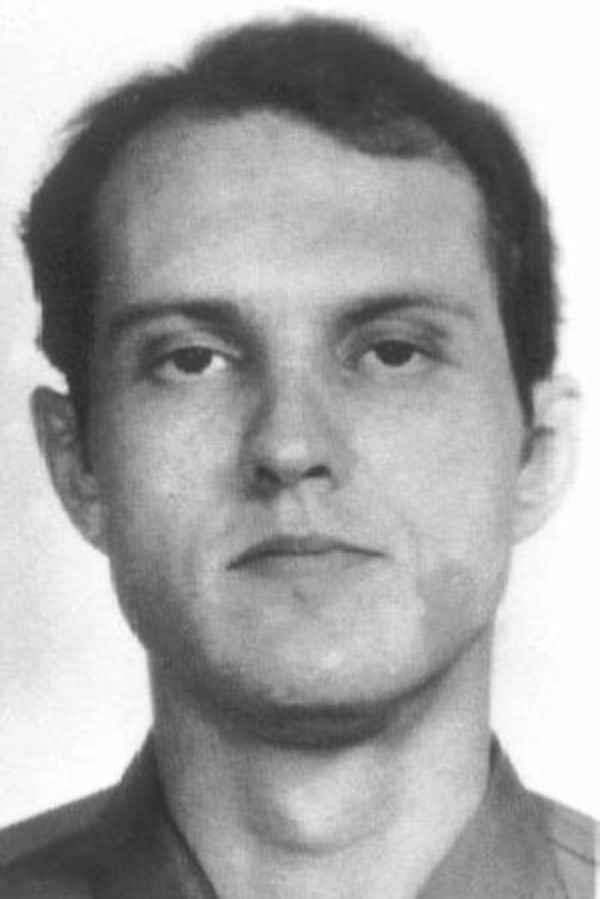
Jesse Joseph Tafero’s execution on May 4th, 1990, at Florida State Prison ended in a horrific malfunction that shocked witnesses as flames erupted from his head during the electric chair procedure. Convicted of murdering two police officers in 1976, his death ignited fierce controversy over capital punishment and justice’s imperfections in America.

On that tragic spring day, Taffero, 43, faced Old Sparky, expecting a swift death. Instead, a catastrophic error transformed his execution into a nightmare. The use of a synthetic sponge rather than a natural sea sponge caused electrical resistance, igniting flames that engulfed his head in black smoke and searing pain—a harrowing seven-minute ordeal that left witnesses, including family members of the slain officers, stunned and anguished.
The case at the center of this grim spectacle involved the brutal murder of two respected law enforcement officers: Philip A. Black, a Florida Highway Patrolman, and Donald Irwin, an Ontario Provincial Police Officer. Both men, aged 39, were gunned down at a quiet Florida highway rest stop during a routine vehicle check in 1976, a tragedy that devastated families and shook communities on both sides of the border.
Jesse Tafero, born in 1946 in New York, had a troubled past marked by crime and violence. His early life was fractured by family breakdown and lack of support. Prior convictions for armed robbery and a violent home invasion painted the portrait of a volatile individual. Despite this, questions lingered regarding the fairness of his conviction and the true perpetrator of the murders.
The day of the murders began with officers Black and Irwin noticing a suspiciously parked car containing Tafero, his partner Sonia “Sunny” Jacobs, their two children, and Walter Rhodes. Black’s detection of a handgun inside the vehicle triggered a routine stop, which spiraled into chaos. Rhodes testified that Tafero pulled the gun and fired, instantly killing the officers; Tafero denied this, claiming Rhodes was the shooter.

Forensics and witness accounts deepened the mystery. Gunpowder residue was found not only on Tafero and Rhodes but also surprisingly on Jacobs and her young son. A truck driver who witnessed the event insisted the initial shots came from the back seat, suggesting Jacobs might have fired a stun gun that incapacitated Black before Tafero took lethal action. This conflicting evidence muddied the prosecution’s case.
Walter Rhodes’s testimony shifted repeatedly. Initially implicating Tafero and Jacobs, he later recanted, further complicating the narrative. His bargains with prosecutors and inconsistent accounts sowed doubt about the conviction’s foundation. Meanwhile, prosecutors pushed for capital punishment, emphasizing Tafero’s criminal history and the heinousness of the crime during the 1976 trial.
The jury’s verdict sentenced Tafero to death and Jacobs to life imprisonment, but Judge Daniel “Maximum Dan” Futch overruled the recommendations, condemning both Tafero and Jacobs to death. This cold, harsh judgment intensified scrutiny over the justice system’s inflexibility and severity, particularly in cases marked by unclear evidence and conflicting testimonies.
As the years passed, the shadow of doubt deepened. Jacobs’s sentence was reduced to life imprisonment after the Florida Supreme Court found the judge had insufficient grounds to override the jury. She was eventually released after an appeals court revealed prosecutors withheld crucial exculpatory evidence. Jacobs dedicated her later life to healing exonerees, founding a center promoting meditation and resilience before her death in 2025.
The gruesome execution incident became symbolic among opponents of the electric chair, embodying the argument that such capital punishment methods are inhumane and prone to errors. Tafero’s agonizing death was not just a spectacular failure of technology but a stark spotlight on the moral and legal questions that haunt the death penalty debate in America.
The families of Black and Irwin endure a lifetime of grief, marked by annual commemorations and the enduring memory of two dedicated officers lost to violence. Their sorrow contrasts the ongoing controversy around Tafero’s guilt and the ethics of his brutal execution. This tragic saga challenges us to reconsider the true cost of justice administered by death.
Documentaries and films, including “In the Blink of an Eye” and “The Exonerated,” revisit this case as a cautionary tale of the justice system’s flaws. Journalists and authors analyze forensic inconsistencies and witness contradictions to unravel a complex web, where truth seems elusive, and swift judgment irreversible.
Tafero’s last meal, a modest steak with French fries and black coffee, and his final words, “I am innocent, but justice will come,” haunt the public consciousness. His plea echoes a broader call to reflect on the imperfections inherent in the pursuit of capital punishment—a call that remains urgen
t and unresolved decades later.
This case forces an examination of whether the justice system can navigate the fine line between punishment and mercy without sacrificing fairness. The horrific execution and ambiguous circumstances surrounding Tafero’s conviction serve as a grim reminder of the pitfalls when human error and judicial rigidity collide.
As debates over the death penalty continue nationwide, Jesse Tafero’s story stands as a stark emblem of controversy, pain, and the desperate need for reform. It questions not only the evidence that condemned him but also the ethics behind enforcing irreversible sentences amid lingering doubts.
The legacy of Jesse Tafero’s execution compels legal experts, civil rights advocates, and society to grapple with the life-and-death consequences of their decisions. It highlights the vital importance of scrutinizing evidence closely and ensuring that justice is not only swift but truly just.
In conclusion, the tale of Jesse Joseph Tafero—marked by tragedy, disputed guilt, and a gruesome death—remains an enduring, unsettling chapter in America’s capital punishment history. It challenges the notion of absolute justice and invites ongoing reflection on how society defines and administers justice in the gravest of circumstances.
Source: YouTube