A Florida courtroom descended into raw emotion as a judge formally sentenced Angel Gabriel Cuzho to death for the 2024 murders of his partner and her four-year-old daughter, marking the first capital sentence handed down in the United States in 2026. The defendant broke down in tears upon hearing the verdict, a stark contrast to the brutality of his crimes that left the sentencing judge herself pausing to compose herself.
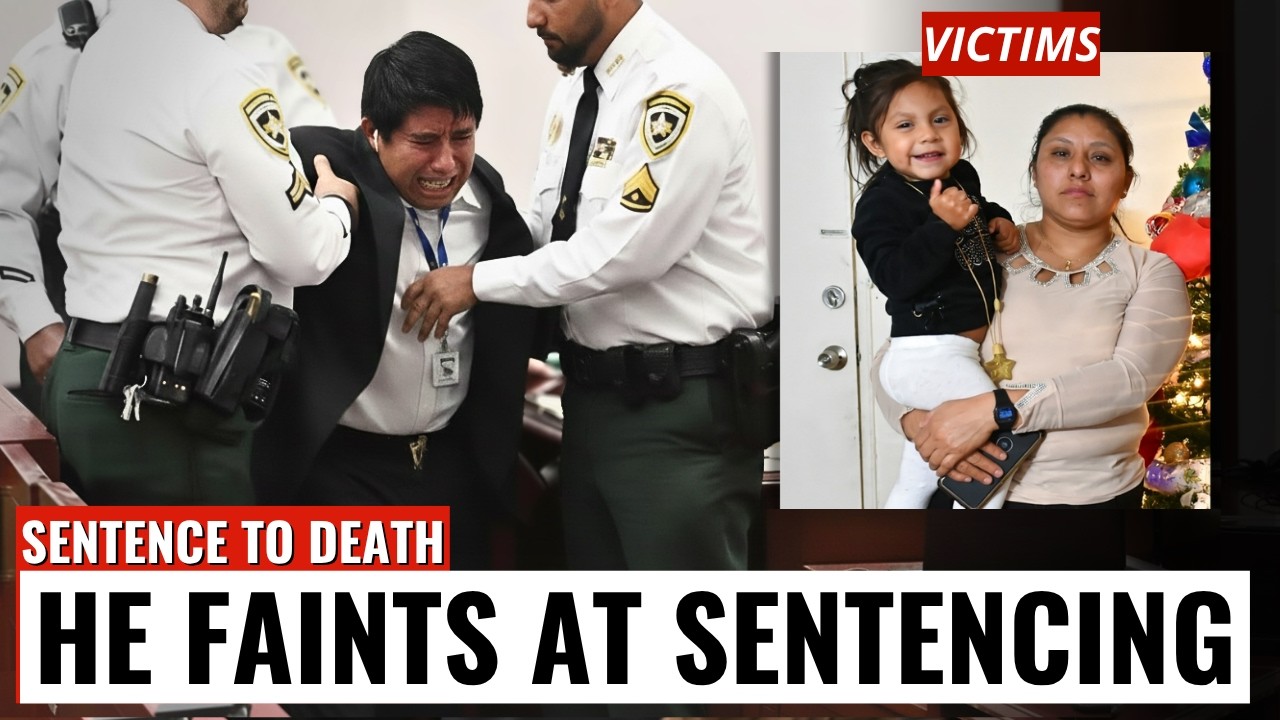
The sentence concludes a harrowing case that began on April 24, 2024, in a mobile home community in Hillsborough County. Amalia Coc Choc de Pec, 38, and her young daughter, Estrella Anastasia Pec Coc, were found brutally murdered in their home. Amalia’s body was discovered at the entrance, partially nude and covered by a tarp, while Estrella was found in a bathtub with the water still running.
Security camera footage from the neighborhood painted a chilling timeline of the final hours. It showed Amalia and Estrella leaving to help a friend, while Cuzho, consumed by what prosecutors described as “irrational jealousy,” made dozens of frantic calls to her. The family was later seen returning home together around 3:15 p.m.
Approximately twenty minutes later, neighbors reported hearing screams so intense that authorities said they could be heard the length of a football field. The footage showed Amalia attempting to flee before being dragged back toward the residence. The medical examiner would later note that both victims had defensive wounds on their hands.

After the attack, Cuzho changed clothes, packed a bag, and was captured on camera fleeing into nearby rural fields. A massive manhunt ensued, involving K9 units and aerial support across areas of strawberry fields and dense brush. He was apprehended the following morning after a brief foot chase.
During interrogation, Cuzho confessed in Spanish to the double homicide, detailing his actions and leading police to the murder weapon—a knife recovered from a trash can. The force of the attacks was so severe that it bent the blade. Prosecutors later revealed Cuzho had a criminal history in Guatemala, including allegations involving the deaths of two women.
The trial took a notable turn when Cuzho, who had communicated fluently in Spanish after his arrest, requested a K’iche’ language interpreter, claiming limited Spanish proficiency. The court approved the request at a cost of approximately $30,000 to the state. During his testimony, Cuzho claimed to have no memory of committing the murders.
This assertion formed the basis of his defense’s plea for a life sentence, arguing it was sufficient punishment for someone who allegedly could not recall his actions. The prosecution, however, presented the confession, the security footage, and graphic evidence to the jury, underscoring the premeditation and extreme cruelty.

On February 6, 2026, the jury recommended death, a sentence formally imposed by Circuit Judge Samantha Ward. While reading the sentence, Judge Ward was visibly affected, pausing multiple times as she described the murder of four-year-old Estrella. The emotional weight finally broke over Cuzho, who sobbed openly before being removed from the courtroom.
With the sentence now final, Cuzho was transferred on April 13, 2026, to the Florida Department of Corrections to begin his time on death row. Given the state’s average timeline of approximately 24 years between sentence and execution, his case may not conclude until around 2050, at an estimated cost of $24 million to taxpayers.
The case has reignited debates over the death penalty’s cost and efficacy, even as prosecutors and the victims’ families expressed relief at the outcome. For Amalia and Estrella’s relatives, the sentence closes a legal chapter defined by unimaginable loss, though the long appeals process ensures the case will remain in the public eye for decades to come.
Source: YouTube