A groundbreaking scientific investigation into the Shroud of Turin has concluded the image on the ancient cloth could only have been created by a burst of energy surpassing any known earthly power, reigniting the fierce debate over its origin. Researchers cite calculations requiring 34,000 billion watts of energy discharged in less than a forty-billionth of a second to chemically alter the linen’s surface, a phenomenon one physicist described as a “nuclear event.”
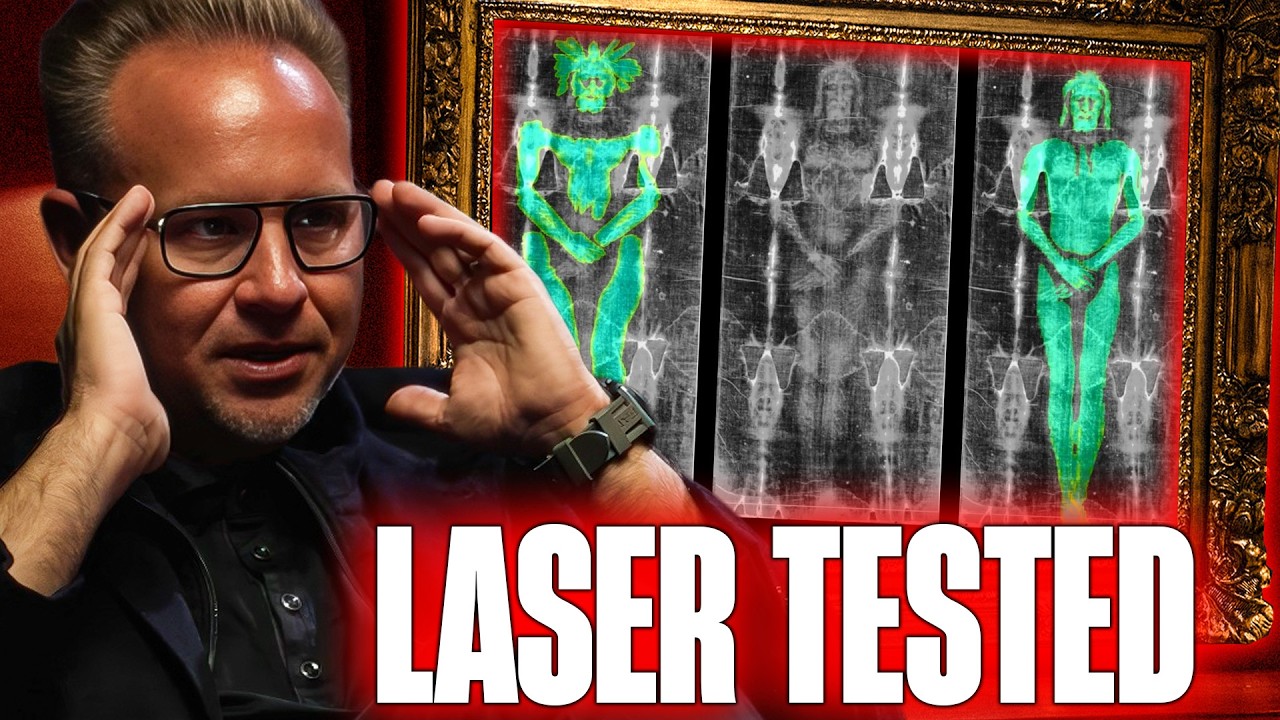
The findings stem from decades of analysis by teams including physicists from the U.S. Air Force Academy and Italy’s ENEA laboratories. Their work suggests the faint, straw-yellow image of a crucified man is not composed of paint, pigment, or dye, but is a superficial chemical change to the linen’s cellulose fibers, mere microns deep. Attempts to replicate the image using advanced lasers have only succeeded on postage-stamp-sized areas.
The investigation’s modern chapter began in 1976 when physicists Eric Jumper and John Jackson, using a VP-8 image analyzer designed for nuclear blast topography studies, made a startling discovery. A 1931 photograph of the Shroud, when processed, revealed encoded three-dimensional information, a holographic property found in no other known artwork or photograph. This 3D data indicates the image’s intensity correlates with the distance between the cloth and the body.
Further forensic analysis adds layers of complexity. Pollen studies by criminologist Max Frei identified 58 species on the cloth, with 38 unique to Jerusalem and blooming in spring. Hematology reports confirm the presence of human male blood, identified as type AB, a rare type found in only a small percentage of the global population. This same blood type is reportedly found on the Sudarium of Oviedo, a face cloth in Spain with a historical tradition linking it to Jesus.
The blood patterns on the Shroud correspond to wounds from scourging, a crown of thorns, and crucifixion, showing forensic accuracy. Scientists note the blood was present on the linen before the body image was formed, as the blood stains soaked through normally, while the image itself resides only on the highest fibers of the cloth weave. This sequence is critical to the proposed hypothesis.

Mathematician Bruno Barbaris has reportedly assigned a staggering probability of one in 200 billion billion that the cloth does not belong to the historical Jesus of Nazareth, based on the confluence of forensic, archaeological, and historical data. This statistical analysis points to the man in the Shroud being a Jewish male crucified under Roman practice in first-century Jerusalem.
The central scientific mystery remains the image formation mechanism. Physicist Paolo Di Lazzaro of ENEA, who led laser irradiation experiments on linen, stated the required energy pulse of 34,000 billion watts for a fraction of a nanosecond is far beyond current terrestrial capabilities. This has led proponents to describe the image as the product of a brief, intense flash of radiant energy emanating from the body itself.
Proponents of the Shroud’s authenticity argue that this aligns with a miraculous resurrection event. They propose that on the traditional date of April 5, AD 33, a transformative burst of energy restored life to the body, simultaneously creating the image and allowing the body to pass through the burial cloths without disturbing the blood stains. This would explain the collapsed, undisturbed position of the linen in the tomb as described in the Gospel accounts.
Skeptics continue to challenge these conclusions, often citing a controversial 1988 radiocarbon dating that placed the cloth in the medieval period. However, defenders of the Shroud’s antiquity contest those results, pointing to potential contamination from a fire in 1532 and later chemical analyses suggesting the dated samples were from a repaired section. The debate over carbon dating remains intensely polarized.

The Shroud, a 14.5-foot-long linen cloth bearing the front and back images of a man, has been housed in the Cathedral of Saint John the Baptist in Turin, Italy, since 1578. It is one of the most studied artifacts in history, subjected to photography, spectroscopy, and microscopic analysis by multidisciplinary teams seeking to unlock its secrets. Each finding seems to deepen the mystery rather than resolve it.
This latest synthesis of physics and forensics pushes the conversation into unprecedented territory. By framing the image formation in terms of a transient, ultra-high-energy event, scientists are forced to confront explanations that border on the inexplicable within known physical models. The Shroud continues to stand as an enigmatic challenge at the fraught intersection of faith, history, and empirical science.
The implications are profound, resonating far beyond academic circles. For millions, the Shroud is a sacred relic, a tangible connection to the foundational event of Christianity. For scientists, it represents an unsolved problem in photochemistry and physics. This new “nuclear event” hypothesis ensures the fragile linen will remain a focal point of controversy, wonder, and rigorous investigation for generations to come.
Source: YouTube