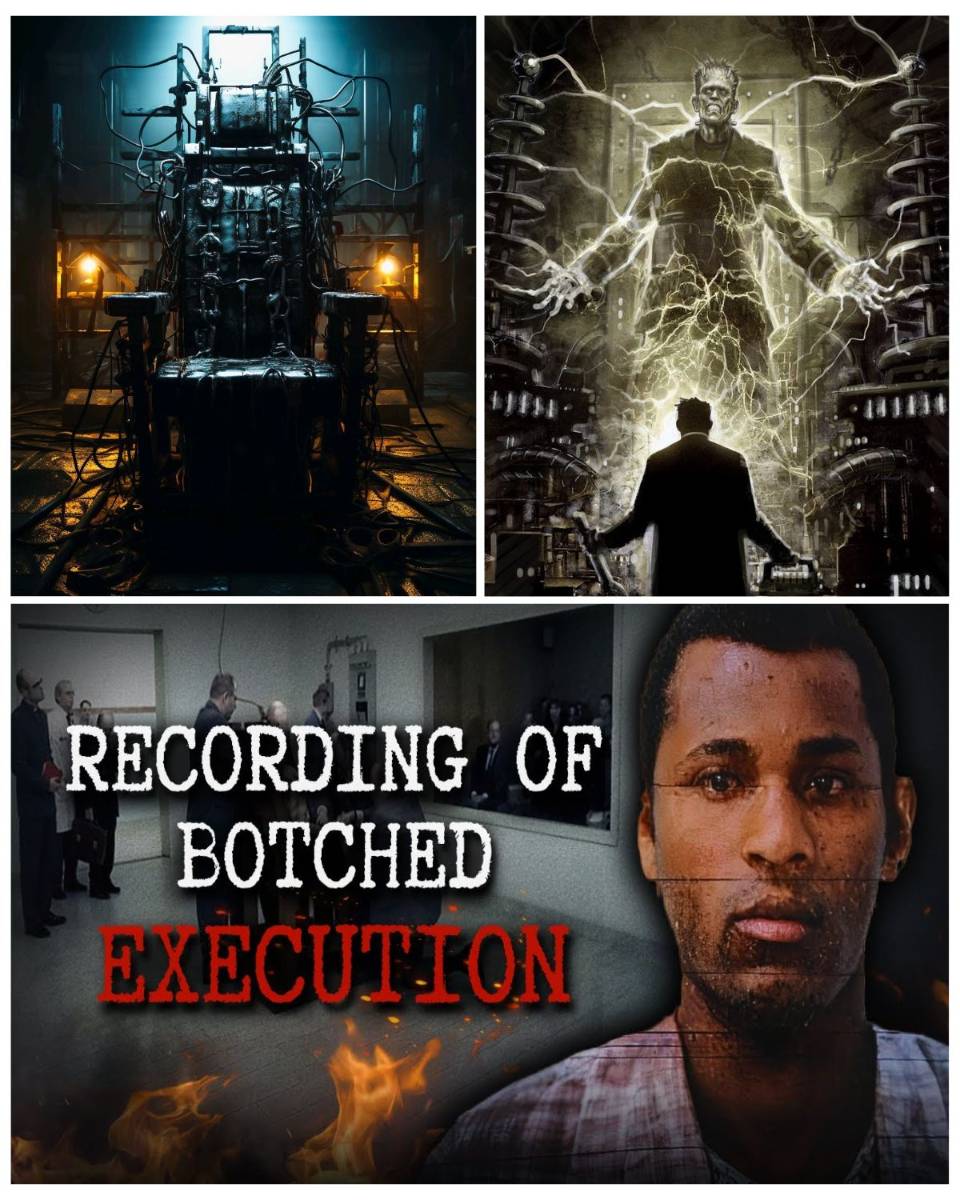
A previously secret state recording has revealed the horrific 19-minute death of a Georgia inmate who survived an initial electric shock, exposing what attorneys call definitive proof of torture in the execution chamber.
 The audio, obtained by defense attorney Mike Meers in 1998, documents the botched 1984 execution of Alpha Otis O’Daniel Stevens. It stands as one of the most catastrophic and debated recordings in American capital punishment history. For 15 years, Georgia systematically taped executions without public knowledge, a practice uncovered only through legal discovery.
On the tape, a state official’s calm narration starkly contrasts with Stevens’ prolonged suffering. The process begins with a countdown. “One, two, three,” a voice says, followed by the initiation of the current. Officials note a “small jerk” from Stevens before he sits still, believing the procedure is working as intended.
The recording meticulously tracks the mandated phases of electrocution. After the first cycle, a five-minute “lapse time” begins for the body to cool before a physician’s check. During this interval, the official’s tone shifts from routine to concern. He reports Stevens moving his head side-to-side, slumping, and appearing to relax—signs of life, not death.
“Commissioner, he is still moving his head,” the official says. At the lapse time’s end, the verdict is chilling. “It appears and the doctors agree with me that he’s still breathing.” The protocol demands a repeat of the entire electrocution, a decision met with palpable confusion on the tape about informing the witnesses.
A second, full cycle of electricity is administered. Again, Stevens’ body jerks violently. Again, officials observe head movement and possible breathing during the subsequent waiting period. “You’re going to have to have them check those sponges and check their connections,” a frustrated voice states, hinting at technical failure.
The atmosphere grows increasingly tense as the procedure unravels. After the second lapse time, physicians enter the chamber. Finally, at 12:37 a.m., nearly 20 minutes after the first shock, Stevens is pronounced dead. The curtains are drawn on a scene that remained hidden from the public for over a decade.
Stevens was executed for the 1974 murder of Roy Asbell, a crime committed after he escaped from jail. He confessed and received a death sentence in 1975. After nine years on death row and five failed appeals, his execution proceeded without clemency, culminating in the ordeal captured on tape.
This recording became a cornerstone legal exhibit. Attorney Mike Meers sought it to prove the electric chair constituted cruel and unusual punishment, aiming to save his client, Timothy Carl Dawson. The state handed over 23 such tapes, a secret archive of death.
Producer David Isay later helped bring the recordings to light, pulling the brutal reality of executions from the shadows. The Stevens tape, in particular, offers a minute-by-minute autopsy of a failed killing, showcasing the potential for error and agony in a sanitized state ritual.
Legal experts argue the audio provides irrefutable evidence that electrocution can cause extreme pain and conscious suffering, violating the Eighth Amendment. The calm, procedural dialogue underscores the bureaucracy of death, making the prolonged struggle of the inmate even more disturbing.
The tape’s existence raises profound ethical questions about state secrecy and accountability. Georgia’s policy of recording, ostensibly for training, created a hidden record of potential torture, only revealed under court order. This secrecy prevented public scrutiny for a generation.
Witnesses in the room that night saw the same events described on the audio. They observed the repeated surges and the officials’ hushed conferences. The recording now allows the world to hear what they saw, adding an auditory dimension to the horror.
Corrections officials on the tape adhere rigidly to a checklist, even as the situation deviates into chaos. Their focus on procedure over the evident suffering of Stevens highlights a system designed to prioritize process over humanity, regardless of outcome.
The technical failures suggested—faulty connections, dry sponges—are known risks of electrocution. These elements can cause inadequate current flow, leading to a slow, painful death from burns and internal cooking rather than instant unconsciousness.
For death penalty opponents, the recording is a powerful tool. It transforms abstract debate into visceral reality, forcing a reckoning with the mechanics of execution. It challenges the notion of a humane, clinical death administered by the state.
Proponents of capital punishment often argue the method is swift and just. The Stevens tape directly contradicts this, documenting a prolonged, visibly agonizing end that many would define as torture, irrespective of the inmate’s crimes.
The legacy of this recording endures in ongoing legal battles. While many states have abandoned the electric chair for lethal injection, this audio remains a haunting precedent, a benchmark for what constitutes cruel punishment under the law.
It also serves as a grim historical document, capturing the final moments of a man in the starkest terms. The audio strips away all abstraction, leaving only the sounds of a state-sanctioned death gone terribly wrong, a man fighting for breath long after he was supposed to be gone.
The state’s decision to repeatedly electrocute a living, breathing man, as coolly described on the tape, reveals the extreme lengths institutions will go to complete an execution once set in motion, despite clear evidence of its failure.
Today, the tape of Alpha Otis Stevens’ death is more than evidence; it is an auditory monument to a flawed system. It ensures that the story of his execution is not just a statistic, but a recorded testament to suffering, a permanent challenge to the morality of the machinery of death.