A photograph taken in a darkened Italian church in 1898 may have revealed a face unseen for nearly two millennia, sparking a scientific and theological mystery that persists to this day. The moment amateur photographer Secondo Pia developed the first photographic plate of the Shroud of Turin, he reportedly exclaimed, “Oh, my God,” upon seeing a clear, positive image of a crucified man emerge from what was considered a faint, ambiguous imprint.
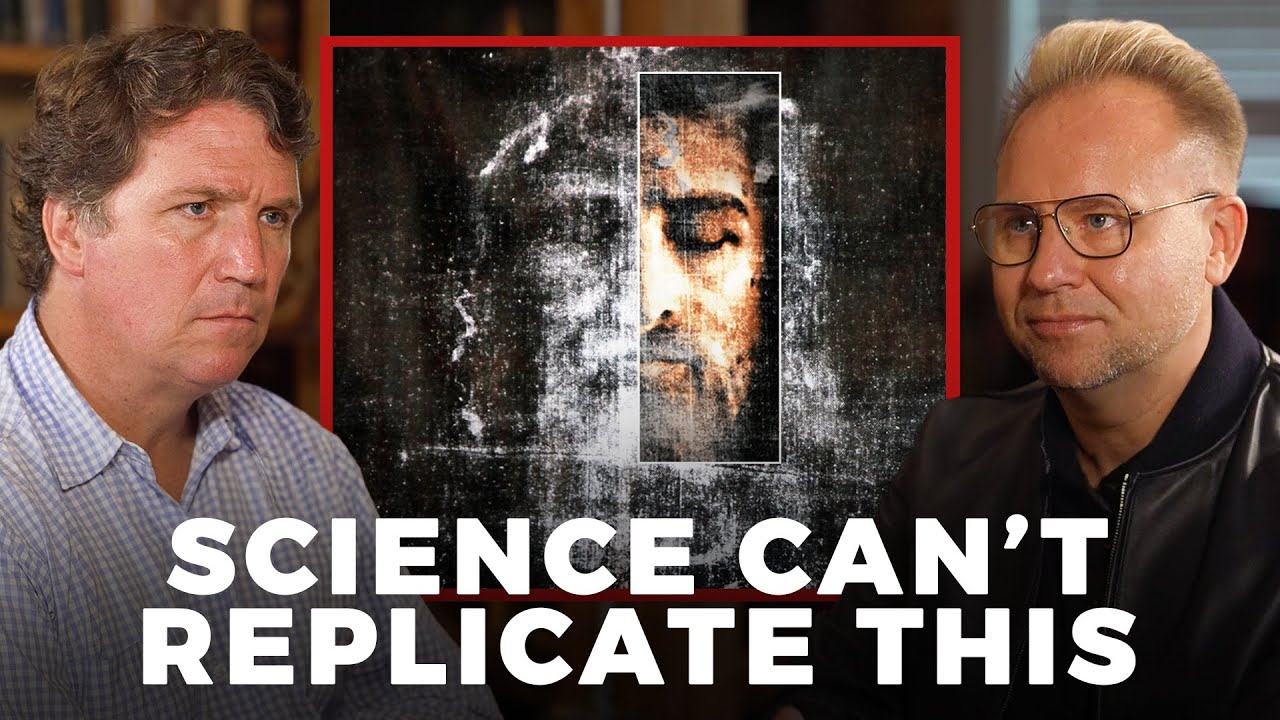
The Shroud, a length of linen long venerated as the burial cloth of Jesus Christ, had been publicly displayed only a handful of times before 1898. Pia’s photographic session was a monumental technical challenge, requiring generators to power lights in the electricity-free cathedral and exposures lasting up to twenty minutes on fragile glass plates. His resulting negative, however, transformed the faint markings into a startlingly detailed portrait.
In that darkroom revelation, the photographic negative acted as a positive image, presenting a visage with haunting clarity. For Pia, a devout believer, the experience was profound. He would have been the first person since the biblical apostles to potentially gaze upon the face of Christ, a moment of personal and historical shock captured in his spontaneous utterance.
The image ignited immediate controversy, with accusations of fraud leveled against Pia. Skeptics argued the new medium of photography was being manipulated. Yet the paradox of the shroud deepened: why would a forged image be clearer in a photographic negative than to the naked eye? This question began a century of rigorous scientific scrutiny that has only compounded the enigma.
Modern analysis reveals the shroud’s image is not composed of any known pigment, dye, or paint. The coloration is a superficial change to the linen fibers, merely two microns thick—so thin it could theoretically be shaved off. The bloodstains, identified as type AB, soaked fully through the cloth, but the body image did not, defying all known methods of artistic reproduction.

Forensic study estimates the man of the shroud suffered approximately 700 wounds, consistent with Roman flagellation and crucifixion, including markings suggestive of a crown of thorns. Pollen spores found embedded in the linen have been traced to plants native to Jerusalem, anchoring the cloth’s history to the correct geographic region.
The central scientific puzzle remains the image’s formation. A leading hypothesis from physicist Paolo Di Lazzaro suggests an intense, ultra-short burst of radiant energy. His team’s experiments indicate it would require something equivalent to 34,000 billion watts of power in a forty-billionth of a second to achieve the same superficial, chemical change on linen—a “flash” of light both unimaginably powerful and cold.
This theory, while compelling, remains unproven, leaving the mechanism a mystery. Reputable institutions, including Los Alamos National Laboratory and the Jet Propulsion Laboratory, have examined the shroud. None has been able to replicate the full spectrum of its characteristics, from the three-dimensional data encoded in the image’s intensity to the absence of directional brushstrokes.
The shroud stands alone among ancient textiles. No other burial cloth from the period contains a comparable human image. The Sudarium of Oviedo, a face cloth from Spain said to have covered the same head, shares the rare AB blood type, adding a tantalizing forensic link but no image. The Shroud of Turin remains uniquely enigmatic.

Its impact has reached far beyond laboratories. Theologian and writer C.S. Lewis, a convert from atheism, kept a photograph of the shroud’s face above the mantle in his Oxford bedroom. For him, it served as a daily reminder of the incarnate God, a tangible connection to the divine narrative he championed.
The Catholic Church, traditionally cautious, permits scientific study while refraining from a definitive pronouncement on authenticity. It treats the shroud as an icon of Christ’s passion, a focus for veneration rather than proof. This stance allows the investigation to continue across disciplines, from history to particle physics.
Today, the shroud resides in the Cathedral of Saint John the Baptist in Turin, Italy, rarely displayed. Public fascination, however, remains undimmed. Each new analytical technique brings fresh data, yet the core questions endure. How was the image made? What event could have caused such a precise, photochemical change?
The 1898 exclamation in the darkroom echoes through the decades. It was a moment where faith, art, and nascent technology collided, revealing a mystery woven into linen. The shroud challenges the boundaries of historical understanding and scientific explanation, ensuring its status as one of the world’s most studied and debated artifacts.
For believers, it is a sacred relic, a silent witness to the resurrection. For scientists, it is an unsolved case, a cold case file from antiquity demanding an explanation that satisfies rigid empirical standards. For millions, it remains a powerful symbol, a face from the depths of history that continues to provoke awe, skepticism, and the simple, human wonder captured in Secondo Pia’s timeless words.
Source: YouTube