RAYFORD, Fla. — A Florida execution chamber fell silent Thursday evening as James Dennis Ford, a man whose brutal 1997 double murder shattered a young family and launched a 28-year legal battle over his mental capacity, was put to death by lethal injection.
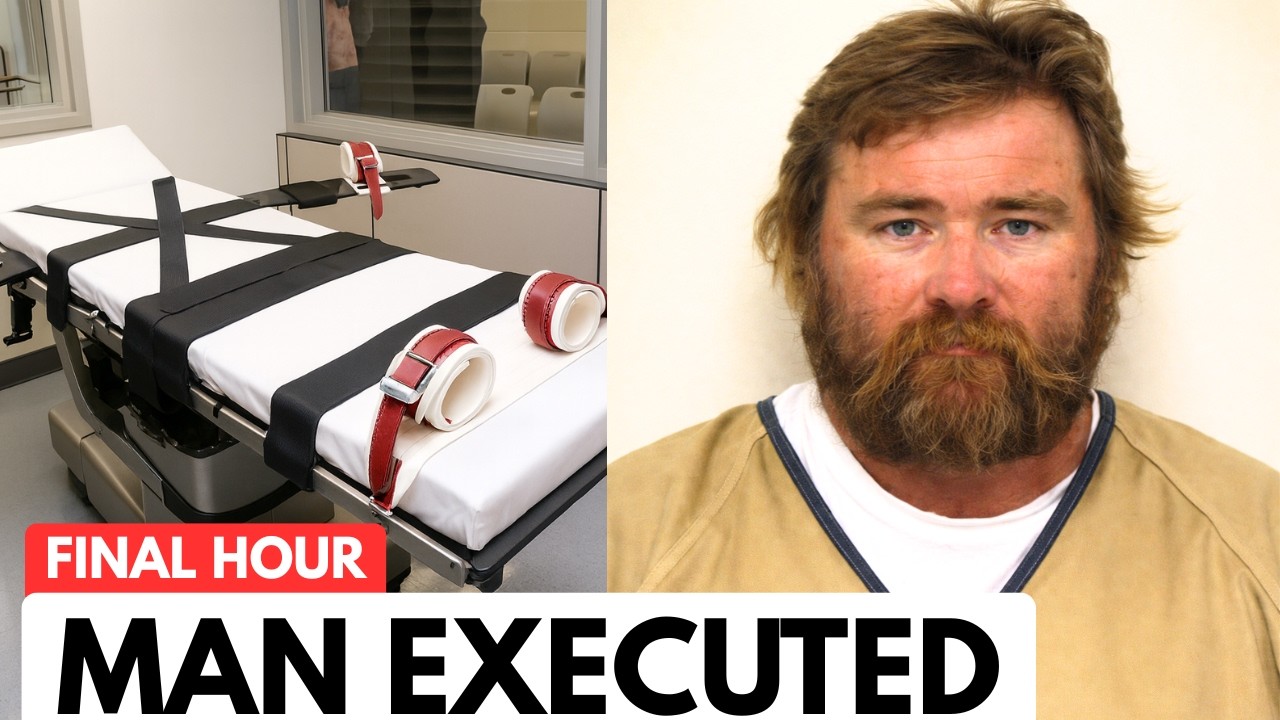
Ford, 64, was pronounced dead at 6:19 p.m. at Florida State Prison. He offered no final spoken words, leaving only a brief written statement that read, “Hugs, prayers, love. God bless everyone.” His execution, the first in Florida this year, closed a case marked by horrific violence, profound loss, and enduring questions about justice and culpability.
The crime that condemned him occurred on a deceptively peaceful Sunday, April 6, 1997, in Punta Gorda. Ford, then a coworker of 25-year-old Gregory Malnory, lured Malnory, his 26-year-old wife Kimberly, and their 22-month-old daughter Miranda to a remote section of a 7,000-acre sod farm.
What began as a fishing trip became a massacre. Ford shot Gregory Malnory in the head, beat him with a blunt instrument, and slit his throat. He then attacked Kimberly Malnory as she tried to flee, raping and beating her before shooting her. Their toddler, Miranda, was left strapped in the family truck for over 18 hours, discovered alive but covered in her mother’s blood.
“This is the day for final justice for Kim and Greg,” said Connie Anne, Gregory’s mother, after witnessing the execution. “I hope he burns in hell. 28 years.”
Ford’s conviction in 1999 was swift, built on overwhelming DNA evidence, the murder weapon, and his collapsed alibi. A jury voted 11-1 to recommend death for each murderer. The subsequent decades were consumed by appeals centered not on guilt, but on Ford’s mind.

His defense argued that at the time of the crimes, Ford had an IQ of approximately 65, functioned at the developmental level of a 14-year-old, and suffered from severe, uncontrolled diabetes and profound alcoholism fueled by grief over his father’s death. They contended these factors should shield him from execution.
Every court, including the U.S. Supreme Court this week, rejected that argument. The rulings held that legal protections for minors do not extend to adults with limited mental capacity. Governor Ron DeSantis signed the death warrant, clearing the final path.
In his final hours, Ford received visits from three family members. He consumed his last meal: steak, macaroni and cheese, fried okra, sweet potato, pumpkin pie, and sweet tea, a $40 comfort meal purchased locally as per Florida protocol.
As witnesses, including members of the Malnory family, looked on, Ford was administered a three-drug cocktail. Officials reported his chest heaved during the procedure before he was pronounced dead.

For the victims’ families, the moment brought a complex mix of relief and unresolved anguish. “I feel justice has been served,” said Dedra Parkinson, Kimberly’s stepmother. She also expressed a haunting sentiment, finding Ford’s manner of death “too peaceful” compared to the suffering he inflicted.
The most poignant voice belonged to Miranda Malnory, now an adult who grew up knowing her parents only through photographs and stories. “I grieve what could have been,” she said. In a staggering display of grace, she added, “Technically, my worst enemy is the person who did this, but I wouldn’t wish this on my worst enemy.”
Another life altered was that of Ford’s own daughter, Peggy Ford, who was 15 when the murders occurred. She described a lifetime of stigma but acknowledged the sentence. “There’s something in my heart that tells me he’s where he needs to be,” she said.
The execution of James Dennis Ford leaves behind a fractured landscape. It provides a definitive end for a legal process but no simple answers to the moral questions it raised about broken individuals, unforgivable acts, and the ultimate price demanded by the state. The silence he maintained to the end now hangs over a story of two families forever bound by a single, devastating afternoon.
Source: YouTube