In a historic and controversial move, the United States executed Daniel Lewis Lee today, marking the first federal execution in 17 years. Convicted of the 1996 triple murder of an Arkansas family, Lee maintained his innocence until his final breath, declaring, “You’re killing an innocent man,” as lethal injection was administered.

The execution took place at the United States Penitentiary in Terre Haute, Indiana, igniting fierce debate over justice, legal fairness, and the death penalty in America. Lee’s case involved racially driven violence, complex legal battles, and dissent from the victims’ own family members.
Daniel Lewis Lee, a known white supremacist, was convicted for the brutal murders of William and Nancy Mueller, and their eight-year-old daughter, Sarah Powell. Despite overwhelming evidence, Lee continued to assert his innocence during his final moments, stirring a polarized national conversation.
For over two decades, Lee sat on federal death row after a trial that raised fundamental questions about fairness. The jury sentenced Lee to death, but controversially spared the alleged mastermind, Chevi O’Brien Kho, who remains alive, serving multiple life sentences.
The case spotlighted deep divisions within the justice system. The presiding judge and lead prosecutor later admitted that the sentencing of Lee to death was flawed. Judge G. Thomas Eley openly questioned if true justice was ever served in this case.
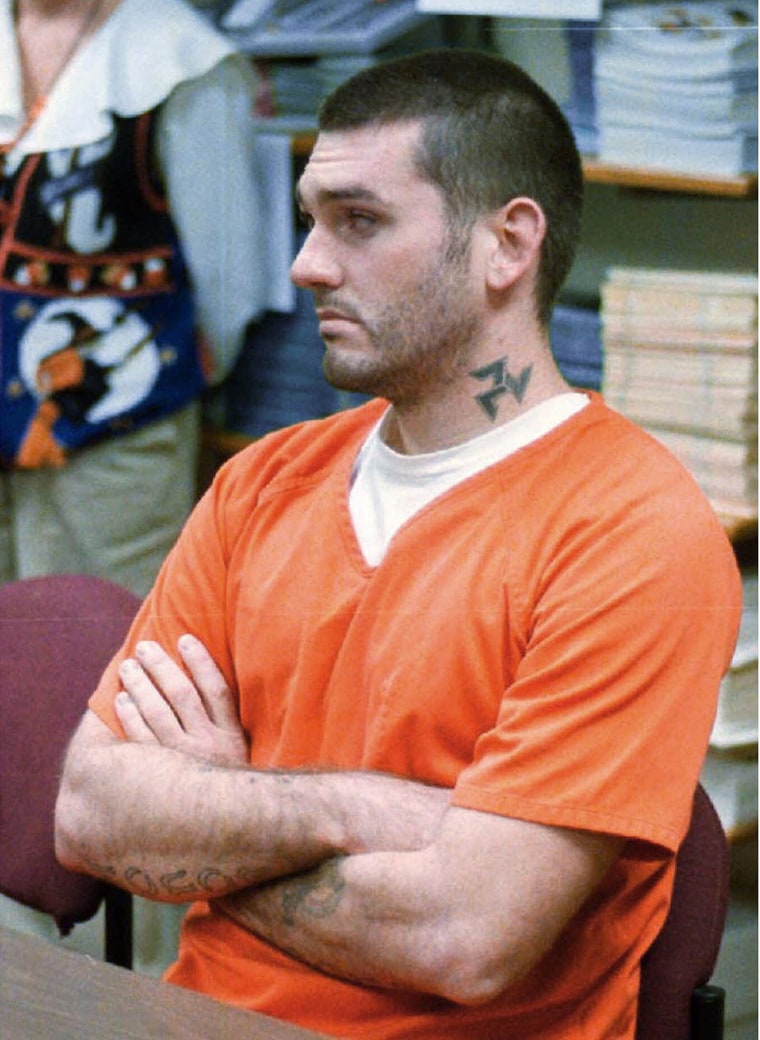
Opposition to the execution came not only from Lee’s legal team but also from the victims’ family. Erlene Peterson, grandmother to Sarah Powell, publicly begged President Trump to halt the execution, insisting this act did not honor her granddaughter’s memory.
Legal proceedings were further tightened by the COVID-19 pandemic, which severely limited Lee’s access to counsel. Appeals against his death sentence contended that crucial psychological assessments used to secure his conviction were unreliable.
The lethal injection protocol faced significant legal challenges hours before the execution was carried out. A federal judge temporarily blocked the procedure, only for the Supreme Court to lift the stay in a narrow 5-4 ruling in the early hours of the execution day.
Lee’s final moments were tense and silent, save for his resolute declaration of innocence. At 8:07 a.m. Eastern Time, the federal government pronounced him dead, closing a dark and divisive chapter in American capital punishment history.
This execution marks a disputed revival of federal death penalty enforcement under the Trump administration after a 17-year hiatus. The move reignited nationwide discussions about the death penalty’s morality, efficacy, and racial implications.

Daniel Lewis Lee’s origins from a troubled childhood to affiliation with violent white supremacist groups were chronicled in detail throughout his trial, exposing the complex interplay between ideology, violence, and systemic failure.
Despite the gravity of the crime, disparities in sentencing sparked outrage. Lee received the death penalty while Kho, the orchestrator of the murders, was sentenced to life terms. This uneven justice has been the source of ongoing legal and ethical controversy.
Legal experts and human rights advocates question the use of the psychopathy checklist (PCLR) in Lee’s sentencing, with even the administering psychologist later repudiating its validity as grounds for capital punishment.
The victims’ bodies were found months after their disappearance in a river, weighted with rocks, a horrific testament to the cruelty of the crime. The recovery spurred a massive investigation linking Lee and Kho to a broader network of extremist activities.
Kho’s continued incarceration at ADX Florence — a supermax prison — contrasts starkly with Lee’s execution, highlighting the unresolved questions about proportional justice and accountability within federal prosecutions.
In 2013, further actions against Kho’s relatives revealed ongoing criminal activity, with weapons and ammunition stockpiles uncovered, demonstrating the persistent threat posed by extremist groups tied to this case.
The execution, heavily televised and publicly scrutinized, has galvanized public opinion. Many ask if this decision delivers justice or perpetuates a cycle of inequity, touching off impassioned debates across political and social spheres.
As the nation grapples with this watershed moment, voices from all sides demand reflection on federal death penalty policies, the fairness of trials involving racial and ideological violence, and the impact on victims’ families.
Daniel Lewis Lee’s death raises profound questions about the application of ultimate punishment in America, the legitimacy of legal evidence and procedures, and the role of state power in life-and-death decisions.
This landmark execution will undoubtedly influence future federal death penalty cases, as advocates, legal professionals, and policymakers scrutinize the case’s profound complexities
and lasting implications.
The Mueller family’s tragedy remains a somber reminder of the human cost entwined with violent extremism. The victims’ legacy fuels unresolved dialogues that stretch well beyond the courtroom into the fabric of American justice.
With Lee’s execution, the federal government sends a polarizing message about crime, punishment, and redemption. The aftermath promises to influence legal reform debates and the national reckoning over capital punishment in the years ahead.