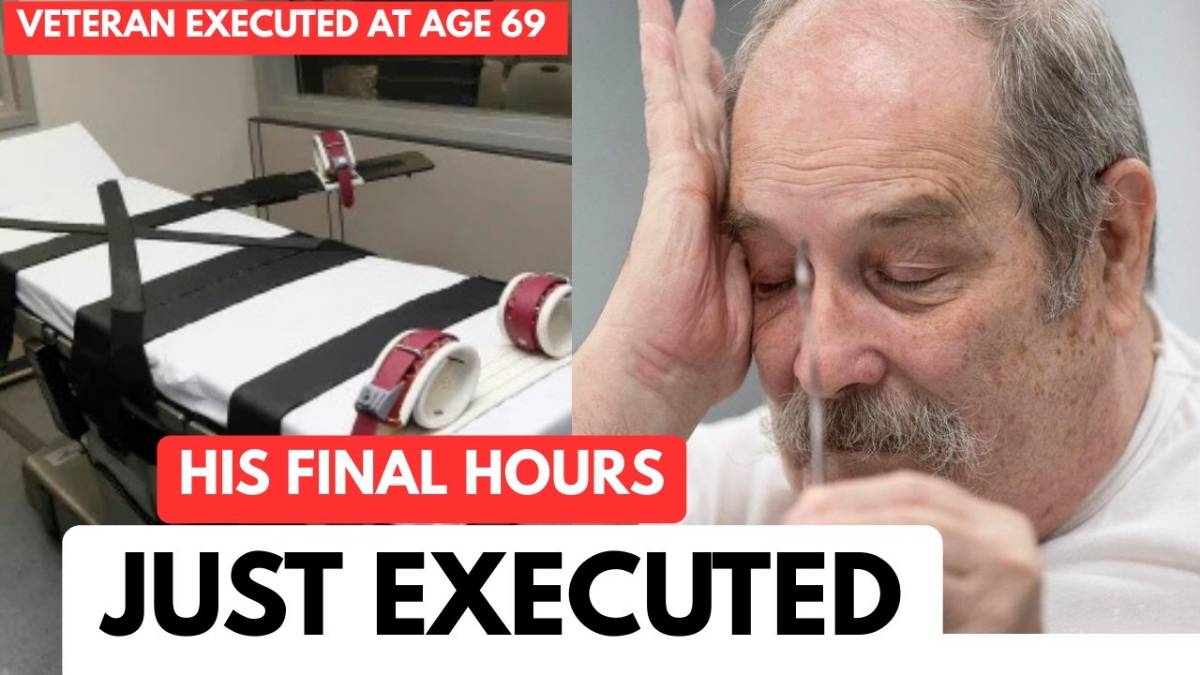
A Missouri man who maintained his innocence to his final breath was executed Tuesday evening for a 2009 double murder, ending a nearly 15-year legal saga that tested the boundaries of circumstantial evidence and capital punishment. David Hosier, 69, was pronounced dead at 6:11 p.m. after receiving a lethal injection at the state prison in Bonne Terre.
 His execution followed the denial of last-minute clemency by Governor Mike Parson. The governor cited Hosier’s refusal of a prior life sentence plea deal and his lack of remorse for the “callous” killings of Angela and Rodney Gilpin. The couple was found shot to death in their Jefferson City apartment on September 29, 2009.
Hosier spent his final hours saying farewell. “They at least let me say goodbye to all the guys,” he said in a recent recording, describing his final day. He shared a last meal of New York strip steak, baked potato, Texas toast, and Dutch apple pie before meeting with his spiritual adviser.
The path to the execution chamber began with a dangerous obsession. Hosier had a long-term affair with Angela Gilpin while she was separated from her husband. When she reconciled with Rodney and cut ties, Hosier’s threats escalated violently. Angela filed for an order of protection, writing she feared he would shoot her and her husband.
Prosecutors argued Hosier, a former firefighter and Navy veteran, was a scorned lover who executed his plan. After the murders, he fled Missouri, leading Oklahoma police on a high-speed chase. He exited his vehicle with arms spread, taunting officers to “shoot me and get it over with.”

Inside his car, police discovered an arsenal: 15 firearms, hundreds of rounds, a bulletproof vest, and a Sten submachine gun. A handwritten note read, “If you are going with someone, do not lie to them. If you do not, this could happen to you.” He claimed the guns were for hunting and denied writing the note.
At his 2013 trial, no direct forensic evidence like DNA or fingerprints tied him to the scene. Ballistics tests were inconclusive. The case rested on circumstantial evidence: his documented threats, the protection order, his immediate flight, and his motive. The jury deliberated less than two hours before convicting him.
Two days later, they recommended death. Appeals stretched over a decade, with state and federal courts consistently upholding the conviction. The U.S. Supreme Court declined to hear his case in August 2023, allowing Missouri to set an execution date.

In his final moments, Hosier remained defiant of his sentence. “I cannot honestly say that I believe in capital punishment,” he stated. “The state says it’s illegal for us to kill somebody… but yet they want to justify murdering somebody. I can’t see by any justification the death penalty as being anything but cruel.”
His health deteriorated sharply in recent weeks. Diagnosed with heart failure in May, he was hospitalized but deemed fit for execution. Special accommodations were made, including local anesthetic, due to his frail condition. His legal team and anti-death penalty advocates pleaded for mercy, citing his age, health, and military service.
Governor Parson was unmoved. He noted Hosier had “cruelly taken the lives of Angela and Rodney Gilpin” and refused to accept responsibility. The clemency denial paved the way for Tuesday’s execution. Eight of the victims’ family members witnessed the lethal injection, seeking long-awaited closure.

Strapped to a gurney, Hosier offered a final statement of love and continued innocence. “I leave you all with love. Now I get to go to heaven. Don’t cry for me. Just join me when your time comes,” he said. Witnesses described him as calm as the drug was administered.
Outside the prison, 52 protesters held a silent vigil. Reverend Jeff Hood, Hosier’s spiritual adviser, criticized the state’s action. “How can you go all over the state and teach children not to kill by killing?” he asked. Supporters of the death penalty argued it provided necessary accountability for heinous crimes.
For the Gilpin family, the execution ends a painful chapter. Rodney’s sister, Rilene Vaughn, said Hosier should be held accountable, though she acknowledged no punishment could bring her brother and sister-in-law back. The case has reignited debates on the death penalty’s application, especially without direct physical evidence.
David Hosier’s story is one of dramatic contrasts: a former firefighter and veteran who became a killer; a man who spoke of faith and heaven while the state carried out its ultimate punishment. His death marks Missouri’s second execution this year and the nation’s seventh, closing a case born from obsession that forever altered multiple lives.
Source: YouTube