A genetic bombshell has been unearthed from a Leicester car park, rewriting the foundational narrative of English monarchy and casting a shadow of illegitimacy over centuries of royal rule. The long-lost bones of King Richard III, confirmed by mitochondrial DNA in 2013, have now revealed a secret through paternal lineage that challenges the very legitimacy of the Plantagenet bloodline.
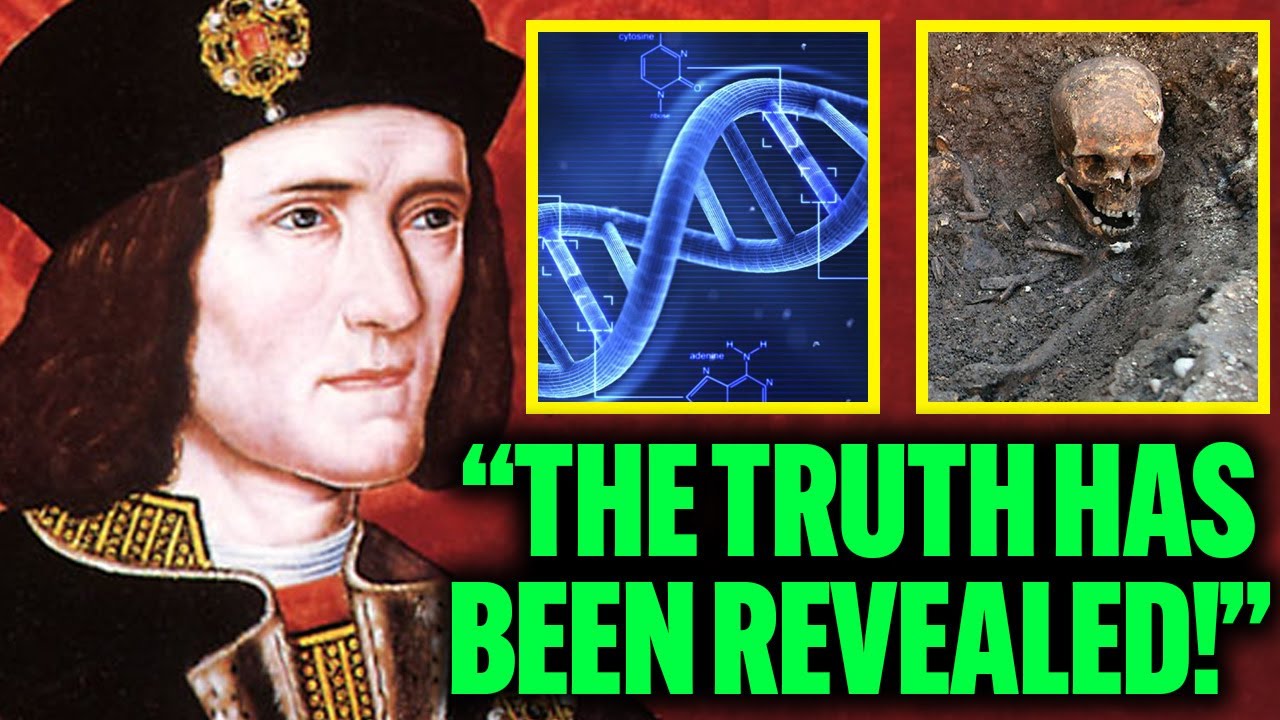
The discovery of the king’s skeleton beneath a municipal parking lot in 2012 was a historical sensation. The curved spine, the brutal battle wounds, and the radiocarbon dating all pointed to the last Plantagenet king. Mitochondrial DNA, passed from mother to child, provided the final, celebrated proof by matching two living descendants of Richard’s sister.
Yet, the other half of the genetic story has remained a closely guarded scandal. Analysis of the Y chromosome, passed exclusively from father to son, has yielded a result that shatters the accepted narrative. The Y chromosome from Richard III does not match that of living male-line relatives descended from Edward III.
This non-match indicates a “false paternity event”—a break in the direct male line—somewhere in the nineteen generations between Edward III and the present-day relatives. The implications are seismic, suggesting an affair, a secret adoption, or an undiscovered illegitimacy buried deep within the royal family tree.
The critical question now haunting historians is when this break occurred. If it happened in the generations immediately following Edward III, it means the later Plantagenet kings, including Richard III and his rivals in the Wars of the Roses, may not have been the true biological heirs to the throne they fought so brutally to claim.
Their entire right to rule, based on divine sanction and unbroken blood descent from William the Conqueror, could have been founded on a genetic lie. The decades-long conflict between York and Lancaster may have been fought over a crown to which neither house had a pure hereditary claim.
Alternatively, the break could have occurred much later in the lineage of the modern-day relatives tested. This scenario would leave Richard’s own claim intact but would still expose a monumental secret within the extended royal family. The DNA evidence confirms the scandal exists but leaves the precise culprit tantalizingly out of reach.

This revelation adds profound irony to Richard’s own story. Historical propaganda, amplified by Shakespeare, painted him as a usurping monster who seized the throne from his nephews, the Princes in the Tower. Now, science suggests his own hold on that throne, and that of his entire dynasty, may have been genetically flawed from the start.
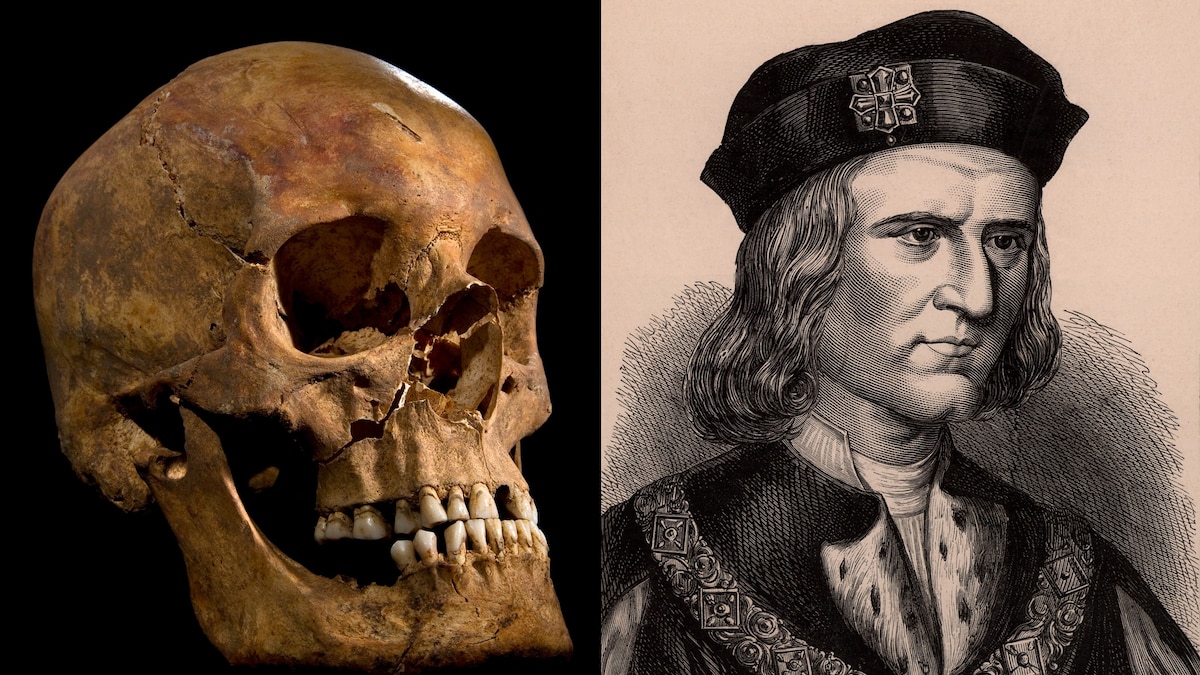
Beyond the genetic shock, the physical remains have systematically dismantled the Tudor-era caricature of the king. Forensic analysis confirms he had scoliosis, causing an uneven posture, but he was not the villainous hunchback of legend. His bone structure shows he was a physically capable and active warrior.
Isotopic analysis of his bones reveals a life of extreme privilege in his final years, with a diet rich in luxury game and an alcohol intake estimated at a bottle of wine per day. A forensic facial reconstruction, informed by the skull’s structure and genetic data, shows a man with blue eyes and blond hair, bearing a composed, intelligent, and weary expression.
His death was brutally clear. Eleven wounds, including three potentially fatal blows to the skull after his helmet was lost, tell of a king who fought on foot to the bitter end at Bosworth Field. He was not the coward of myth but a commander who fell in the chaos of melee, his body subjected to posthumous humiliation.
The combined evidence paints a portrait far more complex than the simple tyrant of history books: a physically resilient man, a product of relentless dynastic conflict, whose very bloodline is now questioned. The discovery forces a fundamental reckoning with how monarchy legitimizes itself.
For centuries, the right to rule was inextricably linked to blood. The Wars of the Roses were a bloody testament to this principle. The DNA from Richard III’s bones now suggests that principle was potentially compromised, exposing a fault line in the bedrock of English royal history.
This is not merely a historical curiosity. It challenges the narratives that have underpinned monarchical authority for generations. The king’s remains have delivered two truths: one that confirms his identity, and another, far more disturbing, that undermines the genetic premise of his dynasty’s power.
The full story, as written in bone and gene, remains partially obscured. But the central, unsettling fact is now incontrovertible. A secret hidden for over five centuries has been exposed, revealing that the hallowed blood of kings may not have flowed as purely as the history books claimed.
Source: YouTube