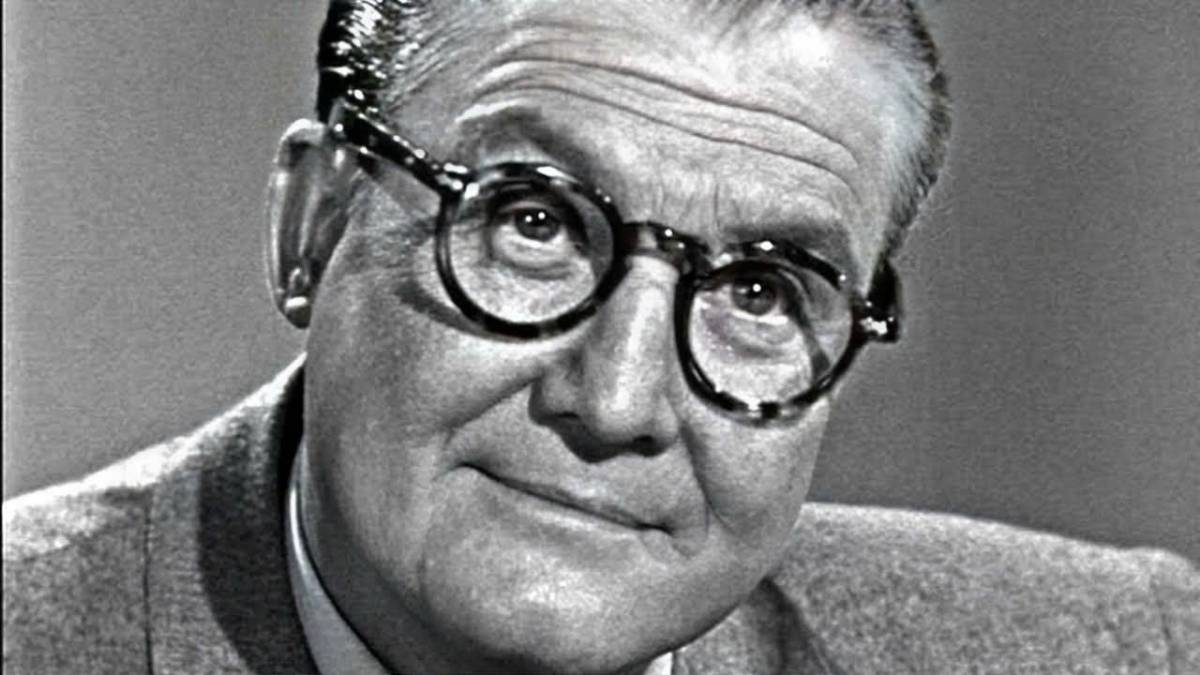
LOS ANGELES, July 1, 1959 — The man who taught a generation to believe a hero could fly was laid to rest today in a service of shocking and profound silence. George Reeves, the beloved star of television’s “Adventures of Superman,” was buried with only a handful of mourners present, a stark contrast to the adoration of millions of children who saw him as invincible.
 The funeral at the Wayside Chapel of the Gates Funeral Home was a ghostly affair. His mother, Helen Bessolo, attorney Jerry Giesler, and a few close friends constituted the entire gathering. No major Hollywood stars attended. The media coverage was scant, and the industry that made him a household name had utterly turned away.
This lonely farewell followed a death shrouded in mystery and scandal. In the early hours of June 16, Reeves was found dead of a gunshot wound in the upstairs bedroom of his Benedict Canyon home. A .30 caliber Luger was found near his body, wiped clean of fingerprints.
Official police investigators quickly ruled the death a suicide. They cited career frustration and personal stress as motives. The headlines were blunt, shocking a public that could not reconcile Superman with such a desperate, final act.
Yet from the beginning, the facts seemed to contradict the official story. Guests downstairs, including his fiancée, Leonore Lemmon, reported hearing only a single gunshot. Lemmon’s alleged remarks before and after the shot fueled immediate suspicion among investigators.
“He’s gone upstairs. Just wait,” Lemmon reportedly said. After the shot rang out, she allegedly added, “See, I told you.” Nearly an hour passed before police were called, a critical delay that has never been fully explained.
A second autopsy, commissioned by Reeves’s mother, noted unexplained bruises on his body. The absence of fingerprints on the weapon and a bullet hole in the floor beyond where he lay added to a growing list of troubling inconsistencies.

Theories began to multiply almost immediately. Was it a tragic accident during a heated argument? Was it a deliberate act of foul play? Or was it, as authorities insisted, a despairing actor taking his own life? No definitive proof has ever emerged.
The vacuum of clear answers was filled by Hollywood’s darkest whispers. Reeves’s personal life placed him at the center of a dangerous liaison. For years, he had been romantically involved with Toni Mannix, the wife of MGM studio executive Eddie Mannix.
Eddie Mannix was a formidable and feared figure, a fixer with rumored connections to organized crime. The affair was an open secret, and its end—when Reeves became engaged to Lemmon—reportedly created intense friction and threats.
This connection, many believe, is the key to understanding the deserted funeral. To publicly mourn George Reeves was to potentially align against powerful, vindictive interests. In an industry built on image and influence, fear became the prevailing emotion.
Attending could have been seen as taking a side in a silent war. It could have meant professional suicide in a town where Eddie Mannix held considerable sway. The absence of his “Superman” co-stars was particularly noted, a testament to the climate of intimidation.

Beyond the fear, there was a pervasive neglect. Typecasting is a common Hollywood curse, but for Reeves it was a life sentence. After donning the cape in 1951, the industry could no longer see the actor, only the icon.
He struggled for years to break free, taking minor roles like the one in “From Here to Eternity,” which was nearly cut from the film for fear audiences would laugh at Superman in a army uniform. His pitches for new projects were uniformly rejected.
“I love this role, but sometimes it feels like a cage,” he confided to co-star Jack Larson. By 1959, at 45, he was famous, financially insecure, and artistically stifled. Hollywood had already moved on, leaving him professionally isolated.
His mother, Helen, channeled her grief into a relentless quest for truth, not ceremony. “I don’t care about ceremony. I only want justice for George,” she stated. Her fight meant a quiet funeral, as resources and focus were directed toward investigation.
The legacy of George Reeves is a paradox of enduring iconography and unresolved tragedy. Just one year after his death, he received a posthumous star on the Hollywood Walk of Fame. His portrayal remains the definitive Superman for his generation.

Yet the questions persist. Friends like Rory Calhoun and colleagues such as Gig Young openly doubted the suicide ruling. Books like “Hollywood Kryptonite” have meticulously detailed the case for foul play, pointing fingers at multiple parties with motive.
The 2006 film “Hollyland,” starring Ben Affleck as Reeves, dramatized the four competing theories: suicide, accident, a crime of passion, or a contract killing. It captured the essence of a man crushed by the very symbol that made him great.
In 2023, a CGI recreation of his Superman in “The Flash” sparked backlash, proving his story still holds powerful resonance. It was a reminder that the man inside the cape was human, vulnerable, and ultimately failed by the world he entertained.
Today’s silent service stands as a chilling indictment. It reveals an industry capable of building up idols and then abandoning them at the first sign of scandal or inconvenience. George Reeves gave America a hero, but in his final hour, heroism was in desperately short supply.
The case remains officially closed, yet forever open in the court of public opinion. The truth of what happened in that bedroom died with George Reeves. What remains is the image of a hero and the haunting silence that followed him to his grave.
Source: YouTube