A seismic shift in the religious and political landscape of Jerusalem is underway as a centuries-old Jewish religious council takes concrete, unprecedented steps toward the construction of a Third Temple, a move with explosive implications for global faiths and Middle Eastern stability. The re-established Sanhedrin, a council of Jewish sages, is actively executing a multi-phase plan that many believers interpret as the direct fulfillment of ancient biblical prophecy, setting the stage for a potential international crisis.
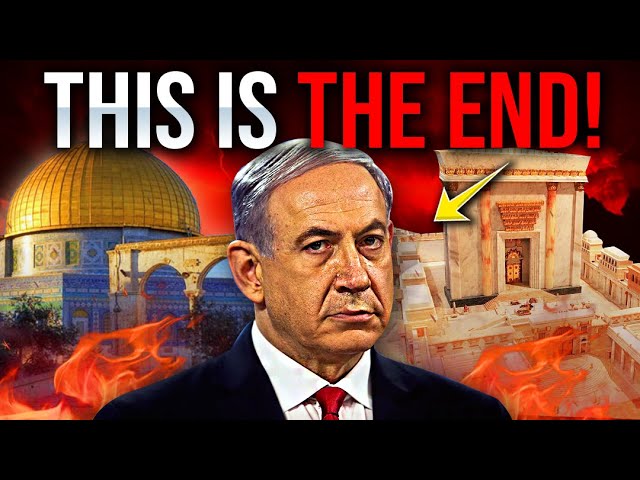
The core of the controversy lies on the Temple Mount, known to Muslims as Haram al-Sharif, the most contested religious site on earth. For Judaism, it is the location of the First and Second Temples; for Islam, it houses the revered Al-Aqsa Mosque and the Dome of the Rock. The Sanhedrin’s efforts directly challenge the fragile status quo that has governed the site for decades, where Jewish prayer is currently prohibited.
In a development that has stunned religious observers, the council has successfully imported five flawless red heifers from the United States to a secret location in Israel. According to the Book of Numbers, the ashes of a perfectly red, unblemished cow are essential for the ritual purification required to reconsecrate the Temple site. Their arrival and maturation are seen not as symbolic but as a critical logistical hurdle now cleared.
“The ceremony of the red heifer needs to be performed on the Mount of Olives, in a place that would have looked directly into where the Temple stood,” stated Rabbi Shmuel Rabinovitch, a figure involved in the preparations. Sources within the movement indicate the purification ritual could be attempted as soon as the Passover or Shavuot festivals in 2024, once the animals reach the required age of three years.
Parallel preparations are advancing rapidly. The Sanhedrin has overseen the cultivation of specific plants and forests to replicate the agricultural conditions of the ancient Temple era for use in rituals. Furthermore, intensive training programs are underway for kohanim, descendants of the priestly class of Aaron, instructing them in the intricate sacrificial rites and use of Temple implements not practiced for nearly two millennia.

Archaeological claims fuel the movement’s historical assertions. Proponents frequently cite the work of British archaeologist Robert Hamilton, who, after a 1927 earthquake damaged the Al-Aqsa Mosque, reported discovering a mikveh—a Jewish ritual bath—beneath the structure. This, they argue, is definitive proof of prior Jewish Temple foundations on the site, a point of intense historical and political dispute.
The political ramifications are immediate and severe. Any attempt to alter the status of the Temple Mount would be viewed by the Palestinian Authority and the entire Muslim world as a catastrophic provocation, likely triggering severe unrest. Jordan’s Islamic Waqf administers the site under a long-standing arrangement, and the Israeli government has historically acted to enforce a ban on Jewish prayer there to maintain order.
Internationally, the developments are being watched with profound alarm. Evangelical Christian circles interpret the Temple rebuilding as a prerequisite for biblically foretold end-times events, including the rise of a figure they associate with the Antichrist and the final battle of Armageddon. This theological perspective adds a volatile layer of global religious fervor to an already incendiary territorial dispute.

The Israeli government remains officially detached from the Sanhedrin’s activities, which private activists and religious figures conduct. However, the group’s accelerating practical preparations create a tangible new reality on the ground, increasing pressure on authorities and threatening to ignite a religious conflagration. The state faces an impossible dilemma: enforcing the law to prevent violence or acquiescing to a growing religious-nationalist movement.
Financial and logistical obstacles remain immense. Constructing a massive Temple complex in the heart of Jerusalem’s Old City would require unimaginable engineering, the displacement of existing structures, and billions in funding, potentially from foreign donors, which would itself create new geopolitical dependencies and tensions.
As the red heifers mature and priestly training intensifies, the region holds its breath. The movement is no longer discussing theoretical prophecy but is engaged in actionable, material preparation. The coming months, particularly around the spring religious festivals, are now seen as a critical flashpoint, with the potential to reshape the Middle East and fulfill prophecies that have waited two thousand years.
Source: YouTube