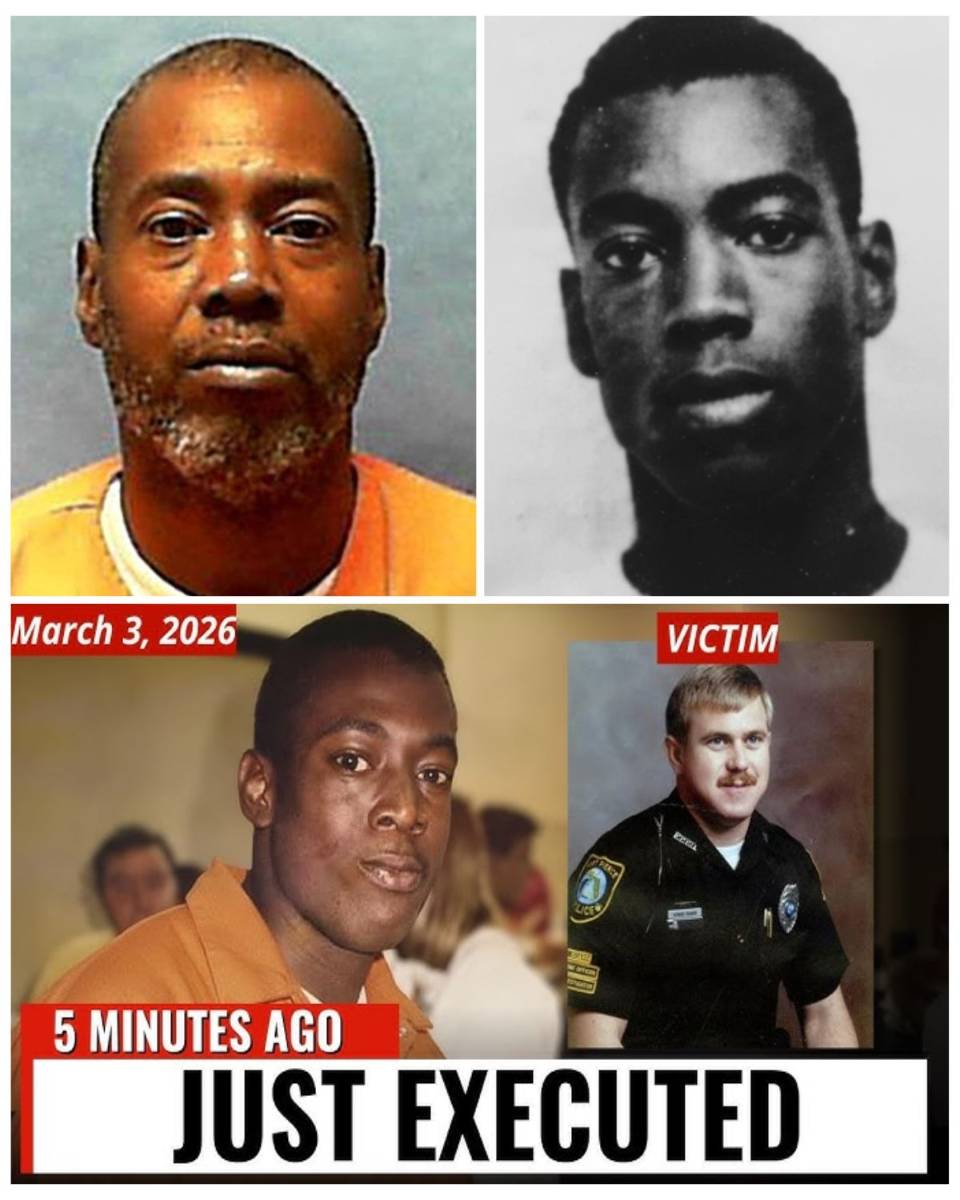
Breaking news from Florida: Convicted cop killer Billy Leon Kearse was executed by lethal injection at Florida State Prison on March 3, 2026, marking the end of a 35-year legal battle. Kearse, who murdered Officer Danny Thomas Parish during a routine traffic stop, faced justice after multiple appeals failed. This execution underscores the state’s resolve in delivering long-delayed retribution for a fallen hero.
 The tragedy unfolded on a quiet night in Fort Pierce, Florida, when Officer Parish spotted a vehicle driving the wrong way down a one-way street. Pulling over the dark blue 1979 Monte Carlo, Parish encountered 18-year-old Kearse, who was nervous and unlicensed. What started as a standard traffic violation quickly escalated into chaos as Kearse panicked over his probation status.
Suspecting trouble, Parish radioed the license plate and requested identification, but Kearse provided false names. The officer ordered him out of the car for arrest, leading to a fierce struggle. Blows were exchanged in the dim streetlight, and in the heat of the fight, Kearse seized Parish’s service weapon, firing 14 shots at point-blank range.
Nine bullets struck Parish directly, with four more lodging in his bulletproof vest. The officer, a dedicated family man and veteran, collapsed on the asphalt as Kearse fled the scene in his car. A passing taxi driver heard the gunshots and used Parish’s radio to summon help, but it was too late; Parish was pronounced dead upon arrival at the hospital.
Investigators traced the license plate that same night, leading to Kearse’s swift arrest. He confessed to the crime, admitting he fired in a panic to avoid returning to prison. The case gripped the community, with Parish’s funeral drawing thousands, including fellow officers and citizens, highlighting the profound loss of a respected law enforcement figure.

Parish, born in 1961, had a storied background, serving in the U.S. Navy and National Guard before joining the police force in 1988 alongside his brother. His death in the line of duty fueled widespread outrage, turning the trial into a national spectacle. In 1991, a jury convicted Kearse of first-degree murder and armed robbery, recommending the death penalty by an 11-1 vote.
However, the Florida Supreme Court overturned the sentence in 1995 due to judicial errors in jury instructions. A retrial in 1996, relocated to avoid bias, saw the state emphasize the crime’s brutality and Parish’s exemplary character. Kearse’s defense highlighted his troubled upbringing, including fetal alcohol effects, an absent father, and an IQ of 79, arguing he was emotionally immature at 18.
Despite these pleas, the new jury unanimously sentenced him to death. Governor DeSantis signed the death warrant in 2016, compressing appeals into a frantic 33 days. Kearse’s attorneys decried the rushed process, but all bids for clemency were denied, paving the way for the execution.

On March 3, 2026, Kearse awoke at 6 a.m. for final visits, including with a spiritual adviser. He declined a special last meal, opting for the standard prison fare, and remained composed throughout the day. At 6 p.m., he was escorted to the execution chamber, strapped to the gurney, and given the opportunity for a final statement, which he declined.
The lethal injection began at 6:02 p.m. with the administration of a powerful sedative. Kearse closed his eyes and breathed heavily, showing no response during the consciousness check at 6:08 p.m. By 6:15 p.m., he was pronounced dead, concluding a 13-minute procedure that brought closure to Parish’s widow after decades of waiting.
For Parish’s family, the execution represented bittersweet justice. His widow, now 60, expressed relief mixed with sorrow, noting, “I don’t like wishing death on anyone, but this is the only way I see justice.“ Many relatives had passed away during the long wait, leaving a sense of unfinished healing.

Kearse, who died at 53, spent over half his life on death row, his case symbolizing the tension between retribution and human frailty. This event reignites debates on capital punishment, victim rights, and the justice system’s delays, reminding us of the human cost in every verdict.
As Florida moves forward, this execution stands as a stark reminder of the fragility of life and the enduring impact of one fateful night. The community mourns Parish’s legacy while reflecting on the broader implications of such cases.
The story doesn’t end here; it echoes in ongoing discussions about crime, punishment, and reform, urging society to confront these issues head-on. Today’s events in Florida will undoubtedly shape future dialogues on justice delayed and the pursuit of closure for all involved.