The state of Florida has executed its first woman in 150 years, ending the life of a calculated serial killer who murdered her husband, her boyfriend, and her own disabled son for insurance money over a chilling twelve-year campaign. Judy Buenoano, 54, was pronounced dead by electrocution at 7:14 p.m. on March 30th at Florida State Prison, her final words a simple refusal to speak.
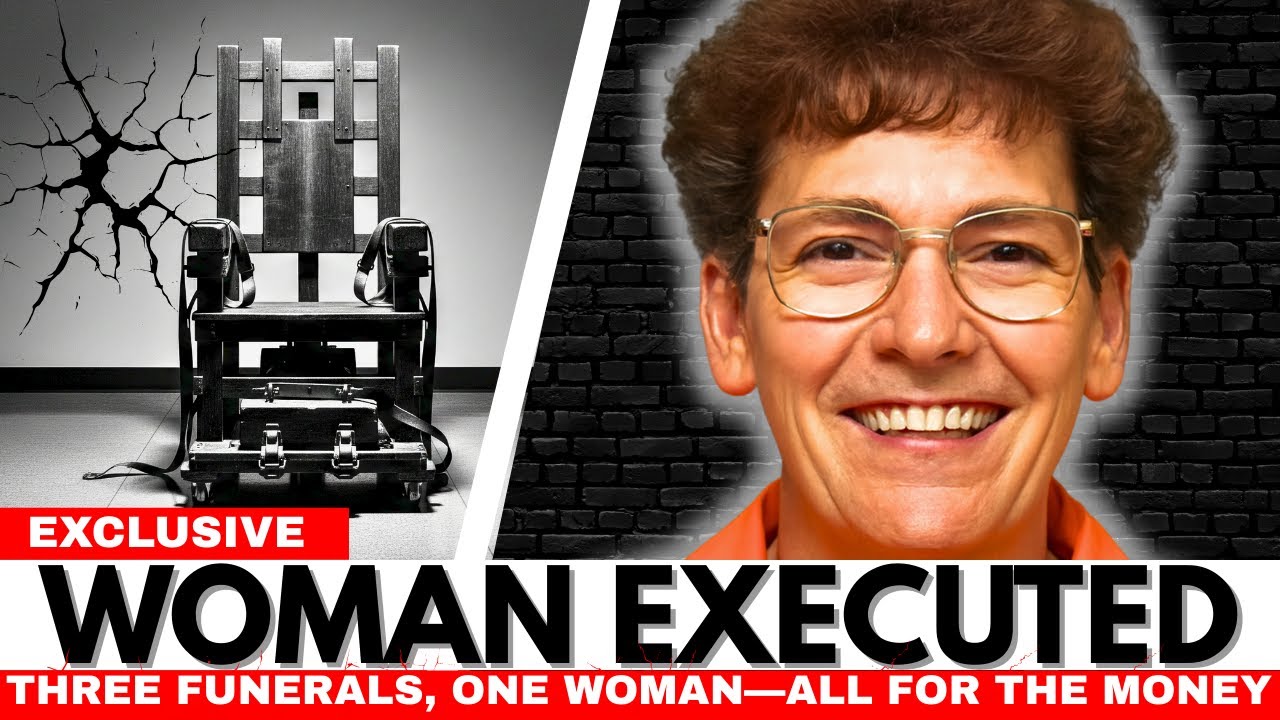
Her death closes one of the most coldly systematic murder-for-profit cases in American criminal history. Buenoano, a former nursing assistant, used medical knowledge to poison her victims with arsenic, crafting deaths that for years were mistaken for natural causes or tragic accidents, all while collecting substantial insurance payouts.
The path to the execution chamber began with the 1971 death of her Air Force husband, James Goodyear. He died mysteriously after returning from Vietnam, with symptoms that baffled military doctors. The official cause was kidney failure, and no autopsy was performed, allowing Buenoano to collect $95,000 in benefits.
She repeated the pattern in 1978 with boyfriend Bobby Joe Morris, a construction worker who succumbed to what appeared to be a severe illness. Again, no autopsy was conducted, and another insurance payout was secured. Both men’s deaths would later be proven by forensic exhumation to be the result of chronic arsenic poisoning.
Her most shocking crime came in 1980, targeting her 19-year-old adopted son, Michael Goodyear, who wore heavy leg braces. During a canoe trip, Buenoano removed his life jacket, leading to his drowning. The death was ruled accidental, and she used the insurance money to open a beauty salon in Gulf Breeze.
Her undetected spree ended only when a fourth target, boyfriend John Gentry, survived both poisoning and a car bombing in 1983. His survival triggered a full investigation, leading to exhumations and advanced toxicology tests that revealed the arsenic in her previous victims’ bodies and the massive insurance policies she held.
Arrested in 1983, Buenoano was convicted in multiple trials. She received a life sentence for Michael’s murder and the death penalty for the murder of James Goodyear, with additional convictions for grand theft and fraud. For thirteen years on death row, her appeals consistently failed against the overwhelming forensic evidence.

In her final hours, Buenoano requested a last meal of steamed broccoli, asparagus, strawberries, and tomato wedges with hot tea and lemon. When offered the opportunity for a final statement, she replied quietly, “No, sir.” The execution proceeded without incident, one minute past the scheduled time.
The case exposed a profound betrayal of trust, where the caregiver became the killer. Buenoano exploited her relationships and used her medical training as a weapon, preying on the vulnerability of those closest to her for purely financial gain. Her composure never wavered, even at trial.
Forensic scientists cite this case as a landmark, demonstrating how historical crimes can be solved through modern toxicology. The advanced analysis performed on exhumed remains in the 1980s provided the irrefutable proof needed to connect the seemingly unrelated deaths spanning over a decade.
Criminal profilers note the transactional nature of Buenoano’s relationships, established not for emotional connection but for access to insurance benefits. Her early life, marked by documented abuse and a violent juvenile offense, was later referenced in psychological evaluations of her adult behavior.
The execution concludes a legal saga that highlighted gaps in death investigations during the 1970s. The lack of autopsies for her early victims, attributed to their seemingly natural circumstances, allowed her crimes to remain hidden and enabled her to continue her lethal pattern for years.
For the families of the victims, the execution brings a long-awaited end. James Goodyear survived combat in Vietnam only to be murdered at home. Bobby Joe Morris was described as generous and trusting. Michael Goodyear, despite his disability, was known for his good nature toward the mother who would kill him.
Buenoano’s crimes forced a grim reconsideration of how society perceives female criminals, particularly those in caregiving roles. Her ability to maintain a facade of devotion while administering poison challenged investigative assumptions and helped reshape protocols for reviewing clustered, suspicious deaths.
As the first woman executed in Florida since 1848, her case will undoubtedly fuel ongoing debates about capital punishment, its application, and its finality. Proponents argue the sentence fits the heinous, premeditated nature of her crimes, while opponents cite it as a somber milestone.

The evidence presented at trial painted a picture of meticulous planning. Buenoano secured insurance policies, studied symptoms, and patiently administered toxins, all while playing the role of the concerned partner or grieving widow, a performance that ultimately failed with John Gentry’s survival.
Her business, a beauty salon built with funds from her son’s death, symbolized the depth of her calculation. It provided a veneer of respectable normalcy in her community, a stark contrast to the brutal reality of her actions conducted in private over more than a decade.
Legal experts note the significance of the surviving victim’s testimony. John Gentry’s account of his illness and the attempted car bombing provided the crucial link that allowed investigators to see the pattern connecting the earlier, geographically dispersed deaths that had gone unquestioned.
The systematic exhumation and testing ordered by detectives became a blueprint for investigating cold cases involving potential poisoning. The presence of arsenic locked in hair and bone samples provided a timeline of exposure that matched the periods when Buenoano was caring for her victims.
In the end, Judy Buenoano offered no explanation, no confession, and no apparent remorse. Her final refusal to speak stands as a silent coda to a life defined by manipulation and lethal deceit. Her body was cremated, leaving behind a legacy studied in law and forensic science classrooms.
The case serves as a grim reminder of the vulnerability inherent in trust and the devastating consequences when that trust is weaponized. It underscores the critical importance of thorough death investigations and the enduring power of forensic science to deliver justice, even years after the crime.
Source: YouTube