After more than three decades of legal battles, the State of Florida has executed Chadwick Willacy for the 1990 torture and murder of his 56-year-old neighbor, Marles Sather. The lethal injection was administered Tuesday evening at Florida State Prison, closing one of the state’s most protracted and brutal capital cases.
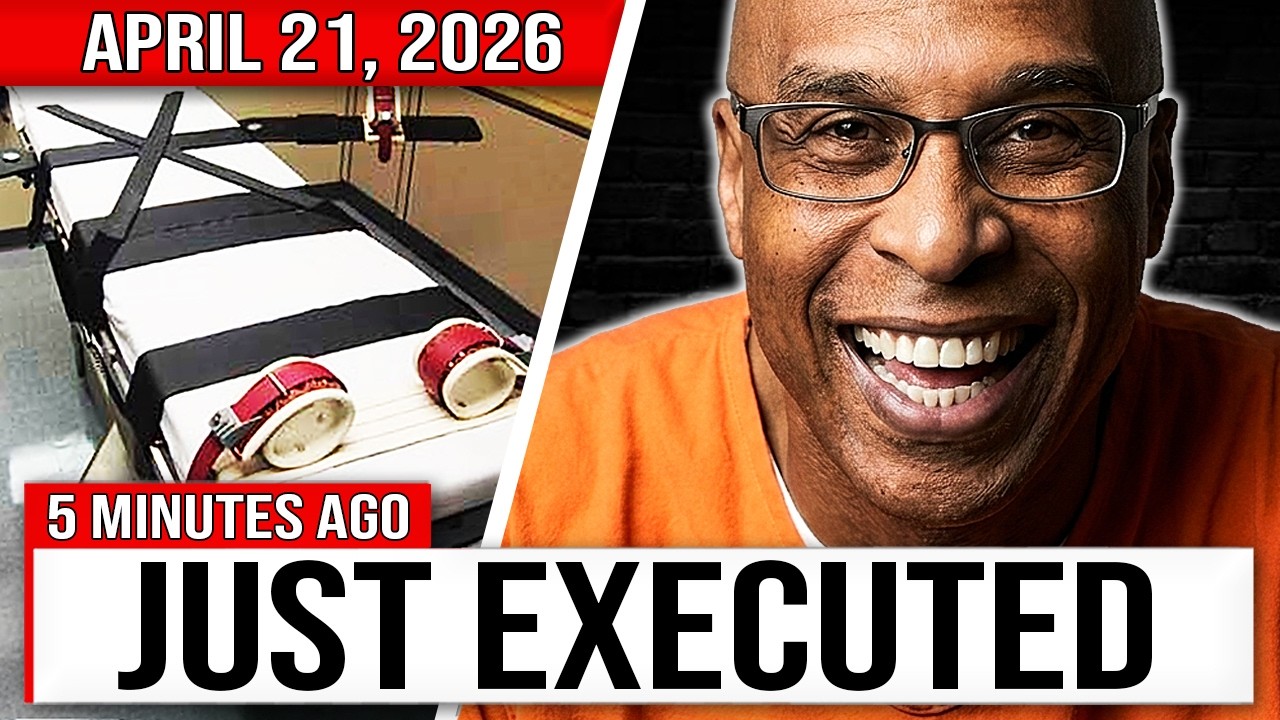
Willacy, 58, was pronounced dead at 6:15 p.m. on April 21, 2026. He spent 34 years on death row for a crime the sentencing judge once called “the most heinous, atrocious and cruel” he had ever seen. His execution followed the signing of a death warrant by Governor Ronda Santis in March.
The crime dates back to September 5, 1990, in Palm Bay, Florida. Marles Sather, a widow of just two months, returned home early from her job at Harris Corporation to find her 22-year-old neighbor, Chadwick Willacy, ransacking her house on Jarvis Street. What followed was an hours-long ordeal of calculated brutality.
Instead of fleeing, Willacy attacked Sather with a hammer and a squeegee. He bound her wrists and ankles with wire and duct tape. He then used a cord ripped from an iron to strangle her with such force that a portion of her skull was dislodged. Medical examiners confirmed she remained conscious throughout.
Willacy then left the immobilized woman, took her ATM card and the keys to her late husband’s car, and drove to her bank. Surveillance photos captured him withdrawing $200 while Sather lay bound in her home. He returned, methodically looted her house, and staged stolen items on her back porch.
His final acts defined the depravity of the crime. Willacy disabled every smoke detector in the house, doused the still-living Marles Sather with gasoline, and placed an oscillating fan at her feet to feed the flames. He struck several matches, setting her ablaze, and walked next door to his own home.
Dr. Charles Wickham, the medical examiner, testified that Sather did not die from the beating or the burns. Soot was found deep in her trachea; she died from inhaling the smoke of her own burning body. Her remains were discovered the next day by her son-in-law.

The investigation moved swiftly. Fingerprints on the fan and gas can, witness sightings, ATM photos, and stolen property found in Willacy’s home left little doubt. A critical break came when Willacy’s own girlfriend found Sather’s check register in his laundry and alerted police.
At trial, the evidence was overwhelming. A jury found Chadwick Willacy guilty of first-degree premeditated murder, burglary, robbery, and arson. They recommended death by a vote of 9-3. A second penalty phase in 1995, ordered after a technicality, resulted in an 11-1 vote for execution.
Marles Sather was remembered as a resilient woman who earned two college degrees later in life. She worked as a government contracts negotiator, sang in her church choir, and was a mother of three and grandmother of three. Her family described her as the heart of their home.
For 34 years, Willacy filed endless appeals, each ultimately denied. In a final, macabre twist, he used his last days not to fight for his own life, but to testify via Zoom for another death row inmate, Raphael Andres, convicted of a strikingly similar strangulation and arson murder.

On his final day, Willacy received visits from his mother, sisters, and a cousin. For his last meal, he requested chicken, tater tots, ice cream, and pie. As the curtain to the execution chamber rose at 6 p.m., he made a brief final statement to witnesses.
He apologized to his own family and urged his “brothers on the row to stay strong.” Maintaining his innocence to the end, he addressed Sather’s family: “I hope this brings you peace. If it does, that’s good. But this is not right.” The lethal injection process began moments later.
A warden shook him and called his name shortly after the drugs were administered, receiving no response. His skin turned gray, and a medic pronounced him dead at 6:15 p.m. The execution brings a long-awaited, painful closure to a case that has haunted the Florida justice system.
The Sather family has endured a 35-year wait for this outcome. For them, and for the community of Palm Bay, the execution marks the end of a grueling legal marathon centered on a crime of almost unimaginable cruelty and betrayal committed by a man who lived just next door.
Source: YouTube