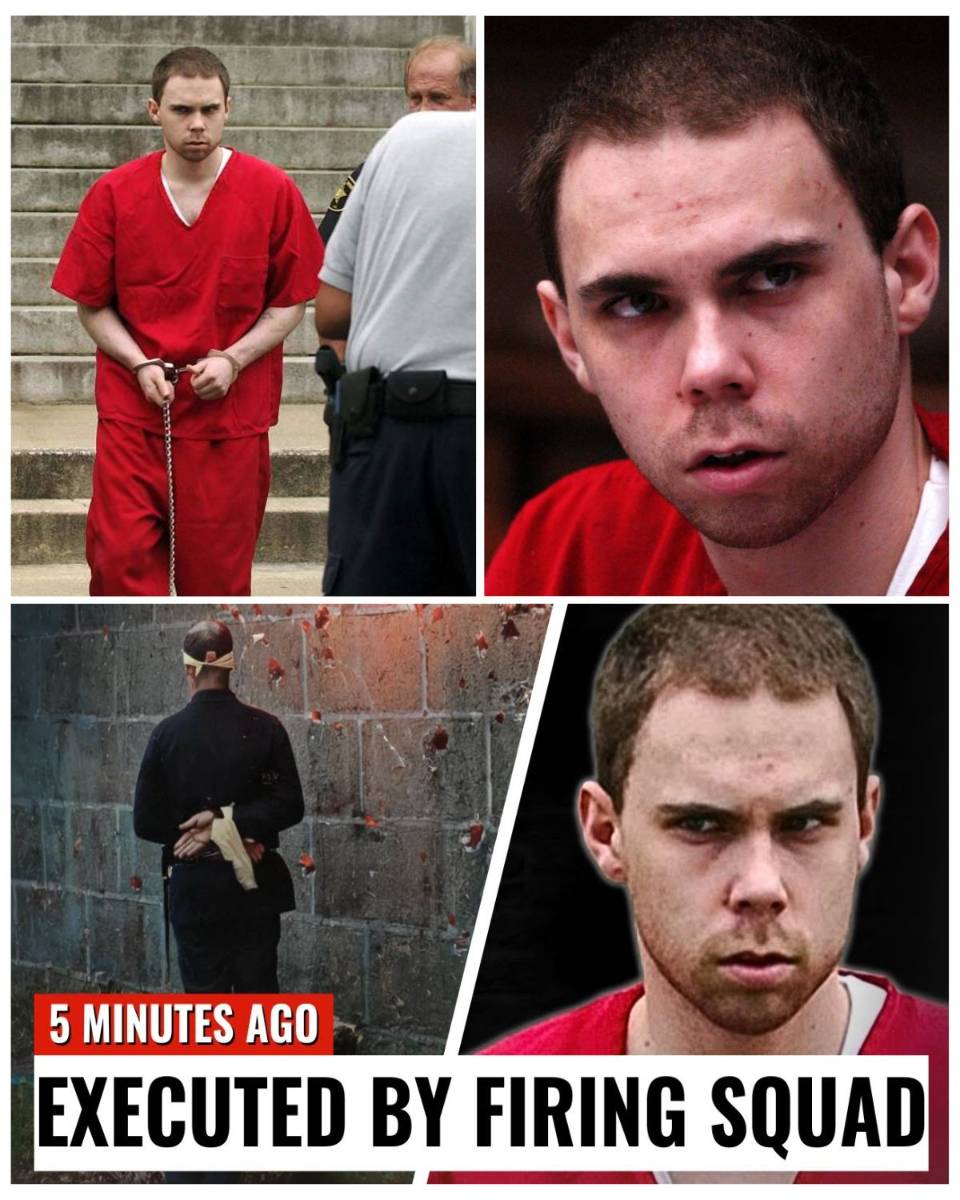
South Carolina has executed serial killer Stephen Corey Bryant by firing squad, marking the end of his 17-year death row saga at Broad River Correctional Institution on November 14, 2025. Convicted for a brutal 2004 murder spree that claimed three lives, Bryant’s execution underscores the state’s unyielding pursuit of justice for his reign of terror.
 This grim event unfolded as authorities carried out the sentence, with Bryant choosing the firing squad method weeks earlier. His crimes began in October 2004, igniting fear across rural Sumter County. At just 23, he launched an eight-day rampage, starting with a senseless shooting of a fisherman, 56-year-old Clinton Brown, who survived despite severe wounds.
Bryant’s violence escalated quickly. On October 9, he murdered his friend and co-worker, 36-year-old Clifton Gainey, shooting him in the head under the guise of a casual outing. Two days later, he invaded the home of 62-year-old Willard Teachen, a stranger, and shot him nine times in a horrific act of savagery.
After killing Teachen, Bryant defiled the body, burning its eyes with cigarettes and scrawling taunting messages on the walls, including “Victim four in 2 weeks, catch me if you can.“ Teachen’s daughter received a chilling phone call from the killer, confirming her father’s death with a mocking laugh that echoed the community’s nightmare.
The rampage continued on October 13, when Bryant encountered 35-year-old Christopher Earl Burgess at a convenience store and offered him a ride, only to shoot him twice and discard his body in a ditch. Authorities arrested Bryant later that day, linking him to the crimes through stolen items and witness accounts.
Charged with multiple felonies—including three counts of murder, armed robbery, and arson—Bryant’s trial in 2008 revealed the full extent of his brutality. Despite defense arguments citing his traumatic background, the jury delivered a death sentence for Teachen’s murder, along with life terms for the other killings.
 Over the next 17 years, Bryant exhausted appeals through the U.S. judicial system, with his final one denied by the Supreme Court in October 2025. South Carolina’s attorney general swiftly set the execution date, adhering to state law that scheduled it for the fourth Friday after the order.
In his final days, Bryant isolated himself, declining family visits and spending time with only a spiritual adviser. On execution day, he awoke at 4 a.m., received sedatives, and was escorted to the chamber at 5:45 p.m., where he was strapped into the chair.
The procedure was clinical and swift: A target was placed over his heart, a hood covered his face, and at 6:10 p.m., three marksmen fired .308 caliber rounds. Pronounced dead at 6:20 p.m., Bryant uttered no final words, leaving behind a legacy of unresolved pain for the victims’ families.
This execution revives debates on capital punishment, as South Carolina resumes such measures after a hiatus. Bryant’s case highlights the long arm of justice, yet raises questions about rehabilitation and the human cost of vengeance.
Experts note that his crimes not only shattered lives but also 𝓮𝔁𝓹𝓸𝓼𝓮𝓭 vulnerabilities in rural law enforcement. The community of Sumter County, still scarred, may find some closure, but the echoes of his terror linger.

In the wake of this event, officials are reviewing protocols for death row inmates, emphasizing mental health and security. Bryant’s story serves as a stark reminder of the fragility of society and the depths of human depravity.
As news spreads, reactions pour in from across the nation, with advocates on both sides weighing in. For the victims’ loved ones, this marks a painful end, while critics decry the method as archaic.
The firing squad execution, rarely used, draws attention to evolving standards in capital punishment. South Carolina’s decision reflects a state committed to its laws, even as public opinion shifts.
Details from Bryant’s last hours paint a picture of isolation and inevitability. His choice of execution method was deliberate, adding to the 𝒹𝓇𝒶𝓂𝒶 of his final act.
 This breaking story underscores the urgency of criminal justice reform, balancing retribution with humanity. As investigations continue, the full impact of Bryant’s crimes and execution will unfold.
Victims like Brown, who survived, now face renewed trauma, while families of the deceased seek peace. Bryant’s execution is not just an end, but a catalyst for broader discussions on violence and accountability.
In rural areas, such events resonate deeply, reminding residents of the ever-present threat. South Carolina’s resolve in this case sends a message, but at what price?
The timeline from arrest to execution spanned over two decades, illustrating the glacial pace of justice. Yet, for many, the wait was worth the closure it brings.
As dawn breaks on November 15, 2025, the state moves forward, but the shadows of Bryant’s actions remain. This execution, while final, opens new chapters in the ongoing fight against crime.