The final breaths of Kimberly LaGayle McCarthy came in hard, raspy gasps, her chest heaving against the restraints of the gurney before falling still. At 6:37 p.m. on June 26, 2013, inside the death chamber of the Huntsville Unit in Texas, the 52-year-old became the 500th inmate executed by lethal injection in the state since the reinstatement of capital punishment, and the first woman put to death in the United States in nearly three years. Her last words, delivered with a chilling calm, were not of apology or regret, but of defiance and faith. This is not a loss, she declared. This is a win. You know where I am going. I am going home to be with Jesus. Keep the faith. I love you all. As the lethal drugs began to flow, she whispered, God is great, before her eyes closed and her body surrendered to the chemicals that ended her life.
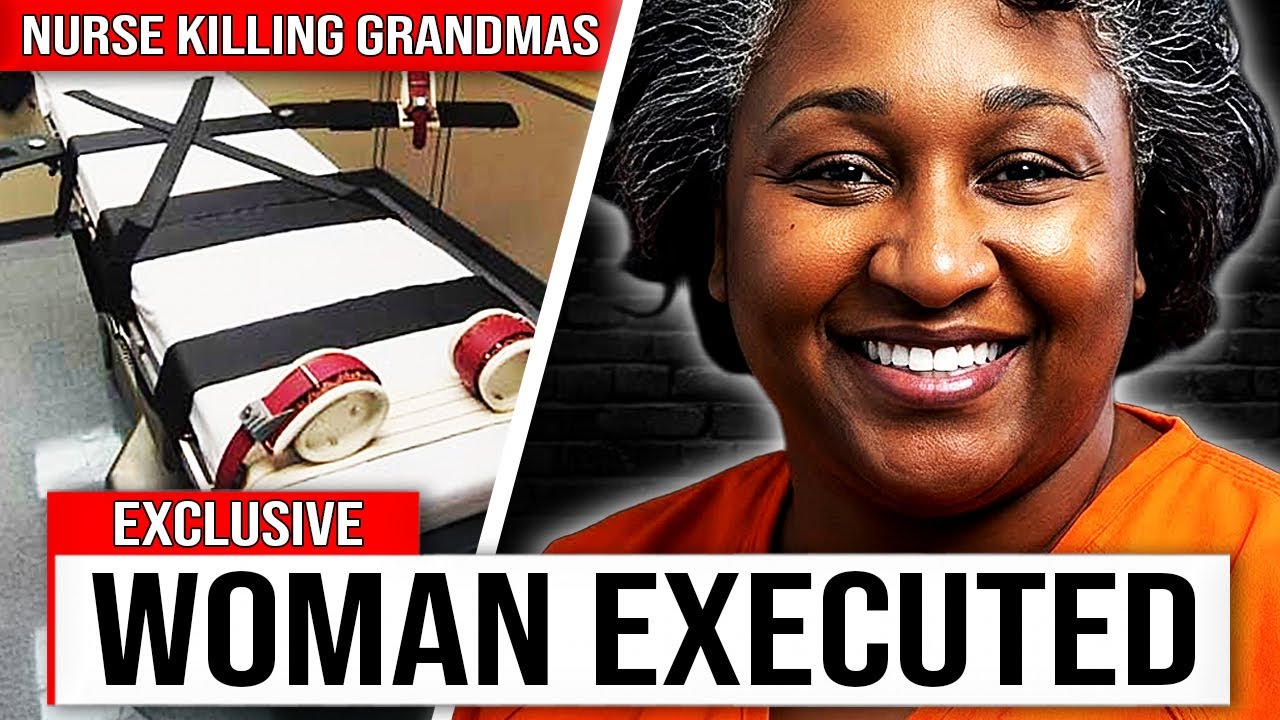
The execution marked the culmination of a legal and emotional odyssey that stretched back more than 15 years, to a sweltering July day in 1997 when a simple neighborly request for sugar spiraled into a savage murder that shocked a quiet Dallas suburb. The victim, 71-year-old Dorothy Booth, a retired psychology professor, had known McCarthy for years. They lived just houses apart in Lancaster, Texas, and McCarthy had once worked as an occupational therapist, a profession built on care and healing. But by the summer of 1997, the woman who knocked on Booth’s door was a shadow of her former self, consumed by a crack cocaine addiction that had already cost her jobs, marriages, and her moral compass.
On July 21, 1997, Booth answered her door to find McCarthy asking to borrow sugar. It was a request that seemed innocent, rooted in the familiarity of their shared neighborhood. Booth, a woman known for her kindness, let McCarthy inside. It was the last act of generosity she would ever perform. Hidden within McCarthy’s clothing was a 10-inch butcher knife, a weapon she had brought with deliberate intent. Once inside, McCarthy pulled the blade and stabbed Booth five times, the force of the blows driving the steel deep into the older woman’s body. But the attack did not end there. McCarthy picked up a heavy candle holder and struck Booth in the face, shattering bone and tissue. As Booth lay motionless on her own kitchen floor, McCarthy knelt down and, with the same knife, severed the ring finger from Booth’s left hand, prying loose a diamond wedding ring that would later be pawned for a mere $200.
The murder was not an act of passion but a calculated prelude to theft. McCarthy ransacked the home, gathering cash and valuables with the cold efficiency of a predator. She then climbed into Booth’s white Mercedes and drove directly to a crack house, where she traded the spoils of her violence for the narcotic that had enslaved her. In the hours that followed, she used Booth’s credit cards four separate times, including a purchase at a neighborhood liquor store, as if the life she had extinguished was merely a means to a chemical end. The brutality of the crime sent shockwaves through the community, but for investigators, the trail of evidence was swift and damning.
Police obtained a search warrant for McCarthy’s home, and what they found there sealed her fate. The butcher knife was hidden inside the residence, scrubbed clean of any visible trace of blood. But investigators, seasoned by years of forensic work, were not deceived. They dismantled the handle of the knife and discovered dried blood still lodged in the seams, a hidden reservoir of evidence that forensic testing confirmed belonged to Dorothy Booth. The discovery was a pivotal moment, linking McCarthy directly to the murder weapon and undermining any attempt to claim innocence. She was arrested and charged with capital murder, setting the stage for a legal battle that would span more than a decade.
McCarthy’s path to death row was paved with a long history of descent. Once a licensed occupational therapist at a nursing home, she had tried to build a conventional life, marrying and raising a son. But the stability she achieved was fragile, and crack cocaine shattered it completely. Her criminal record began with a forgery conviction in 1990, followed by prostitution charges and theft of services. Each arrest chipped away at the remnants of her former identity, leaving behind a woman consumed by desperation. By the time of Booth’s murder, McCarthy was willing to do almost anything for her next high, even if it meant spilling blood. The addiction had her by the throat, and the violence that followed was the logical endpoint of a long, tragic unraveling.

After her arrest, McCarthy gave detectives a written statement that attempted to rewrite the narrative of the crime. She claimed that the murder was not her doing but the work of two drug dealers she knew only as Kilo and JC. According to her account, the men had been partying with her at her home on the night of July 21, but when the money and drugs ran out, they turned aggressive, threatening to harm her if she did not come up with something fast. She said they devised a plan for her to call Booth and ask to borrow sugar, a ruse to gain entry to the home. McCarthy insisted she remained outside while Kilo and JC forced their way in, emerging minutes later with Booth’s purse, car keys, and other valuables. She admitted to driving the Mercedes to a crack house and pawning the stolen items, but she denied any direct role in the killing.
The physical evidence, however, told a different story. Dorothy Booth’s blood was found on the knife hidden in McCarthy’s home. Booth’s identification was discovered in McCarthy’s possession. Surveillance footage captured McCarthy using the stolen credit cards. And there was no forensic trace of any other individual at the crime scene, no DNA, no fingerprints, no witnesses to corroborate the tale of two phantom drug dealers. For the jury that heard the case in November 1998, the evidence was overwhelming. They convicted McCarthy of capital murder and sentenced her to death, a punishment that reflected the savagery of the crime and the lack of any credible defense.
But the full scope of McCarthy’s violence did not emerge until the sentencing phase of her trial, when prosecutors unveiled evidence linking her to two unsolved murders from a decade earlier. In December 1988, nearly ten years before Booth’s death, two elderly women in Dallas County had been killed in their homes under circumstances that bore a chilling resemblance to the Booth case. The first victim was 81-year-old Maggie Harding, a trusted family friend who had known McCarthy for most of her life. Harding had helped plan McCarthy’s wedding, stored furniture for her, and welcomed her as family. McCarthy had even done part-time office work for Harding, learning the layout of her home and the fact that she kept large amounts of cash on the premises.
On the day of the murder, McCarthy entered Harding’s home and launched a sustained, brutal attack. Harding was stabbed repeatedly through the chest, abdomen, and face, with one wound piercing straight into her heart. Her jaw was broken, her cheekbone shattered, and her brain was bleeding from the force of the blows. Investigators later found a metal meat tenderizer in the kitchen sink, believed to be the weapon used to inflict the crushing injuries. When the attack was over, Harding’s purse was gone, taken by the same person who had once called her family. The case went cold, but DNA evidence would later link McCarthy to the scene.
Just days later, a second murder occurred. The victim was 85-year-old Jetty Lucas, a distant cousin of McCarthy’s mother. Lucas was physically disabled and barely able to defend herself when her front door closed behind her attacker. She was stabbed in the face, the blade penetrating straight through her eyes. Her head and neck were struck with such force that one of her ears was torn, her skull fractured, and her brain bled from within. Near her body lay a claw hammer, its curved end still stained with evidence of the violence. Her wallet and purse had been emptied. The similarities between the two cases were unmistakable. Both victims were elderly women who trusted McCarthy. Both were beaten and stabbed with extreme ferocity. And in both cases, McCarthy walked away with just enough cash to feed her addiction.
McCarthy was never tried for these earlier murders, but the DNA evidence presented during her sentencing painted a portrait of a serial predator, a woman who targeted the vulnerable and the trusting, exploiting bonds of family and friendship for the sake of a fleeting high. The revelation did not sway the jury from its death sentence, but it added a layer of horror to a case already defined by its cruelty. For the families of Harding and Lucas, the execution of McCarthy brought a measure of closure, though the wounds of losing their loved ones in such a violent manner would never fully heal.
McCarthy’s legal journey was marked by twists and turns that delayed her execution for years. In 2001, her conviction was overturned on a technicality, after an appeals court ruled that investigators had taken her statement without her lawyer present, a violation of her constitutional rights. But Texas prosecutors, determined to see justice served, did not relent. They retried McCarthy in 2002, and the outcome was identical. She was found guilty again and sentenced to death. Over the next decade, her lawyers mounted a series of appeals, arguing that McCarthy was a drug addict, not a serial killer, and that racial bias had played a role in her sentencing. McCarthy was African American, and her attorneys pointed to statistical disparities in the application of the death penalty. But the courts rejected each argument, and the date of her execution was set and reset multiple times.

She was first scheduled to die in January 2013, but a temporary reprieve was granted just hours before the lethal injection was to begin. The same scenario played out in April of that year, with McCarthy receiving another last-minute stay. But on June 26, 2013, there were no more delays. The legal avenues had been exhausted, and the state of Texas moved forward with the sentence. McCarthy spent her final hours in a cell just feet from the execution chamber, her time marked by a strange mix of silence and dark humor. She had refused all interview requests from reporters for years, but with the guards, she let slip a few jokes, brief moments of levity in a day otherwise wrapped in the weight of impending death.
She was not allowed to choose a special final meal, a policy in Texas for death row inmates. Instead, the prison brought her a last breakfast of oatmeal, fruit, and chicken sandwiches at 1:48 a.m. She ate in the stillness of the early morning, then spent the rest of the day packing up her belongings, meeting with the chaplain, speaking with her spiritual adviser, and sitting for a final visit with the man who had once been her husband. Then she waited. When the time came, she was strapped to the gurney, and her last words echoed through the chamber, a declaration of victory in the face of death. As the drugs took effect, she took hard, raspy, loud breaths for several seconds before becoming quiet. Her chest moved up and down for another minute before she stopped breathing entirely.
After the execution, Dorothy Booth’s daughter, Donna Aldridge, spoke to reporters, her voice carrying the weight of 16 years of grief and anticipation. She described her mother as an incredible woman who was taken before her time, and expressed gratitude for the finality of the event. The finality of this event has allowed me to say goodbye to my mother, Aldridge said. We are grateful to see justice fulfilled. She noted that McCarthy never expressed remorse for killing Dorothy or for the other two elderly victims, a silence that only deepened the pain for the families left behind. The execution, she said, was not a cause for celebration but a necessary end to a long and painful chapter.
The case of Kimberly LaGayle McCarthy raises profound questions about justice, addiction, and the limits of punishment. Was she a monster who deserved to die, or a woman consumed by a disease that stripped her of her humanity? Her defenders pointed to her history of drug abuse as a mitigating factor, arguing that the state should have shown mercy. Her detractors pointed to the three elderly women she killed, the brutality of her methods, and the absence of any remorse as evidence that the death penalty was the only appropriate response. The debate will continue long after her body has been lowered into the ground, a testament to the complexity of a case that defies easy answers.
McCarthy’s execution also highlights the broader context of capital punishment in Texas, a state that has executed more inmates than any other since the Supreme Court reinstated the death penalty in 1976. The 500th lethal injection was a milestone that drew international attention, with protesters and supporters gathering outside the Huntsville Unit. For some, it was a moment of grim pride, a demonstration of the state’s commitment to law and order. For others, it was a reminder of the flaws and inequities in a system that has been criticized for racial bias, wrongful convictions, and the moral cost of state-sanctioned killing. McCarthy was the first woman executed in the United States since 2010, when Teresa Lewis was put to death in Virginia. Her case, with its layers of violence and addiction, became a flashpoint in the ongoing national conversation about who deserves to die and who gets to decide.
In the end, the story of Kimberly LaGayle McCarthy is a story of descent, from a promising young woman with a career and a family to a convicted killer who died on a gurney, her last words a testament to a faith that offered her solace in her final moments. It is a story of victims, Dorothy Booth, Maggie Harding, and Jetty Lucas, three women who trusted the wrong person and paid with their lives. And it is a story of a justice system that, after years of appeals and delays, finally carried out the sentence that a jury had imposed. Whether that justice was served is a question that each observer must answer for themselves, based on their own beliefs about crime, punishment, and the value of a human life. What is certain is that on June 26, 2013, a chapter of violence and legal struggle came to a close, leaving behind a legacy of pain, reflection, and unresolved debate.
Source: YouTube