The silence of 45,000 years has been broken, and what the oldest human DNA ever recovered has revealed is sending shockwaves through the scientific community. A team of geneticists at the Max Planck Institute for Evolutionary Anthropology in Germany has successfully decoded the complete genomes of individuals who lived during the dawn of human presence in Europe. The findings, published in a bombshell study, expose a truth that rewrites the very foundation of our origin story: the first Europeans, the true pioneers who dared to enter a frozen and hostile continent, simply vanished. Their bloodlines ended. We are not descended from them.
For decades, archaeologists pieced together the story of early humanity through weathered bones and stone tools, each fragment a clue to a distant past. But the crucial element, the genetic code that carries the unbroken narrative of life, was always out of reach. DNA degrades over time, shattering into microscopic fragments that become contaminated by soil and microbes. Scientists long believed there was an absolute limit to how far back they could peer into the genetic past, a line that could never be crossed. That line has now been erased.
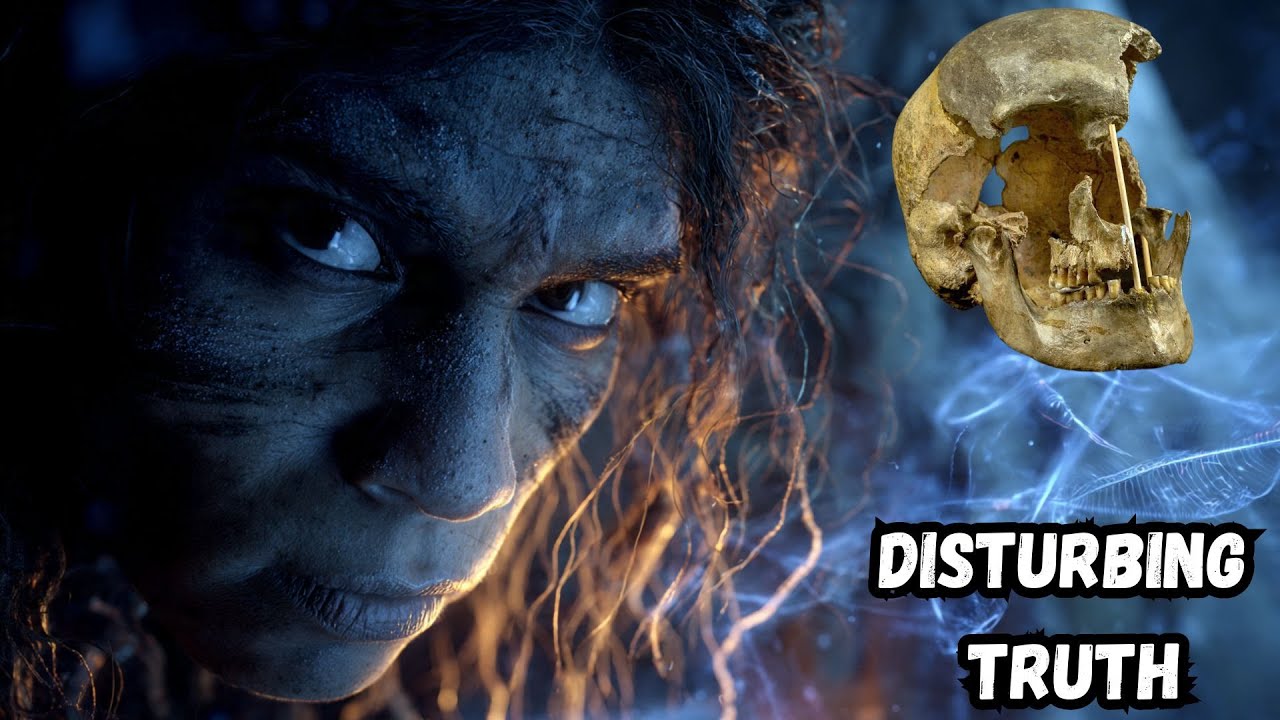
The journey to this discovery began in 1950 at an archaeological site called Zlatý kůň in what is now the Czech Republic. Excavators uncovered something extraordinary: the skull of a young woman, damaged and fractured, yet remarkably preserved. For decades, the skull sat in museum collections, measured and compared to other fossils. No one imagined that inside that ancient bone lay something far more valuable than its shape: fragments of DNA, waiting silently to tell their story. That story would remain untold for over half a century.
Fast forward to the early 2000s. More ancient remains were discovered in Bacho Kiro cave in Bulgaria. Suddenly, researchers had access to some of the oldest human remains ever found, all dating back more than 40,000 years. But there was a monumental problem. DNA this old is not clean or intact. It is shattered into tiny chemical fragments, contaminated by soil, microbes, and tens of thousands of years of decay. Reading it required reinventing genetic science from the ground up, a painstaking process that pushed the boundaries of technology.
Teams at the Max Planck Institute took on the challenge. They carefully drilled into ancient teeth, natural time capsules sealed from the outside world. Inside the dense inner layers, they found microscopic traces of ice age DNA. What they uncovered was nothing short of revolutionary. They reconstructed entire human genomes, not fragments, not partial sequences, but complete readable genetic maps of people who lived 45,000 years ago. These were among the first modern humans to spread across Europe after leaving Africa, the vanguard of our species.
When scientists compared these ancient genomes to modern humans, they noticed something striking. These individuals carried much longer and more continuous segments of Neanderthal DNA than we do today. This meant they lived very close in time to when modern humans and Neanderthals first interbred. The genetic traces were still fresh, the signatures still strong. They were among the first generations born after two human species met, mixed, and permanently changed our DNA. This discovery alone was a seismic event in the field of paleogenetics.
But the most disturbing discovery was yet to come. These people were not direct ancestors of modern Europeans. They belonged to an early wave of migration that entered Europe and then disappeared. They were pioneers, but their descendants left no trace. Think about the irony. The first to arrive, the ones who braved an unknown, frozen land, the ones who survived against impossible odds, they vanished. This revelation shocked scientists to their core. For years, it was assumed that the first humans in Europe gave rise to later populations. The genomes told a different story.
This is a story of a forgotten people, surviving for a time, then fading away like footprints erased by snow. And yet, their DNA gave us a direct window into one of the most critical moments in human history. This isn’t myth. This isn’t speculation. This is the literal code of life preserved inside individuals who walked the earth tens of thousands of years ago. Their genomes revealed something else, something deeply human: how fragile our species once was. Small groups scattered across frozen landscapes, facing brutal winters, dangerous predators, and competition with Neanderthals.

Survival was never guaranteed. Every step forward was a gamble against extinction. And still they tried. The length of Neanderthal DNA segments acted like a biological clock, allowing scientists to calculate how many generations had passed since interbreeding occurred. The result was staggering. These individuals lived only a few hundred generations after humans and Neanderthals first met. We are looking almost directly at the consequences of that encounter, not a distant echo, but the first ripples of an event that shaped humanity forever.
There was one final revelation. Europe was not populated in a single straight migration. There were multiple waves. Some disappeared, others endured. Our genetic history is not a straight line. It is a braided river with paths splitting, merging, drying up, and continuing onward. This raises a haunting question: how many entire human stories were lost to time? For thousands of years, people lived, loved, created art, and told stories by firelight. They had fears. They had dreams for their children. And then they were gone.
No descendants, no languages, no cultures remembered. Only fragments of bone buried in distant caves, waiting tens of thousands of years for someone to hear their final whisper through molecules of ancient DNA. This discovery is not just about science. It is about reconnecting with our deepest humanity, understanding that our existence is not the result of a single triumphant journey, but of countless attempts, failures, and second chances. We are here because others tried and did not make it.
The implications are profound. Every modern human carries a genetic legacy that is a patchwork of survival and loss. The Neanderthal DNA in our cells is a reminder of ancient encounters that could have gone either way. The fact that these early pioneers vanished challenges the narrative of inevitable progress. It forces us to confront the reality that our own future is not guaranteed. The choices we make today will determine whether our story continues or whether one day we too will be just another forgotten chapter.
The scientific process behind this breakthrough was a masterclass in perseverance. Researchers had to develop new methods to extract and purify DNA that had been degraded for millennia. They used advanced sequencing technologies to piece together the shattered genetic code, a task akin to reconstructing a library from a pile of confetti. Every fragment had to be verified against contamination from modern humans and microbes. The margin for error was razor thin, but the results were undeniable.
The individuals whose genomes were decoded lived in a world vastly different from our own. The climate was brutal, with ice sheets covering much of northern Europe. They hunted mammoths, woolly rhinoceroses, and reindeer. They lived in small, mobile groups, constantly on the move to follow herds and find shelter. Their lives were short and harsh, but they possessed the same cognitive abilities as modern humans. They created art, buried their dead, and passed down knowledge through generations.

The discovery that they were not our ancestors has sparked a fierce debate among anthropologists. Some argue that these early populations were simply outcompeted by later waves of migrants who were better adapted to the changing environment. Others suggest that disease or catastrophic events wiped them out. The truth is, we may never know exactly what happened. But the genetic evidence is clear: their lineage died out, leaving no direct descendants among living humans.
This finding also sheds new light on the relationship between modern humans and Neanderthals. The long segments of Neanderthal DNA in these ancient genomes indicate that interbreeding occurred relatively soon after the two groups met. This challenges the idea that Neanderthals were a separate species that could not produce fertile offspring with modern humans. Instead, it suggests that the two groups were closely related and capable of producing viable children, a fact that is now written into our genetic code.
The implications for our understanding of human evolution are staggering. We are not the descendants of a single, linear progression from primitive to advanced. We are the product of a complex web of migrations, interbreeding, and extinctions. The story of humanity is one of constant flux, with populations rising and falling, merging and diverging. The oldest human DNA ever recovered has given us a glimpse into this dynamic history, and it is far more disturbing than we ever imagined.
As the news of this discovery spreads, it is already reshaping how we think about our place in the world. Museums are rethinking their exhibits. Textbooks will need to be rewritten. The public is grappling with the idea that the first Europeans were not our ancestors but a lost people who vanished without a trace. This is not a comfortable truth, but it is a necessary one. It forces us to confront the fragility of our own existence and the randomness of survival.
The researchers at the Max Planck Institute are already planning their next steps. They are analyzing more ancient remains from other sites across Europe and Asia, hoping to fill in the gaps in our genetic history. Each new genome they decode adds another piece to the puzzle. But the question that haunts them is the same one that haunts us all: how many other lost populations are out there, waiting to be discovered? How many stories have been erased by time?
For now, we have the voices of those who lived 45,000 years ago, preserved in their genetic code. They have spoken to us across an unimaginable gulf of time, and their message is clear. We are survivors of a past far more complex and tragic than we ever imagined. The oldest human DNA in the world has revealed a disturbing secret, and it is a secret that will change everything we thought we knew about who we are and where we came from.
Source: YouTube