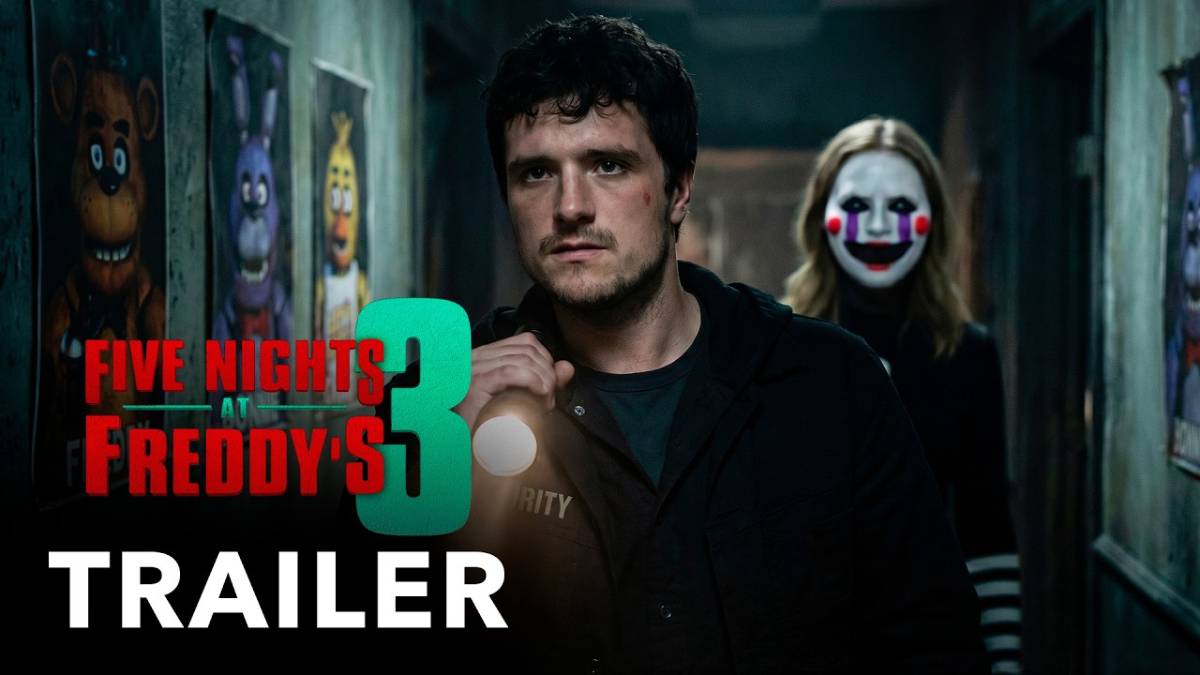
A chilling new chapter in the Five Nights at Freddy’s saga has been unleashed upon the world, with the release of the first trailer for the upcoming 2026 film, titled Five Nights at Freddy’s 3. The footage, which dropped without warning earlier today, promises a return to the franchise’s roots of relentless terror and psychological dread. The trailer opens with a haunting voiceover that immediately sets a grim tone, suggesting that the horrors of the past are far from buried.
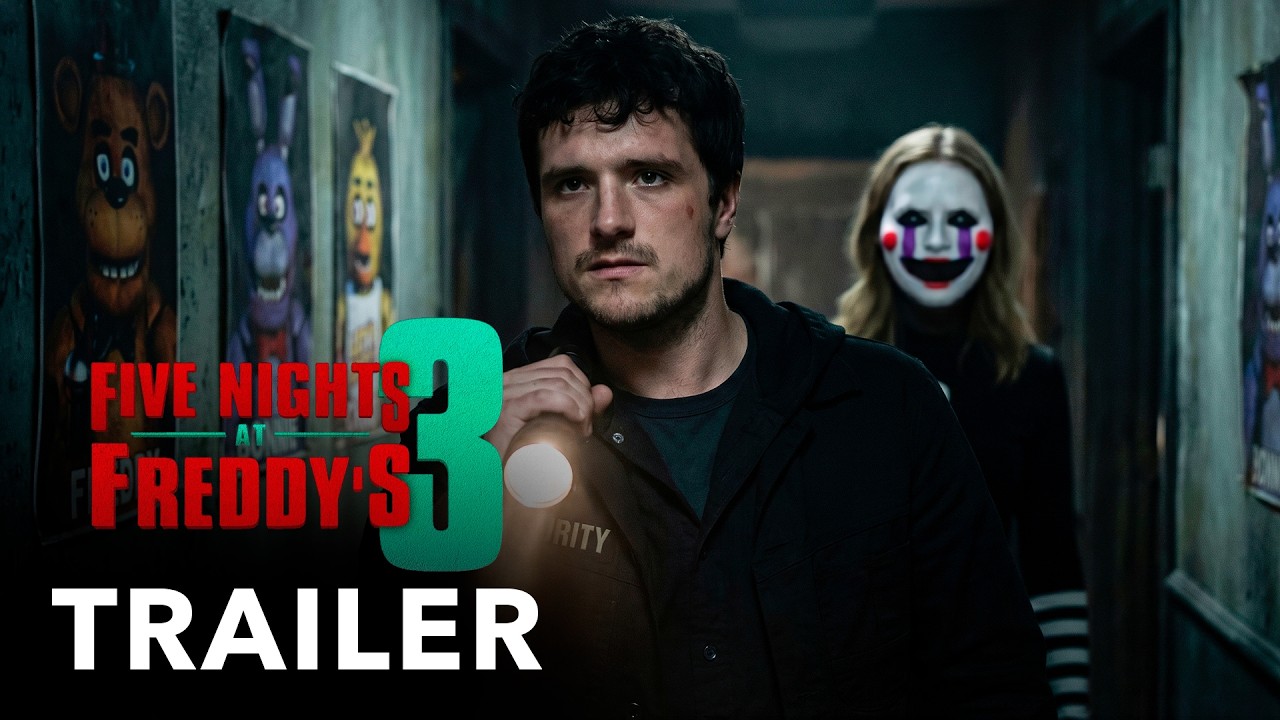 The voice, which fans will recognize as belonging to Mike Schmidt, the protagonist from the first film, delivers a stark warning. After all that happened, they still want to reopen it. I have to be there. I know how to stop it, he says, his voice laced with a weary determination. This line suggests that the Fazbear Entertainment brand is once again attempting to capitalize on its macabre history, this time with a new attraction called Fazbear’s Fright.
The trailer then shifts to a promotional style, with a slick, carnival-like announcer declaring, Looking for a thrill you’ll never forget? Fazbear’s Fright, opening this fall. Don’t miss your chance to experience the horror. This marketing ploy within the trailer is a clever nod to the source material, as Fazbear’s Fright was the haunted horror attraction featured in the original Five Nights at Freddy’s 3 video game. The juxtaposition of a cheerful invitation with the underlying dread of the animatronics is a masterstroke of tension.
A pulsating, industrial soundtrack kicks in as the visuals become more chaotic. Quick cuts show darkened hallways, flickering lights, and the unmistakable silhouette of Springtrap, the franchise’s most iconic and terrifying antagonist. The suit, a withered and decayed animatronic rabbit, is shown in brief, jarring flashes, its empty eye sockets seeming to stare directly into the viewer’s soul. This is the first time the character has been depicted in live-action with such graphic detail.
The music swells to a crescendo before cutting abruptly to silence. A new voice, deep and gravelly, speaks directly to the audience. Glad you came back for another night. I promise, it’ll be a lot more interesting this time. The voice is unmistakably that of William Afton, the serial killer who haunts the franchise. This line confirms that the narrative will delve deeper into Afton’s twisted legacy and his connection to the new location.
The final shot of the trailer is a slow zoom into a security monitor, showing a single, empty room. Suddenly, the screen glitches, and the image of Springtrap appears, standing perfectly still in the center of the frame. The title card slams onto the screen: Five Nights at Freddy’s 3, with a release date of Fall 2026. The trailer ends with the sound of a child’s laughter, distorted and echoing into the darkness.
Industry analysts are already predicting that this film will be the highest-grossing entry in the franchise to date. The first film, released in 2023, shattered box office records for a horror movie, and the sequel, which premiered in 2024, expanded the lore significantly. This third installment appears to be a direct continuation, picking up the threads left by the previous films while also adapting the beloved horror attraction concept from the games.
The decision to feature Mike Schmidt as the returning protagonist is a significant one. In the video games, the third installment featured a new, unnamed security guard, but the film franchise has chosen to keep Josh Hutcherson’s character at the center of the story. This suggests a more cohesive narrative arc, with Schmidt being drawn back into the nightmare against his will. His line about knowing how to stop it implies that he has gained crucial knowledge about the animatronics’ behavior and the curse that drives them.
The inclusion of Fazbear’s Fright as the primary setting is a brilliant narrative choice. In the game, the attraction was a horror-themed museum built from salvaged props and equipment from the original, abandoned pizzerias. The film appears to be taking this concept and expanding it into a fully operational, albeit cursed, haunted house. The trailer shows glimpses of vintage arcade machines, tattered posters, and the infamous “safe room” where Afton’s spirit is trapped.
 The visual effects team has clearly outdone themselves with the design of Springtrap. The animatronic is shown in a state of advanced decay, with exposed wires, torn fabric, and a skeletal frame visible beneath the fur. The suit’s design is a horrifying fusion of a cheerful cartoon rabbit and a mummified corpse, a visual representation of the evil that has festered within it for decades. This level of detail will undoubtedly satisfy long-time fans who have waited to see the character brought to life with such fidelity.
The film’s director, Emma Tammi, who helmed the first two installments, is returning to direct this new chapter. In a statement released alongside the trailer, she said, This is the story we have been building toward from the very beginning. Fazbear’s Fright is not just a location; it is a trap, a monument to the sins of the past. We are going to explore the true nature of the curse and what it means to be trapped in a nightmare of your own making.
The production team has also confirmed that the film will feature a mix of practical animatronics and CGI, a technique that made the first film so terrifyingly immersive. The Springtrap suit, in particular, is a hybrid creation, with a physical puppet used for close-up shots and digital enhancements for its more supernatural movements. This blend of techniques ensures that the horror feels tangible and grounded, even as the story ventures into more fantastical territory.
The soundtrack for the trailer, composed by the Newton Brothers, features a reworked version of the classic FNAF theme, but with a more industrial and aggressive edge. The music builds tension masterfully, using silence and sudden bursts of noise to create a sense of unease. The final line of dialogue, delivered by Afton, is accompanied by a low, rumbling bass that feels like a heartbeat, or perhaps the sound of a machine waking up.
Social media has exploded with reactions since the trailer’s release. Fans are dissecting every frame, searching for hidden clues and Easter eggs. One popular theory suggests that the phrase “I know how to stop it” refers to the “Happiest Day” minigame from the original game, where the souls of the children are finally laid to rest. Others believe that Mike Schmidt may be attempting to destroy the animatronics once and for all, possibly by burning down Fazbear’s Fright.
The trailer has also sparked a wave of speculation about the film’s rating. The first two films were rated PG-13, but the graphic nature of the Springtort design and the darker tone of the trailer have led many to believe that this installment could push the boundaries of that rating. The sight of the decaying suit, combined with the implied violence of Afton’s past, suggests that the filmmakers are not shying away from the more gruesome aspects of the lore.
The marketing campaign for Five Nights at Freddy’s 3 is already being hailed as one of the most effective in recent memory. The decision to release the trailer without prior announcement created a sense of urgency and surprise that is rare in the age of leaked footage and scheduled reveals. The hashtag #FNAF3 is currently trending worldwide, with millions of views on the trailer within the first hour of its release.
The film’s release date, Fall 2026, places it in prime award season territory, though it is unlikely to be a contender for traditional accolades. However, the franchise has proven that critical recognition is not necessary for commercial success. The first film grossed over $290 million worldwide on a budget of just $20 million, and the sequel performed similarly. This third installment is expected to surpass those numbers, potentially becoming one of the highest-grossing horror films of all time.

The lore of Five Nights at Freddy’s is notoriously complex, with multiple timelines, retcons, and fan theories. The film franchise has streamlined this narrative, focusing on the core story of William Afton’s murders and the vengeful spirits of his victims. This third film is expected to resolve many of the lingering mysteries from the previous installments, including the fate of the missing children and the true nature of the animatronics’ sentience.
The trailer also hints at the inclusion of other classic animatronics from the franchise. In the background of one shot, the silhouette of a tattered Chica can be seen, her beak missing and her eyes glowing with a malevolent light. Another shot shows a pile of discarded parts, including the head of Bonnie, his guitar shattered beside him. These cameos suggest that Fazbear’s Fright will be a museum of horrors, filled with the remnants of the past.
The voice actor for William Afton has not been officially confirmed, but the voice in the trailer sounds remarkably similar to the performance from the video games. Fans are speculating that the role may have been recast, or that the original voice actor, PJ Heywood, has been brought in for the film. The line delivery is chilling, with a calm, almost paternal tone that belies the monstrous nature of the character.
The trailer also features a brief, almost subliminal image of a child’s drawing, showing a group of five children holding hands around a figure that resembles Springtrap. This image is a direct reference to the “Give Gifts, Give Life” minigame from the original game, where the spirits of the children are shown giving life to the animatronics. This suggests that the film will explore the origins of the curse in greater depth.
The production design for Fazbear’s Fright is a standout element of the trailer. The attraction is depicted as a labyrinthine maze of dark corridors, fake cobwebs, and flickering lights. The attention to detail is extraordinary, with every prop and poster feeling like a genuine artifact from the 1980s. This immersive environment will be a key factor in the film’s ability to generate genuine scares.
The film’s runtime has not been announced, but given the complexity of the story, it is expected to be the longest entry in the franchise. The first film ran for 109 minutes, while the sequel was slightly shorter at 97 minutes. This third installment may approach the two-hour mark, allowing for a more deliberate pace and deeper character development.
The trailer has also reignited debate about the nature of the animatronics’ movements. In the games, they are only active when the player is not watching them. The film has taken liberties with this rule, allowing the animatronics to move freely for dramatic effect. However, the trailer shows a scene where Springtrap is standing perfectly still, only to vanish when the camera blinks, suggesting that the original mechanic may be honored in key moments.
 The marketing team has also launched a viral campaign, with websites and social media accounts for Fazbear’s Fright appearing online. These accounts are posting in-character content, including advertisements for the attraction and cryptic messages from the staff. This transmedia approach is designed to blur the line between fiction and reality, drawing fans deeper into the world of the film.
The financial success of the franchise has already led to plans for a fourth and fifth film, with the story reportedly mapped out through a complete trilogy of sequels. This third film is seen as the midpoint of the narrative, a turning point where the heroes face their greatest challenge and the villains become more powerful than ever. The trailer’s tagline, “The nightmare is just beginning,” reinforces this idea.
The film’s release date, Fall 2026, is strategically chosen to capitalize on the Halloween season. The first film was released in October 2023, and the sequel followed in December 2024. This shift to a fall release suggests that the studio is aiming for a more traditional horror movie window, maximizing the potential for repeat viewings and word-of-mouth buzz.
The trailer has also sparked a wave of fan art and theories, with the community already speculating about the film’s ending. One popular theory suggests that Mike Schmidt will sacrifice himself to destroy Springtrap, finally ending the cycle of violence. Another theory proposes that the film will introduce a new character, a paranormal investigator, who will help Schmidt uncover the truth about Fazbear Entertainment.
The visual style of the trailer is notably darker than its predecessors. The color palette is dominated by deep reds, blacks, and sickly greens, creating a sense of decay and corruption. The lighting is often harsh and directional, casting long shadows that hide potential threats. This aesthetic choice reinforces the film’s themes of guilt, memory, and the inescapable nature of the past.
The sound design is equally impressive, with every creak, whisper, and footstep amplified to create a sense of hyper-awareness. The trailer uses binaural audio techniques to make the viewer feel as though they are standing in the center of Fazbear’s Fright, surrounded by unseen dangers. This immersive approach is a hallmark of the franchise and a key reason for its enduring popularity.
The film’s cast is expected to include returning actors such as Josh Hutcherson as Mike Schmidt, Elizabeth Lail as Vanessa, and Matthew Lillard as William Afton. New additions to the cast have not been announced, but rumors suggest that several well-known horror actors are in negotiations to join the project. The trailer does not show any new characters, keeping their identities a mystery for now.
The trailer ends with a final, chilling image: a close-up of Springtrap’s face, his jaw hanging open to reveal a dark, empty void. The camera lingers on this image for a full five seconds before the screen cuts to black. This final shot is a promise of the horrors to come, a reminder that the nightmare is far from over. The countdown to Fall 2026 has begun, and the world is watching.