The Mysterious Submarine’s First Encounter
It all began when a local fishing captain made an unusual sonar reading during his trips. The object appeared again and again at the same coordinates, but it didn’t fit any known profile—too large to be debris and too stationary to be a school of fish. At first uncertain, the captain shared the coordinates with a wreck diver named Bill Nagel, who immediately sensed the importance of the lead.
In September 1991, Nagel set out with his team to investigate. The depth of 230 feet posed significant risks, including nitrogen narcosis—an effect that mimics intoxication, impairs judgment, and distorts perception. Despite the dangers, the divers descended into the darkness. And then, through the murky depths, the unmistakable shape of a submarine emerged.
What they saw was startling: a German U-boat, perfectly upright and disturbingly intact, with no debris scattered around it—an anomaly for a wrecked vessel. As the divers ventured closer, they observed disturbing details—the hull had been torn open, but not by random damage. The destruction was deliberate, with a distinct pattern. Human bones were visible in the wreckage, and most troubling of all, there were no markings on the submarine. No numbers, no identification, nothing to link it to any known submarine.
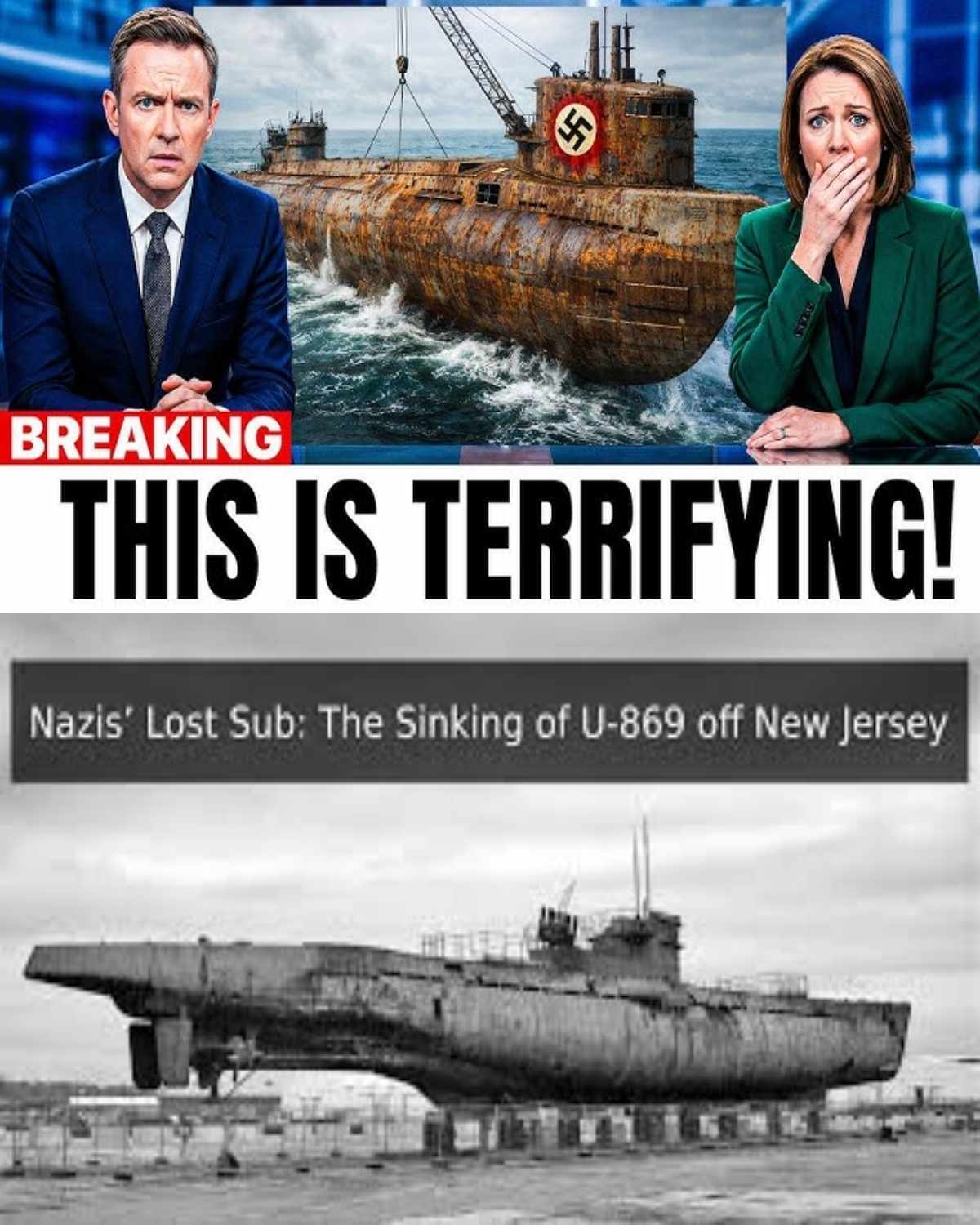
The Official Denial
The official response was swift: no German submarine had ever been reported lost in those waters. Yet, the evidence on the ocean floor told a different story. The wreck was real, the bones were real, and the historical record had a glaring gap.
The investigation became more complex as the divers attempted to identify the submarine. With no markings to go on, they turned to design details, structural features, and forensic analysis of the remains. The search would not be easy, and the mystery would take years to unravel.
A Dive That Changed Everything
The mystery deepened when, on October 12, 1992, two divers, Chris Rouse and his 22-year-old son, Chrissy, ventured to the wreck. They were known for their exceptional diving skills, but they couldn’t have predicted the tragedy that would unfold.
After diving to 230 feet without the specialized gas mixture needed for deep dives, Chrissy entered the wreck’s interior. While retrieving a German artifact, he triggered a collapse of corroded structures. He became pinned to the submarine’s floor in total darkness, with silt clouding the water, leaving him unable to see anything. His father noticed the guide line had gone still and rushed in to help. In a desperate, panicked attempt to free his son, Chris managed to extract Chrissy—but both men were now in grave danger.
With the pressure of the depth and no time to properly decompress, the Rouses surfaced too quickly. Chrissy’s regulator filled with water, and the nitrogen narcosis, combined with the rapid ascent, took its toll. Chris died on the boat before help could reach him, while Chrissy was airlifted to a hyperbaric chamber. Tragically, he passed away shortly after, delusional and disconnected from reality, his perception forever altered by nitrogen bubbles in his brain.
The wreck had claimed two lives in its pursuit of answers.
Returning to the Depths
Despite the dangers, the divers returned. The loss of Chris and Chrissy Rouse only heightened the urgency of solving the mystery. The team’s mindset was no longer just about uncovering the wreck’s identity—it was about answering the questions it posed, at any cost.
When they returned to the submarine, the control room revealed a startling discovery: the bones of the crew were scattered in a violent pattern, suggesting forceful movement rather than a flooding scenario. The damage inside the submarine didn’t match the typical patterns caused by external pressure. Instead, it suggested an explosion from within—something had caused catastrophic internal damage.
After more investigation, the divers and experts concluded that the submarine had been struck by a torpedo. But there was no record of any Allied vessel firing a torpedo in those waters, raising even more questions.
The Knife That Solved the Mystery
In 1991, diver John Chatterton made a breakthrough. While searching the wreck, he found a stainless steel dinner knife with a name carved into the handle: “Hurenburgg.” This name led them to a German naval record—a Martin Hurenberg had served on a submarine called U869, which was officially reported to have been sunk near Gibraltar. But this did not match the location of the wreck off New Jersey.
After further investigation, Chatterton and his team spent another six years diving to uncover more details. In August 1997, they discovered a small wooden box inside the wreck that contained an identification tag with the markings “U869.” The submarine’s identity was finally confirmed, solving a mystery that had lasted more than 50 years.
The Weapon and the Tragedy of U869

The final piece of the puzzle came from naval weapons experts who examined the damage to the submarine’s hull. The inward-focused breach suggested it had been struck by a T5 acoustic homing torpedo, a revolutionary weapon developed by the Germans during World War II. The torpedo had locked onto the submarine’s own engine noise, returning to strike the vessel that launched it, without warning. This catastrophic flaw meant that the submarine had been destroyed by its own weapon.
U869 had sunk off the American coast, its destruction completely unrecorded by history. The crew had died violently in the initial strike, while the men in the sealed rear compartments of the submarine experienced their final hours in total darkness, knowing that no rescue could come.
The wreck still lies on the ocean floor, 60 miles off the coast of New Jersey, gradually decaying, its secrets slowly becoming known to the world—one dive at a time.
The Human Cost of Discovery
This tragedy is a reminder of the human cost of uncovering history’s forgotten chapters. The crew of U869, the divers who risked everything to identify it, and the families affected by these revelations—all played a role in bringing this lost history back to life. What remains at the bottom of the Atlantic is not just a sunken vessel, but a testament to the hidden stories and unsung heroes of World War II.
The wreck of U869, with its tragic and mysterious history, serves as a powerful reminder that some secrets take decades to uncover, and even longer to truly understand.