A seismic shift in North American relations is underway as Canada’s response to intense U.S. pressure defies decades of diplomatic precedent and triggers an unexpected economic boomerang. Washington’s latest campaign, intended to force Ottawa into compliance, has instead accelerated a profound realignment, revealing new vulnerabilities within the United States while positioning Canada as an emerging global competitor.

The crisis began with a calculated series of escalations from Washington. U.S. Trade Representative Jameson Greer set the stage by openly suggesting the United States might allow the USMCA trade pact to expire in 2026. This was not idle speculation but a direct threat to the foundation of continental commerce.
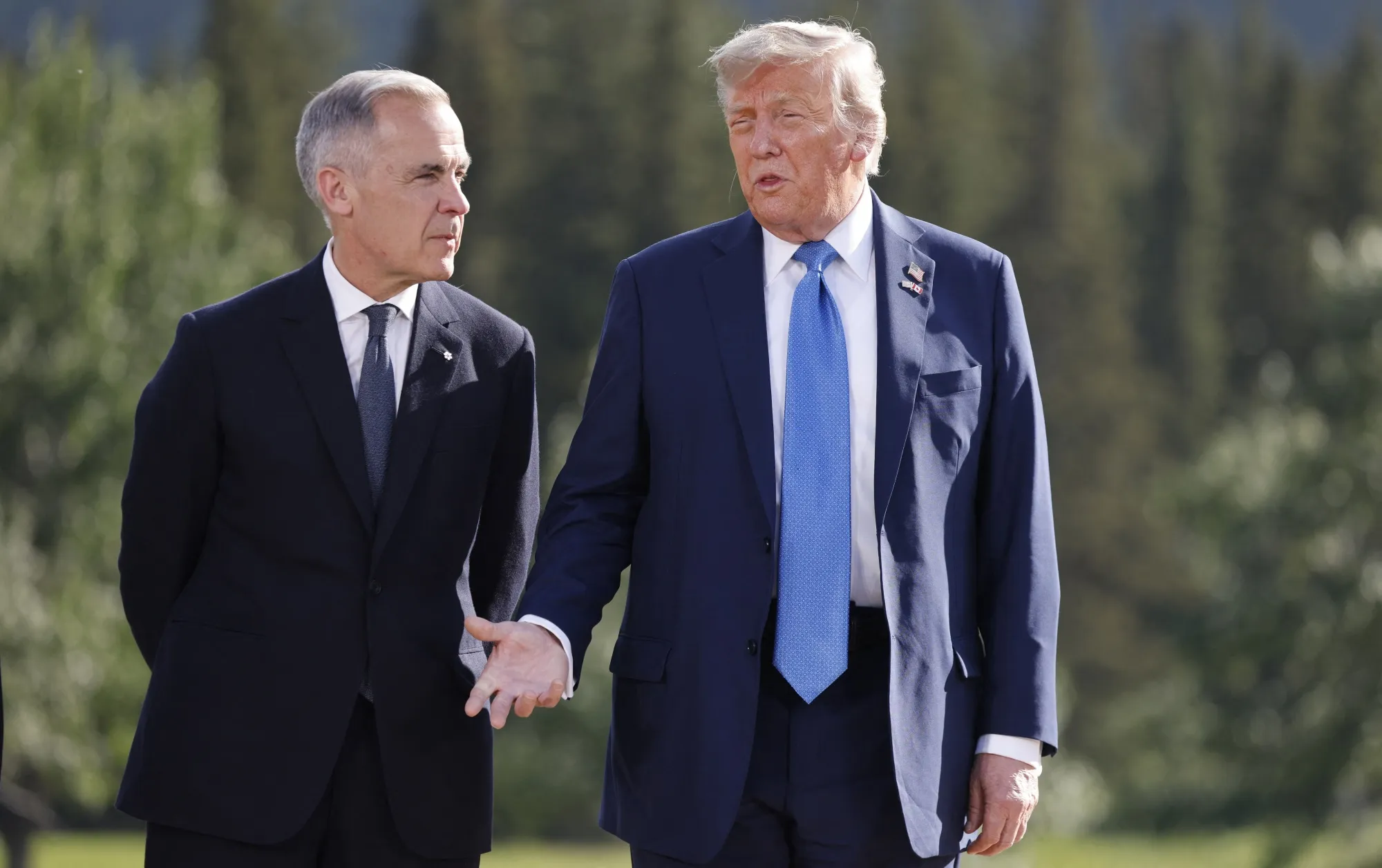
Former President Donald Trump then amplified the pressure with incendiary rhetoric, stating Canada should be treated “like the 51st state.” The remark sparked immediate outrage across Canadian society and the political spectrum, becoming a catalyst for a fundamental reassessment of the bilateral relationship.
The final provocation came from the U.S. Ambassador, who publicly criticized Canada’s domestic political advertising rules. Ottawa firmly rejected the interference and diplomatic talks froze. Washington had overplayed its hand, expecting capitulation but instead igniting a chain reaction.
Analysts in Washington predicted panic and retreat from Ottawa, believing Canada lacked the economic fortitude to withstand sustained pressure. The reality proved starkly different. The International Monetary Fund noted in late 2025 that Canada displayed remarkable economic resilience despite the turmoil.
Foreign direct investment into Canada surged by a staggering $77.8 billion, pushing total inbound investment toward $1.5 trillion. Global investors, wary of American volatility, were voting with their capital, choosing Canada as North America’s safer harbor.
Canada’s strategic pivot became unmistakable. It began constructing two parallel supply chains: one to manage unpredictable U.S. trade and a second, more ambitious network targeting Europe, India, and South America. This was not a minor adjustment but a wholesale repositioning.
Newfoundland and Labrador exemplified the change. Historically sending most energy exports south, the province now directs over half its oil to Europe—a dramatic shift from less than 10% two decades prior. Canada was actively decoupling from over-reliance on its southern neighbor.
The economic blowback within the United States emerged swiftly. U.S. manufacturing entered a prolonged contraction, shrinking for nine consecutive months through November 2025—the longest slump since the 2008 financial crisis.
Policy instability drove transport equipment manufacturers to cut jobs and move operations offshore. American consumers felt the pinch, with a meager 2.6% increase in Cyber Monday spending signaling eroding confidence.
Major corporations like Costco initiated legal action seeking tariff refunds, a move that could cost the U.S. government billions if replicated. Investment funds began re-categorizing the United States as a “high policy risk” jurisdiction.
Canada’s stable political climate and vast network of over 50 global free trade agreements suddenly became a powerful magnet. Companies from Europe and Asia saw Canada as a secure gateway to North American markets without the Washington-driven “tariff roller coaster.”
Even U.S. firms started viewing Canadian expansion as a strategic buffer against domestic policy turbulence. Capital began flowing north, subtly shifting the continental balance of investment.
Internally, Canada accelerated a foundational industrial rebuild. Surveys showed 72% of Canadian manufacturers backed incentives for nearshoring to reduce dependency on U.S. parts. This structural shift focused on future-critical sectors.
Electric vehicle manufacturing, battery mineral processing, and advanced engineering saw massive investment. Critical mineral projects in Quebec and Ontario gained unprecedented momentum, supported by global partnerships.
Analysts began describing a “Canadian industrial wall”—a resilient domestic production network designed to shield the economy. This quiet, effective build-out prepared Canada for a more independent, globally integrated future.
Canada’s outward strategy expanded in tandem. It solidified new export corridors to Europe and Asia, with nations increasingly viewing Canada as a stable, clean-energy partner. Japan and South Korea saw it as a reliable alternative to unpredictable U.S. trade policy.
The ultimate Washington scenario—a complete USMCA collapse—now carries a startling potential outcome. Instead of crippling Canada, it could cement its status as the continent’s new manufacturing hub.
With its trade agreements, resources, and investor confidence, Canada could attract firms needing access to both Western and Asian markets. The threat meant to corner Ottawa might instead crown it.
The irony is profound. A U.S. pressure campaign designed to assert dominance has systematically strengthened Canadian independence. Factories, investors, and allies are recalibrating their North American calculus.

Industries defining the next century—EVs, clean tech, critical minerals—are deepening their roots in Canada. Pressure did not weaken the nation; it revealed a country prepared to step from its neighbor’s shadow.
As Canada evolves into a rising global hub, Washington faces an unsettling, unanticipated question. Has its attempt to exert leverage accidentally forged a more formidable economic competitor directly on its northern border?
The story transcends a single diplomatic clash. It exposes a strategic shift brewing for years. Canada did not just resist; it adapted, expanded, and transformed. The pressure exposed U.S. economic vulnerabilities while propelling Canada into a phase of rapid strategic growth.
The defining question now hangs over the continent. If this trajectory continues toward the 2026 USMCA deadline, who will truly control the future of North America’s economy? The answer may arrive sooner, and look far different from what anyone in Washington ever expected.