A sweeping political decision intended to fortify American industry has instead triggered its most rapid collapse in decades, with more than 100,000 jobs vanishing as a direct consequence. The White House’s aggressive escalation of aluminum tariffs to 50% has catastrophically backfired, shuttering plants and devastating communities while handing a decisive, unassailable advantage to Canada.

The hum of industry has fallen silent across heartland factory floors, leaving behind idle machines and empty workstations. Assembly lines stand intact, tools waiting for hands that will not return, after a single policy choice erased livelihoods overnight. This was not the result of automation or foreign competition, but a domestic strategy that fundamentally misjudged the global market’s realities.
In 2018, a 10% tariff on aluminum imports was launched with promises of reviving American smelters and restoring industrial pride. Public support was strong, fueled by a narrative of national security and economic independence. Yet the duty did not remain static, climbing first to 25% and then, by early 2025, doubling to a staggering 50%, a rate applied even to the closest ally and largest supplier, Canada.

The policy’s fatal flaw lay in ignoring a fundamental truth of aluminum production: it is voraciously energy-intensive. Smelting a single ton consumes enough electricity to power a home for months. In the United States, where energy costs are high and volatile, this created an insurmountable barrier that tariffs could not overcome.
American producers, even with a 50% wall shielding them from imports, found themselves strangled by power bills. In regions like Ohio and Kentucky, peak-hour rate spikes made continuous operation financially impossible. The tariff was designed to level the playing field but instead tilted it irrevocably against domestic manufacturers.

Across the border, the contrast is stark. Canadian smelters, particularly in Quebec, operate on a foundation of vast, affordable hydroelectric power. Their electricity costs average nearly half those in the U.S., providing a structural advantage no tariff can erase. This clean, cheap energy has become the bedrock of unshakable competitiveness. Industry giants like Alcoa issued stark warnings, stating that no amount of political rhetoric could restart idled smelters without addressing the core issue of energy affordability. They pleaded for a long-term national energy strategy, not just protectionist measures, but their calls went unheeded in Washington. The consequences have been immediate and brutal. Businesses reliant on aluminum—from automakers to construction firms—faced soaring input costs. Many attempted to absorb the shock by cutting hours, payrolls, and production. Others relocated operations abroad. The result was a wave of closures, wiping out an estimated 100,000 jobs, including nearly 20,000 highly skilled positions in smelting itself.
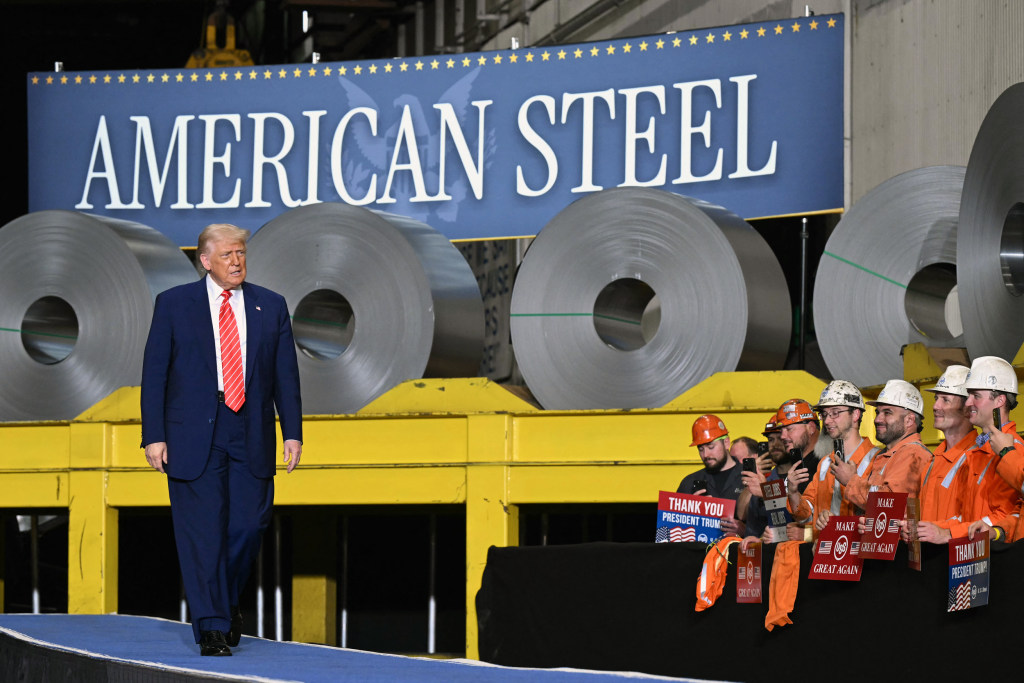
Meanwhile, Canada pursued a strategy of quiet, calculated resilience. Ottawa avoided retaliatory measures and heated rhetoric. Instead, it doubled down on its strengths, deepening trade partnerships with Europe and Asia and advancing its renewable energy infrastructure.
The outcome has been a dramatic realignment. In the first quarter of 2025, as U.S. plants faltered, Canadian aluminum production surged by 12%. Smelters in Quebec and British Columbia expanded, hiring engineers and technicians and installing new production lines. They solidified their reputation as a global hub for “green,” sustainable aluminum. Multinational corporations faced with untenable U.S. costs had little choice but to shift supply chains north. A Toronto-based aerospace executive stated bluntly that sourcing from the U.S. under a 50% tariff was simply not viable, calling it a business decision for survival.
The human toll is etched into American towns where factories now stand with locked gates. Families face mortgages and uncertainty, their careers dismantled by a policy meant to protect them. The promise of industrial revival has given way to the weight of betrayal and economic decline.
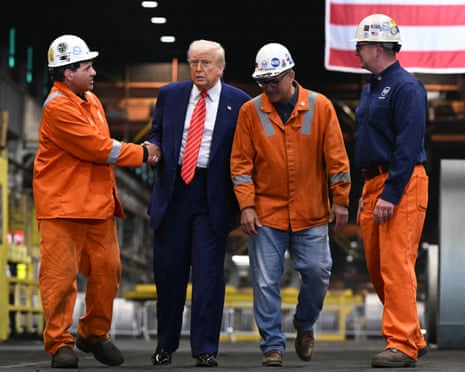
This policy failure exposes a deeper vulnerability. In an era where competitive advantage is built on sustainable infrastructure and strategic planning, blunt protectionist tools can prove dangerously counterproductive. The United States sought to reclaim control but instead ceded ground, watching Canada fill the void as the world’s reliable industrial partner.
The unsettling question now hanging over Washington is whether this represents a contained collapse or a harbinger of a broader economic earthquake. If a single policy could unravel an entire industry so rapidly, what other sectors might be vulnerable to similar miscalculations? The window to shift course is narrowing, as the foundations of global trade are being redrawn not by tariffs, but by access to clean, affordable power and strategic foresight.