A former high-ranking mob captain has broken a decades-old silence, claiming to possess definitive proof identifying the man who murdered legendary Teamsters boss Jimmy Hoffa. Michael Franzese, once a powerful capo in the Colombo crime family, states he has uncovered the truth behind one of America’s most enduring mysteries.
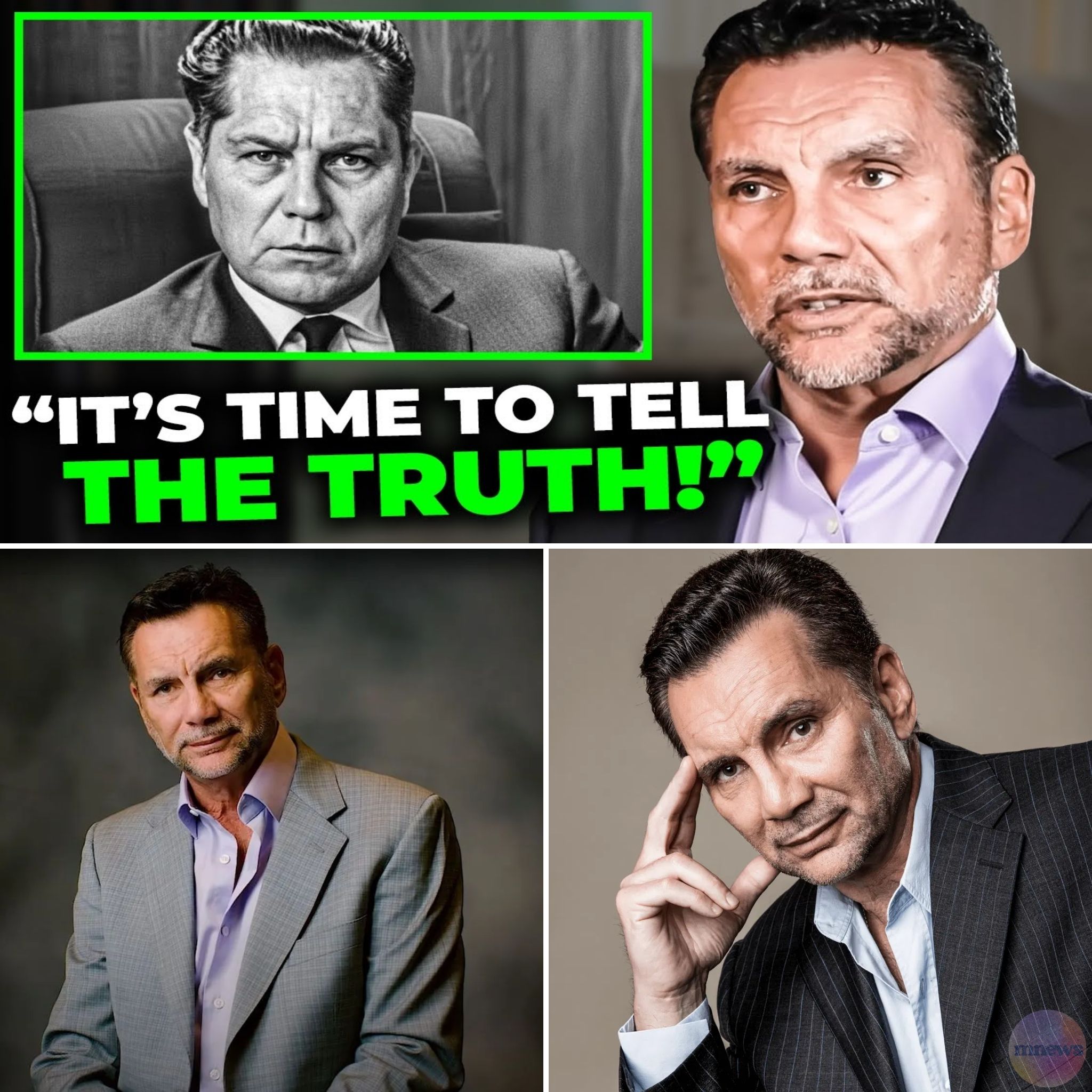
Hoffa vanished from a Detroit-area restaurant parking lot on July 30, 1975. His disappearance sparked a half-century of speculation, fruitless investigations, and countless conspiracy theories, leaving a gaping hole in the nation’s history. Now, Franzese asserts the answer has been within the underworld’s inner circle all along.
The former mobster, who famously walked away from organized crime, bases his claim on firsthand conversations with high-level sources. He moved in elite criminal circles where major operations were planned and discussed. According to Franzese, the identity of Hoffa’s killer is an open secret among those who were there.
Franzese directly challenges the most notorious public confession. For years, contract killer Richard “The Iceman” Kuklinsky claimed credit for the hit. Franzese dismisses Kuklinsky as a pathological liar and an unreliable outsider. The mob would never entrust a high-profile, strategic elimination to a freelance operator, he insists.
The real story, Franzese indicates, involves a trusted insider from within the organized crime structure. His claims point to a calculated power play, not a random act of violence. Hoffa’s attempted return to power threatened a billion-dollar pipeline of union pension funds flowing to mob-backed Las Vegas casinos.
This financial motive, not personal vendetta, sealed Hoffa’s fate. With Hoffa imprisoned, his successor, Frank Fitzsimmons, allowed the mob unfettered access to the Teamsters’ Central States Pension Fund. Hoffa’s determination to reclaim the presidency in 1975 put that entire operation at immediate risk.
The order to eliminate Hoffa required approval from the Mafia’s national Commission. Families in Detroit, New York, and Chicago all agreed his removal was necessary for business. The meeting at the Machus Red Fox restaurant was a meticulously planned trap, leveraging Hoffa’s trust in familiar faces.
A key figure in the setup was Charles “Chucky” O’Brien, Hoffa’s foster son and a Teamsters official with mob ties. Investigators long believed O’Brien was the driver who lured Hoffa from the restaurant. That trusted face was critical to making the powerful union leader lower his guard.

Franzese suggests the hit itself was executed swiftly and professionally at a secure location, likely a mob-connected home in the Detroit area. The operation prioritized silence and the complete disappearance of the body, a hallmark of high-level mob tradecraft that has confounded law enforcement for 50 years.
The aftermath achieved its goal. Fitzsimmons remained in control, and the mob’s financial spigot stayed open. However, the brazen disappearance of a national figure also triggered unprecedented federal scrutiny, ultimately contributing to the mob’s decline under RICO prosecutions in the following decades.
Despite numerous deathbed confessions and tips, from Frank “The Irishman” Sheeran to Detroit mobster Tony Zerilli, no evidence has ever surfaced. The FBI has dug up fields, drained lakes, and searched landfills based on claims, always coming up empty. Hoffa’s body has never been found.

Franzese’s emergence as a credible insider willing to speak adds a significant new dimension. He promises not just a name but corroborating evidence, hinting at a recorded tape that spells out the details. This assertion forces a re-examination of long-held theories and dismissed confessions.
The identity Franzese points to remains carefully guarded, but his credibility lends the claim immense weight. As a former captain who managed multi-million dollar schemes, his knowledge comes from the epicenter of mob power. He understands who was trusted with tasks of this magnitude.
The enduring mystery of Jimmy Hoffa’s fate is more than a true crime story. It is a dark parable about the collision of labor power, organized crime, and American ambition. Hoffa’s rise from poverty to national influence was ultimately undone by the very alliances that built his empire.
Franzese’s revelations, if proven, could finally provide a grim resolution. They underscore that Hoffa’s murder was a cold, corporate decision made by a board of criminal directors. The shooter was merely a tool in a much larger machinery of greed and control that consumed its own.
The search for Hoffa’s body may never end, but the testimony of a man like Michael Franzese brings us closer to the truth than any excavated field. The proof, he says, lies not in the ground, but in the whispered secrets of the men who ordered the hit and the one who carried it out.