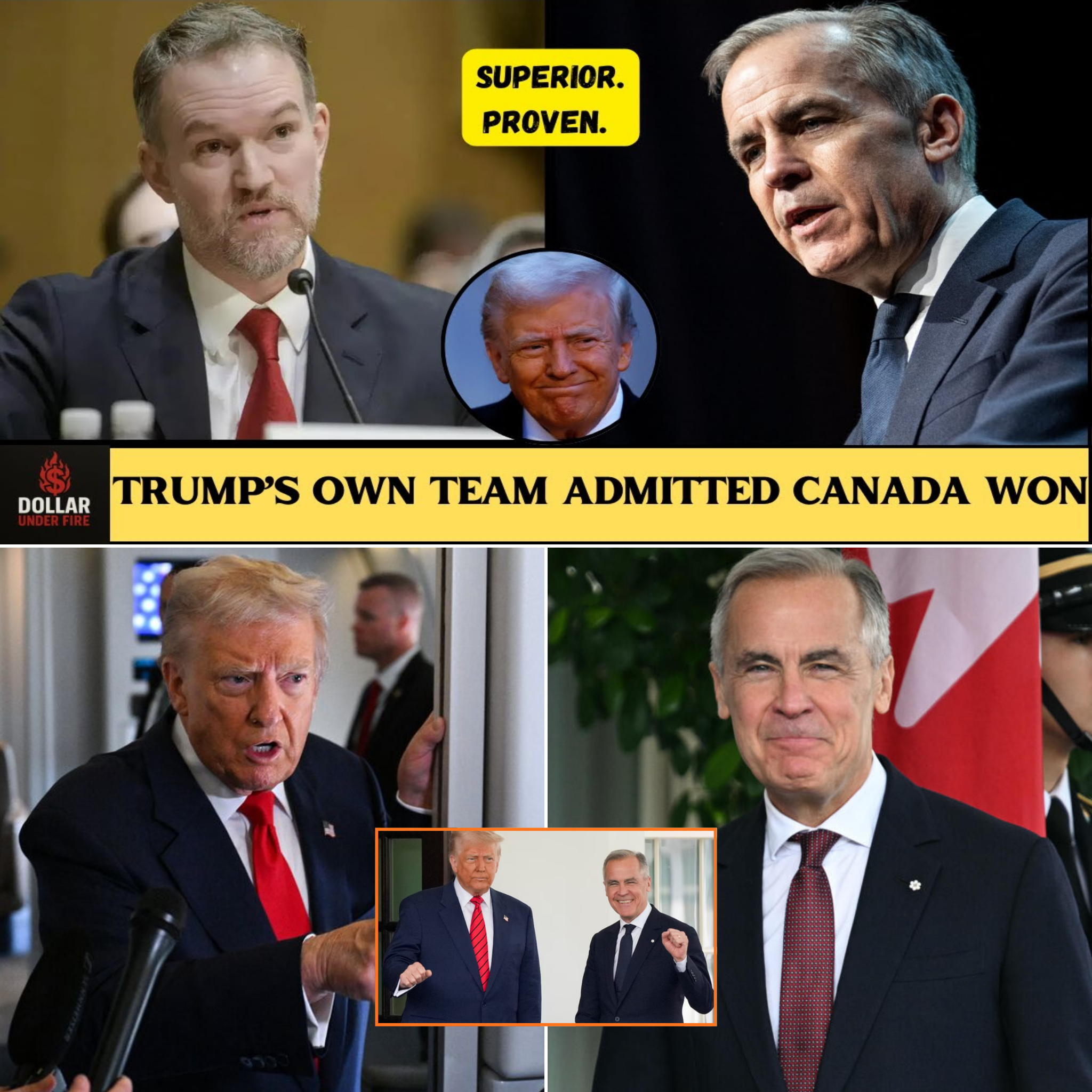
In a stunning revelation that reshapes North American trade dynamics, Trump’s own trade negotiator, Jameson Greer, openly acknowledged Canada’s superior position in the economic relationship between the two nations. This admission, made during a speech at the Atlantic Council, marks a pivotal shift in the narrative surrounding U.S.-Canada trade relations.
 For months, the prevailing belief was that Canada would buckle under the pressure of Trump’s trade chaos. However, Greer’s statement dismantles that notion, declaring that Canada is “different, not equal, not comparable, different, and better positioned.” This shift in rhetoric signals a significant change in how the U.S. perceives its northern neighbor.
Greer emphasized that Canada’s labor standards, legal framework, and trade structure warrant different treatment compared to Mexico. This distinction is crucial, as it highlights the U.S. recognition of Canada’s value as a premium partner rather than merely a foreign supplier. By separating Canada from Mexico in trade negotiations, the U.S. is sending a clear message: Canada holds a unique and vital role in North American economic integration.

The implications of Greer’s remarks extend beyond mere acknowledgment of differences. He indicated that U.S. negotiations with Canada and Mexico have been conducted on separate tracks, a strategy that reveals a hierarchy in trade relationships. This separation underscores the U.S.’s recognition that Canada’s labor standards and legal predictability align more closely with American values, reducing fears of being undercut by cheaper labor.
Moreover, Greer pointed out that Canadian energy and manufacturing are deeply integrated into the U.S. economy. This interconnectedness means that Canadian goods and services are not just imports; they are essential components of American industries. The U.S. benefits from this integration, as it allows for more stable and reliable supply chains.
As Greer prepares for his upcoming report to Congress, the focus will likely shift to how Canada can leverage this newfound recognition. With alternative markets and partnerships already established, Canada is no longer negotiating from a position of dependency. Instead, it has built a robust economic framework that allows it to engage from a position of strength.

This pivotal moment in U.S.-Canada trade relations raises critical questions about the future of the Canada-United States-Mexico Agreement (CUSMA). As Greer suggested, the current framework may no longer reflect the economic realities of the three nations. Canada is now in a position to negotiate for terms that better suit its interests, potentially reshaping the trade landscape in North America.
In conclusion, Greer’s admission is not just a diplomatic acknowledgment; it is a recognition of Canada’s strategic evolution in the face of U.S. pressure. As Canada continues to diversify its trade relationships and strengthen its economic position, it stands ready to negotiate from a place of power rather than fear. The balance of power in North American trade is shifting, and Canada is poised to capitalize on this new reality.