A seismic shift in global power is unfolding not in treaty halls or summit rooms, but in the wake of a dismissive shrug from Washington. While former President Donald Trump celebrated online victories and declared tariffs his weapon of choice, a strategic alliance between Canada and Spain has accelerated, fundamentally reshaping Europe’s economic and defense posture and leaving America’s influence diminished.
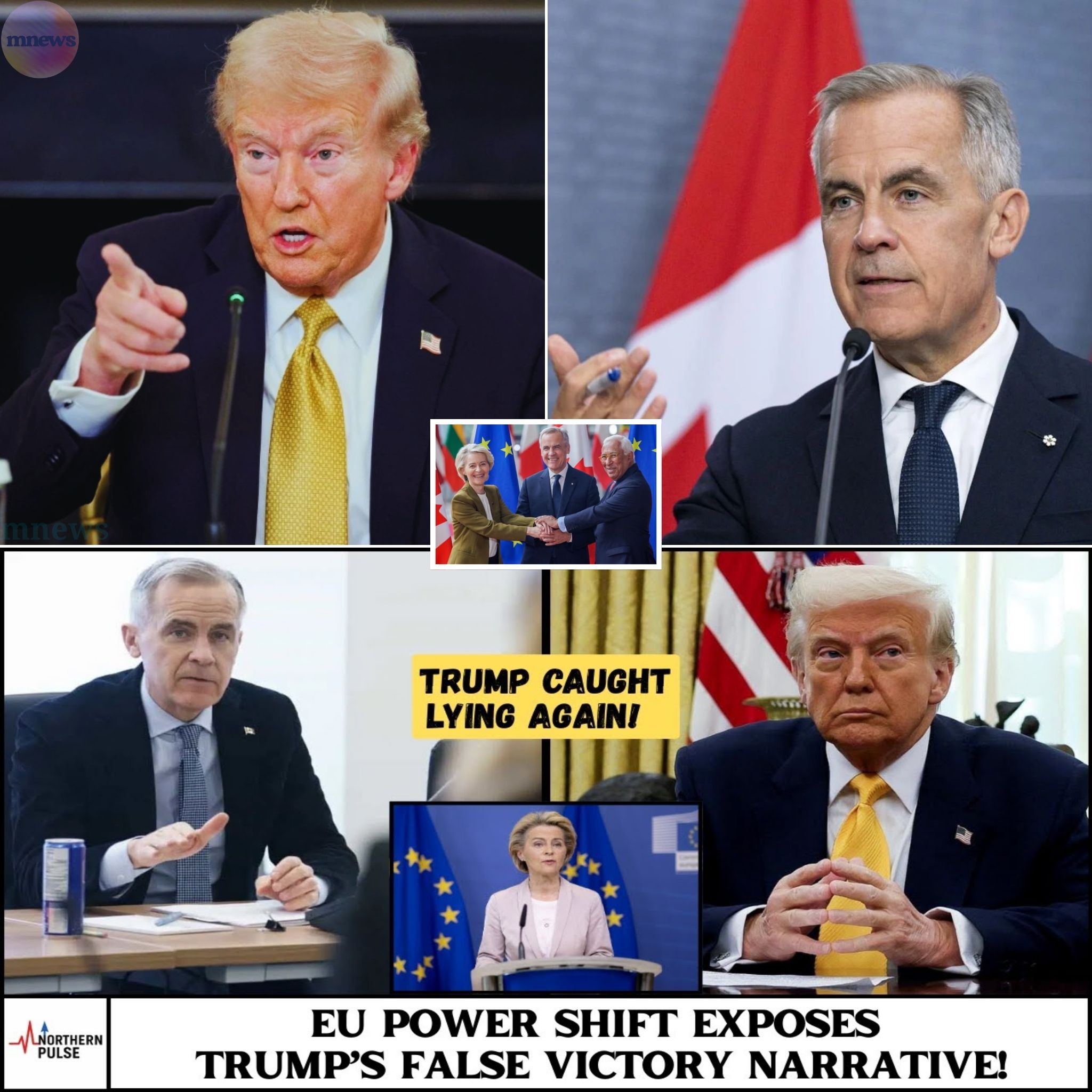
The catalyst was a seemingly offhand remark. When asked about restarting negotiations with Canada, Trump offered no strategy, only a non-committal “We’ll see,” followed by a claim that Canada makes things “we don’t need.” To allies, the message was deafening: America is stepping back. In geopolitics, such uncertainty creates a vacuum, and vacuums are filled with startling speed.
While Washington signaled disinterest, Spain’s Minister of Economy, Trade, and Business, Carlos Cuerpo, landed in Ottawa with a blueprint for the future. His mission was deliberate, not ceremonial. “Canada is a key partner of the EU, a key partner of Spain,” he stated, framing a world where nations are actively diversifying alliances, not just supply chains.
The partnership moved swiftly from rhetoric to concrete, multi-sector integration. The first breakthrough is in energy security. Spain, with the largest LNG processing capacity in Europe, formally offered Canada access to its terminals. “We are open to Canadian LNG,” Cuerpo declared, creating a direct avenue for Canadian energy to flow into Europe, bypassing U.S. gateways and reducing historic dependence on Russian gas.
The collaboration extends into green hydrogen and renewable infrastructure, positioning Canada as a cornerstone of Europe’s energy transition. This strategic energy corridor grants Canada unprecedented leverage and a global market role independent of U.S. approval, a stark reversal of traditional continental dynamics.
More startling is the defense realignment. In a historic move, the European Union and Canada have deepened integration under the EU’s Security and Defence (SED) framework, a €150 billion initiative to rebuild Europe’s defense industrial base. Canada is now being treated as a “frontrunner” within this system, a status rarely afforded even to the United States.

The joint framework commits to joint military procurement, shared defense targets, and integrated supply chains. This elevates Canada from a traditional NATO ally to an embedded, structural pillar in Europe’s long-term security architecture, standing beside nations like France and Germany.
The most ambitious vision, however, lies in trade architecture. Analysts are now actively discussing using Canada as the strategic hinge to link the European Union with the Comprehensive and Progressive Agreement for Trans-Pacific Partnership (CPTPP). Canada holds free trade deals with both blocs.
A partial integration of the EU and CPTPP would create a trade network spanning 39 pro-trade governments, representing over 50% of global GDP without the United States. It would establish unified dispute systems and reduce dependence on U.S.-centric trade norms, creating a “post-certainty” system that functions regardless of American unpredictability.
This realignment was not born in anti-American sentiment, but in pragmatic adaptation. As the U.S. posture shifted toward unilateral tariffs and transactional alliances, reliable partners sought new anchors. Spain, one of Europe’s fastest-growing advanced economies, is betting strategically on Canada’s stability and resources.

The implications are profound. The international system that once awaited American leadership is now improvising its own stability. Trump’s claim to have “settled eight wars” was contradicted in real-time by renewed conflict in Southeast Asia, underscoring the fragility of U.S. declarations.
History often pivots on quiet revelations. Trump’s remark about Canada was one such moment. It did not insult Ottawa; it liberated it. Europe was not offended; it was opportunistic. The alliances now being cemented in energy, defense, and trade are structural and long-term, built on a foundation of reliability that Washington has inadvertently called into question.
The world has not turned against the United States. It has simply stopped waiting for it. As America hesitated, Canada and Spain stepped forward, triggering a power shift that is quietly dismantling old assumptions and constructing a new geopolitical reality where the Atlantic alliance has found a new, decisive center far from the Potomac.