In a strategic pivot reshaping North America’s automotive landscape, Toyota is decisively strengthening its manufacturing footprint in Canada, a move driven by the need for stability amidst volatile U.S. trade policies and supply chain uncertainty. This realignment, emerging not from a single announcement but from a pattern of investments and project shifts, signals a fundamental recalibration for the electric vehicle era, with profound implications for jobs and industrial strategy across the continent.

The automaker’s monumental $14 billion battery plant in North Carolina, weeks from its first shipments, now appears as one node in a broader network increasingly anchored north of the border. Facing a perfect storm of financial pressures, including the looming threat of $800 billion in potential losses from U.S. tariffs on Japanese exports, Toyota has been compelled to act. These geopolitical headwinds compound severe profit warnings, including a forecasted 21% decline for 2025, forcing a strategic reassessment.
Analysts confirm this is no temporary adjustment but a long-term restructuring. “This reflects a vision that extends far beyond tariff concerns,” one industry observer noted. It is a deliberate effort to shield operations from unpredictable U.S. policy shifts while securing a resilient foundation for EV production. The costs of American volatility are already staggering; Trump-era tariffs alone have reportedly cost Toyota $1.25 billion in profits.

Further financial strain comes from a projected $5.1 billion operating profit drop due to currency fluctuations and another $2.4 billion from rising material costs. For a company that exported over 542,000 vehicles from Japan to the U.S. last fiscal year, these pressures are unsustainable within the current framework. The reaction from some U.S. states has been swift, with officials criticizing what they perceive as an abandonment of American workers.
Toyota’s response, delivered quietly but clearly through its Canadian operations, emphasizes careful, long-term planning over short-term political reaction. The obstacles within the U.S. ecosystem are multifaceted and growing. Key American projects, like the EV hub in Kentucky—once a cornerstone strategy—face delays, with full-scale operations pushed to mid-2026.

Even the relocation plans for the Tacoma truck to Texas are being reassessed to mitigate tariff impacts on Mexican-made parts. This instability makes the high-cost, long-cycle business of electric vehicle manufacturing a monthly gamble. Furthermore, the U.S. cannot independently meet the stringent sourcing requirements of the Inflation Reduction Act (IRA), forcing automakers to seek reliable foreign partners.
In this climate of uncertainty, Canada has emerged as a logical and compelling destination for strategic investment. While Washington advances tariffs and mixed signals, Ottawa has focused on creating certainty. The Canadian government has committed over 6.44 billion Canadian dollars to accelerate mining for critical minerals like nickel, lithium, and cobalt, with an additional two billion earmarked for expanding domestic refining.
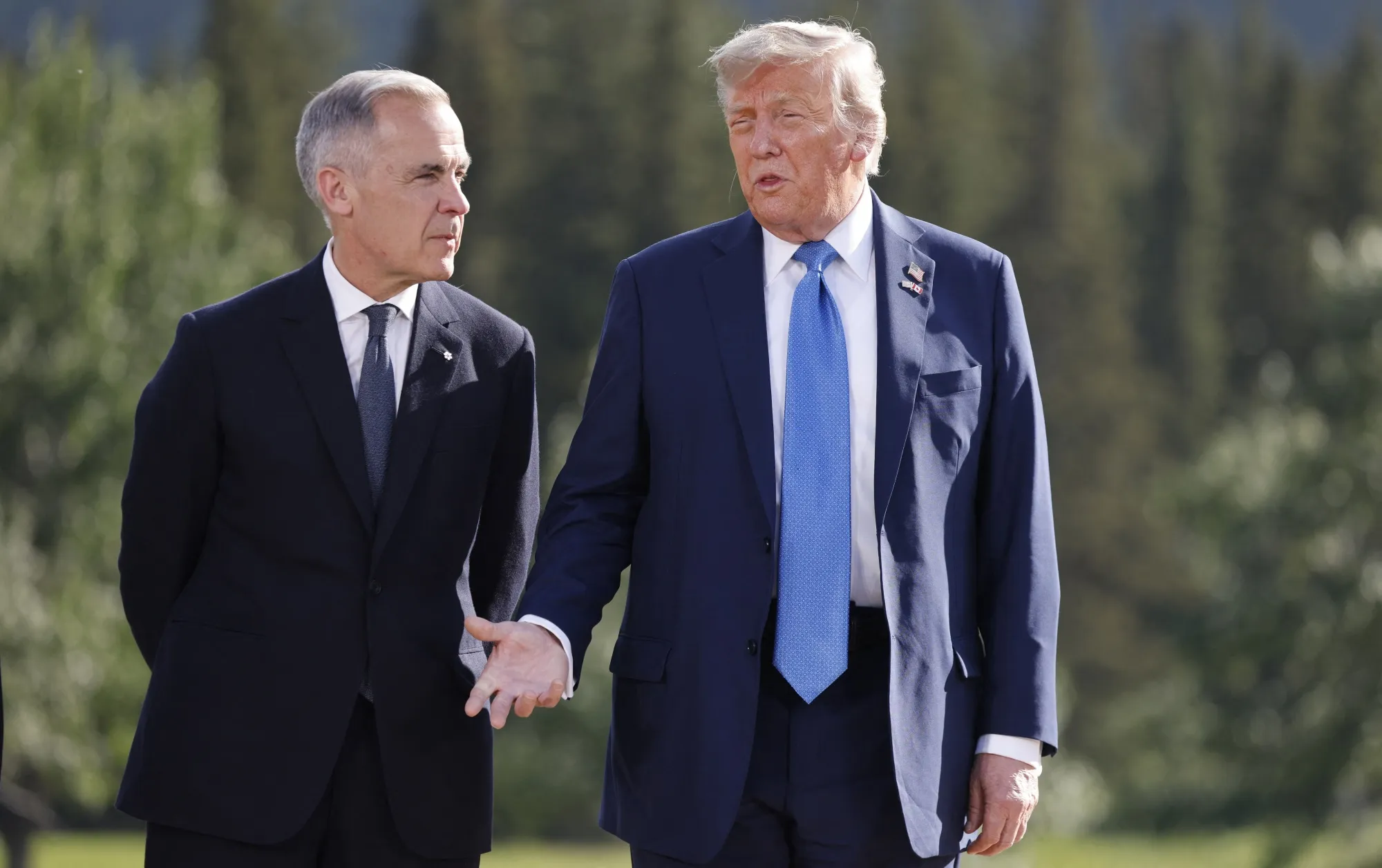
This investment provides the long-term predictability Toyota and others crave. Canada’s advantage is not merely in raw materials but in its growing industrial-scale refining capacity—a critical link the U.S. still lacks. Projects like the First Cobalt Corp refinery are establishing a secure, domestic battery supply chain.
In Quebec and Ontario, battery cell and component projects are rising adjacent to the traditional U.S. auto belt, enabling efficient logistics from refined material to final assembly. Crucially, these Canadian facilities are designed to fully comply with the U.S. IRA, allowing Toyota to maintain access to essential consumer tax credits that remain elusive for some U.S.-based production.
This creates a powerful dual role for Canada as both mineral supplier and refining hub. By deepening its presence in Ontario and Quebec, Toyota is building an EV manufacturing corridor insulated from U.S. policy volatility. Its proximity to Michigan and Ohio maintains a seamless production chain while minimizing cross-border disruption.

The competitive edge is clear. Major investments from Honda and General Motors in Canada are fueling a vibrant industrial cluster, each new project reinforcing the ecosystem. Toyota’s commitment strengthens the perception of Canada as a durable strategic foundation, not a temporary workaround. Ontario and Quebec now function as a stable “safe zone” for decades-long investment cycles.
This northward shift, however, is escalating tensions. U.S. industrial states and federal lawmakers have expressed concern, warning that Canada could become a backdoor for international manufacturers to benefit from U.S. incentives while American plants bear the risks. The delays in Toyota’s U.S. EV projects have intensified these worries, creating a paradox where policies meant to boost domestic production are pushing investment elsewhere.
Toyota’s move is emblematic of a broader sectoral trend. EV manufacturing hubs are coalescing in regions that combine mineral resources, advanced refining, and policy stability. Canada’s alignment of all three elements is making it a critical pillar in North America’s EV ecosystem. For automakers, access to IRA-compliant supply chains is non-negotiable, and Canada currently delivers a level of certainty the United States struggles to match. This quiet shift is far-reaching. For Toyota, it is not a retreat from the U.S. market but an effort to build a more predictable and resilient production base. Leveraging Canada’s stable policy environment protects its multi-billion-dollar EV investments. The clustering of mining, refining, and component manufacturing in Canada reduces costs, cuts import reliance, and ensures compliance.

Toyota’s story is not isolated. Other automakers are solving the same equation of strict rules, tariff risks, and volatile chains by seeking safer ground. Canada’s unique combination of attributes is a competitive edge no other North American region can easily replicate. The emerging industrial corridor offers the long-term stability essential for success in an industry where securing compliant materials is as crucial as operating assembly lines. The evolution of this market demonstrates that corporate strategy is now inextricably linked to political risk assessment. Companies are compelled to look beyond short-term costs toward long-term predictability. Canada’s integrated approach—from mine to refinery to factory floor—is proving that sustainable growth derives from stability as much as scale.

Toyota’s pivot may be the first major signal, but it will not be the last. It indicates that the future of North American EV manufacturing is being shaped not only by consumer demand but by the search for industrial certainty. As the continent’s EV ecosystem expands, the integration of resources, policy, and corporate vision will grow in importance. Canada’s comprehensive strategy is quietly redefining the industrial map, positioning itself not merely as a link in the chain but as the foundational anchor for the electric vehicle era.