A political threat aimed north has ricocheted back with startling force, striking the American agricultural heartland and grocery aisles first. The mere suggestion of U.S. tariffs on Canadian potash has triggered immediate economic consequences, exposing a profound vulnerability in America’s own food security before a single policy was enacted. This unfolding crisis demonstrates that in global supply chains, control over essential resources often speaks louder than political rhetoric.

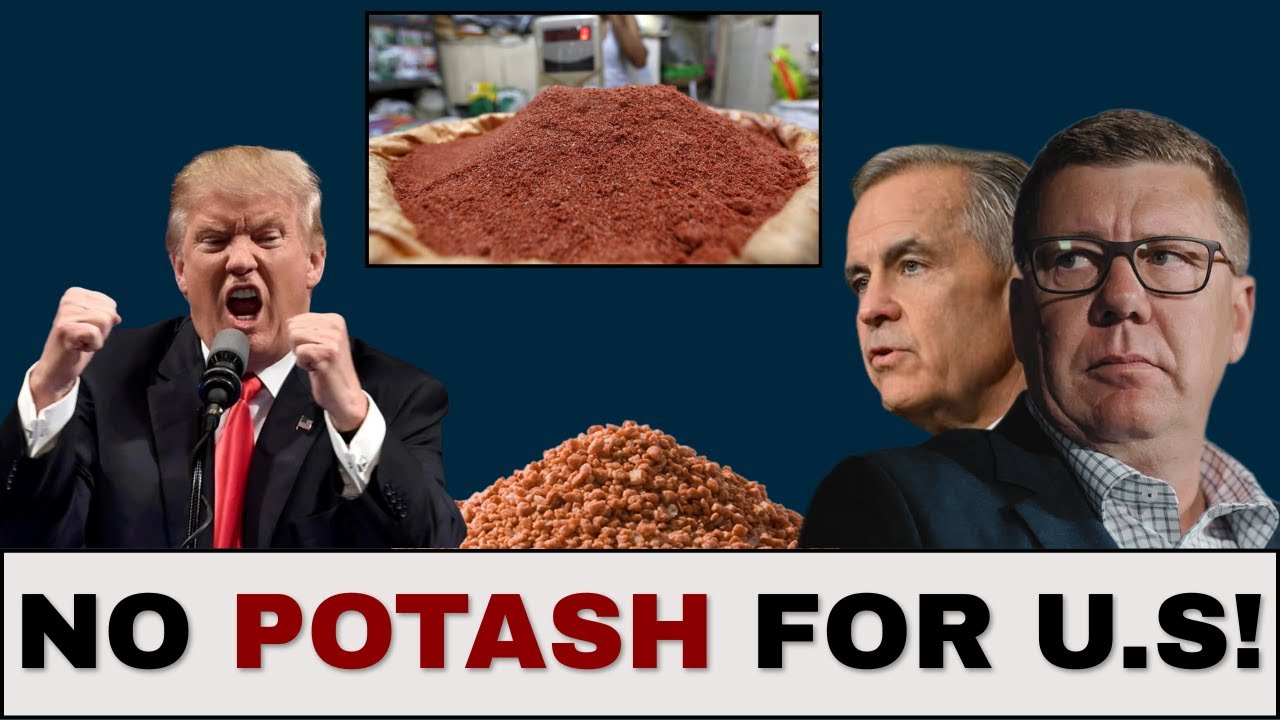
Markets reacted with instant, punishing clarity to the threat against the world’s most stable potash supplier. Fearing imminent disruption, benchmark potash prices surged from approximately $330 to nearly $350 per ton overnight. This was not a response to legislation or executive order, but to fear alone. The volatility injected immediate uncertainty into the foundational input for the entire North American food system.
For American farmers operating on razor-thin margins, this price spike is catastrophic, not symbolic. Fertilizer constitutes the second-largest input cost for corn growers, with many already dedicating over twenty percent of production expenses to it. The sudden increase forces agonizing recalculations of planting decisions, harvest projections, and survival prospects for the coming season.

The shockwave translates directly from farm fields to family tables. Economists warn that elevated fertilizer costs inevitably inflate prices for bread, meat, vegetables, and countless processed goods. American consumers are now facing the prospect of higher grocery bills as a direct result of a geopolitical maneuver aimed at a foreign nation.
Paradoxically, the target of the threat remains conspicuously calm. Canada, which controls nearly one-third of global potash production and supplies over ninety percent of U.S. imports, has not panicked. Its stability stems from an unassailable advantage: geology. Beneath Saskatchewan lies the planet’s largest high-quality deposit, a resource that cannot be replicated or quickly replaced.
This geological reality defines the strategic landscape. The United States possesses no viable short-term alternative to Canadian potash. Developing new mines requires billions in investment and decades for permitting and construction, timelines utterly disconnected from the urgent, seasonal cycles of agriculture. A single disrupted planting season can devastate local economies. Global tensions have already severed other supply lines, magnifying Canada’s critical role. Sanctions and instability have largely removed Russian and Belarusian potash from reliable circulation for Western nations. This leaves American farmers more dependent than ever on their northern neighbor, a fact Ottawa understands perfectly.

The fundamental miscalculation in Washington now becomes painfully clear. Tariffs are taxes paid by importers, not exporters. A proposed twenty-five percent levy would not burden Canadian companies but would land squarely on the balance sheets of farms across Iowa, Nebraska, and Kansas. The cost would be passed through instantly. Industry giant Nutrien issued a stark warning that any tariff cost would transfer directly to American growers. For many, this could collapse their financial math entirely, triggering a wave of bankruptcies, foreclosures, and the loss of generational livelihoods. The human cost of the political gambit would be measured in lost farms.

In a surreal twist, the U.S. government reportedly prepared a new farm bailout package, potentially worth billions, to offset the damage caused by its own threatened policy. This would layer emergency taxpayer spending atop existing aid, creating a circular flow of money to repair a self-inflicted wound. While Washington scrambled, Canada executed a strategy of disciplined silence. Officials like Mark Carney avoided rhetorical escalation, allowing the relentless pressure of the planting calendar to work on their behalf. They understood that crops do not wait for political resolutions, and American farmers would become the most potent lobby for de-escalation.
Ottawa simultaneously fortified its position, strengthening trade corridors with Europe and positioning itself as the globe’s reliable supplier in an era of volatility. This quiet diplomacy enhanced Canada’s strategic leverage while the U.S. focused on public confrontation.

When Canada finally responded, it did so with surgical precision. Ottawa announced counter-tariffs targeting thirty billion dollars in U.S. goods, strategically selected to impact industries in key political battleground states. The message was unambiguous and aimed directly at the American political core.
The retaliation signaled even greater capacity, with warnings of an escalation to one hundred twenty-five billion dollars in additional tariffs if pushed. This revealed a layered, pre-planned defensive strategy that demonstrated Canada was prepared for a prolonged economic dispute.